When seven-year-old Emily Heaton told her father Jeremiah that she wanted to be a real-life princess, he, like other dads, did not laugh the request away or told her that princesses existed only in fairy tales. Instead, he took her request quite seriously and started researching whether there was anywhere on Earth that was not claimed by a country. Luckily, he found what he was looking for and finally discovered Bir Tawil.Never heard of Bir Tawil?
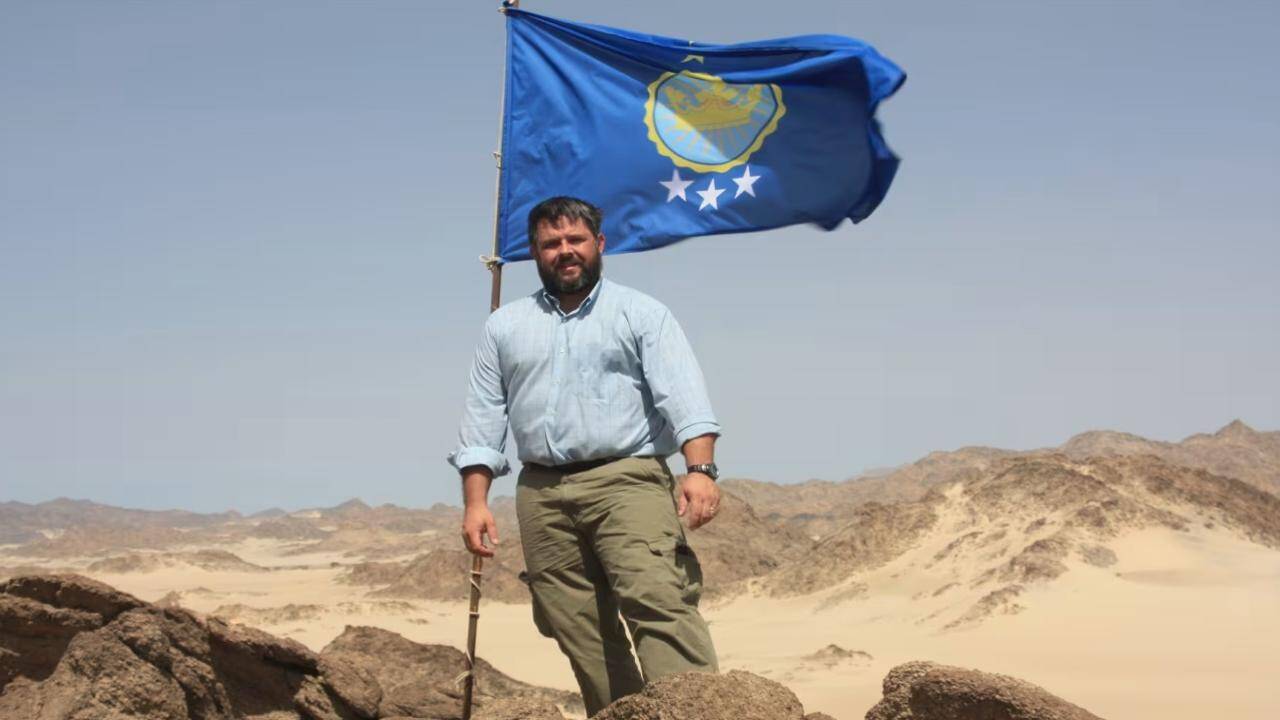
With th flag (PC: Today)
Bir Tawil is a remote, arid 2,060 sq km patch of desert sitting in between Egypt and Sudan. On Emily’s seventh birthday (June 16, 2014), Heaton travelled into the desert and planted a family-designed flag. He then declared the territory the Kingdom of North Sudan and named his daughter Princess Emily.No, it’s not the plot of a kid’s adventure story but the real story behind a dad’s will to make his daughter a real princess.A daughter’s question that became a father’s missionEmily’s wish was an innocent one. She wanted to know whether she could be a princess or not. But her father, Jeremiah Heaton, did not want to disappoint her.Rather than getting her a princess doll or a crown, he started looking into the idea of finding an actual piece of land that was not claimed by any sovereign country. That search eventually led him to Bir Tawil.As per reports, Heaton travelled from the United States to Cairo and then made the tough journey towards the desert. The final expedition involved travelling for hours across the harsh landscape before he reached the spot where he would plant his flag.On Emily’s seventh birthday, he raised a blue flag featuring four stars and a golden crown, designed by his kids. His family called their imagined country the Kingdom of North Sudan.And Emily was its official princess.But the question is why is there an “unclaimed” desert?
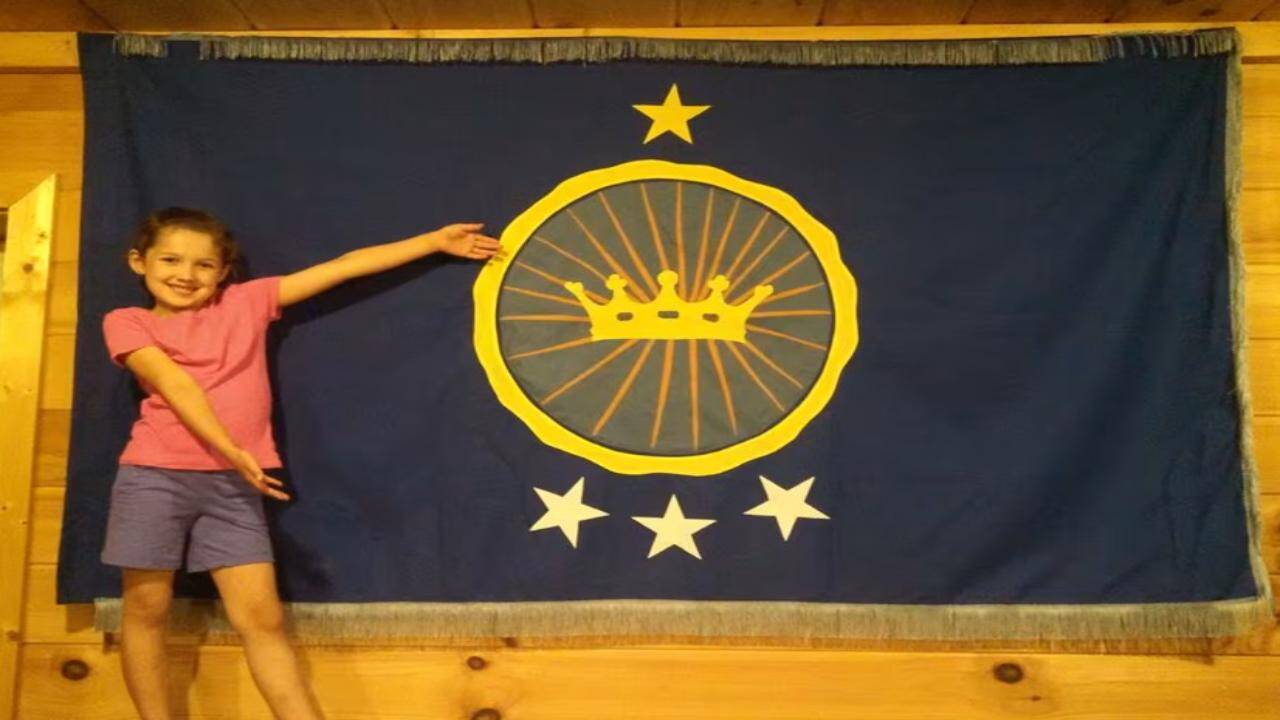
Family-designed flag (PC: Today)
Now this is also a fascinating part of the story. Bir Tawil exists because of a peculiar disagreement over the Egypt-Sudan border.The boundary was first established in 1899, when Britain and Egypt agreed on a political boundary running roughly along the 22nd parallel. In 1902, Britain subsequently created a different administrative boundary.Under the 1899 boundary, the Hala’ib Triangle falls on the Egyptian side while Bir Tawil falls on the Sudanese side.Under the 1902 administrative boundary, Hala’ib falls on the Sudanese side while Bir Tawil falls on the Egyptian side.Both Egypt and Sudan have maintained claims to the strategically more valuable Hala’ib area. The result is the remarkable anomaly that neither country claims Bir Tawil as its own territory. A 2026 UK government geographical factfile describes Bir Tawil as an area “claimed neither by Egypt or Sudan”.That makes Bir Tawil one of the world’s most unusual pieces of land.It is also inhospitable.Bir Tawil is landlocked and overwhelmingly desert. It has no permanent settlement and no surface water. Its highest point, Gabal Hagar El Zarqa, rises to about 662 metres, while the landscape includes mountains, valleys and vast stretches of barren terrain.So no Emily has not got herself a castle or garden or a kingdom. She had, symbolically at least, inherited a huge stretch of one of the harshest environments in North Africa.Did Jeremiah actually create a country?
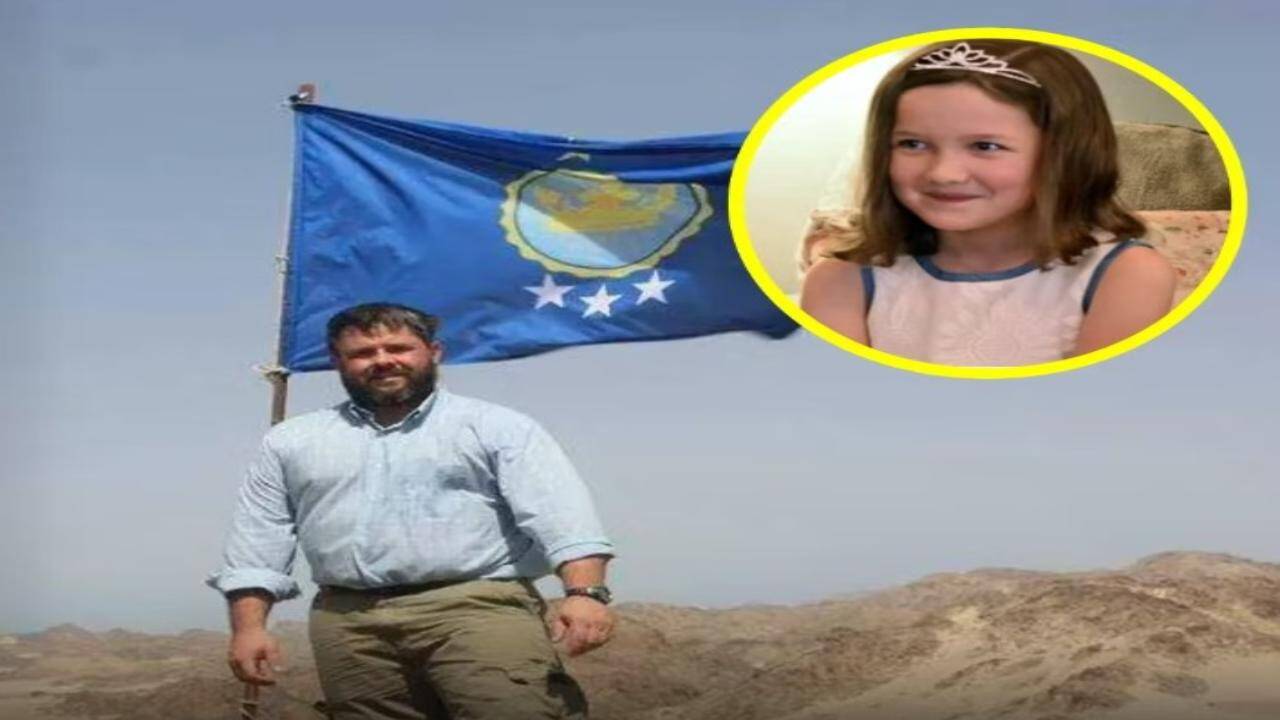
The Princess (PC: Today)
No, not in the legal sense. This is the part of the story that often gets lost. Heaton just planted a flag created by his family and called the creation of a kingdom. But declaring sovereignty over land does not automatically create a new internationally recognised state.There is no permanent population living there, no established government exercising authority over the territory, no functioning institutions and no diplomatic recognition from Egypt, Sudan or the United Nations.So Emily was a princess in the wonderfully imaginative sense of the word and not by international law.What makes the article endure is not really the claim to territory. It is also the image of a father taking a child’s impossible question seriously. For one seven-year-old girl, her father had answered the question that mattered most.And somewhere in a remote corner of the Sahara, he raised a little blue flag and told his daughter she was the princess of the land!