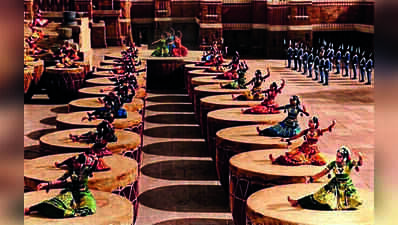
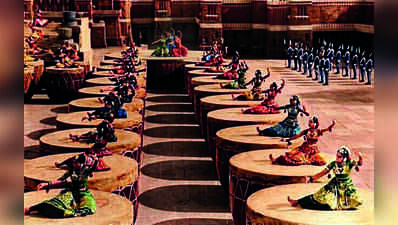
Neeraja.Ramesh@timesofindia.comThere was a time when a Tamil film without four or five songs was almost unthinkable. A romantic duet, an introductory number for the hero, a kuthu song and perhaps a festival sequence meant not just music and glamour but several days of employment for dozens of dancers. That ecosystem has steadily shrunk. And group dancers, once indispensable to the Tamil film song, are finding themselves squeezed out by background tracks, shorter running times and tighter production budgets. The big dance number has not vanished, but for hundreds who depend on it for their livelihood, work has become less predictable.This is not an overnight crisis. In 2016, choreographer Shobi, president of the Cine and TV dancers and dance directors association, said work available to dancers have fallen over 20 years as Tamil cinema moved towards realistic and ‘song-less’ films. Large groups of 50 or more dancers, he said, were associated only with big star and big budget productions.The concern was echoed by choreographer Raju Sundaram a year later. Recalling an era when a film routinely contained at least five songs, he said the dancers’ union was worried about dwindling opportunities.Choreographer Kala, who began her career in her teens, says Chennai was the hub for group dancers in the South, with Kollywood’s colourful song-and-dance numbers providing them steady work. “Gradually, their talent took them beyond Tamil cinema to film industries in Kerala, Karnataka, Hyderabad and Mumbai. “Vijay’s films had songs that opened up opportunities for dancers. Heroes like Ajith, Simbu and Sivakarthikeyan, too, had peppy numbers that needed large groups of dancers. Those songs kept hundreds of artists employed,” she says.Today, she adds, with tighter budgets, “there is not much room for big group numbers anymore”. Recognising the uncertainty confronting ageing and struggling dancers, the dancers’ union has stepped in with welfare measures, including pensions.For her, however, being part of the industry has never been about her own success. “I was like a banyan tree. I did not want to grow alone; I wanted everyone around me to grow as well. That is why my crew went on to do well for themselves in the industry,” she says.For decades, says dancer B Vijayalakshmi, songs operated almost independently of screenplay. A hero and heroine could leave Chennai in one shot and appear with 40 dancers in Switzerland in the next. “Dance portions were discussed with as much importance as the screenplay.” Contemporary filmmakers are more reluctant to interrupt a thriller, crime drama, social drama or tightly written action film for a five-minute choreographed number. Instead, they run the melody over a montage, playing an emotional track in the background. Even if a film has four songs on its album, that no longer translates into four opportunities for dancers.“Action sequences and fighters now command much of the screen space that 30-40 dancers once filled with colour, rhythm and energy,” says Vijayalakshmi, who groomed actors Vani Viswanath and Rambha during their early years. “They came to us like clay and we helped mould them as dancers. The relationship did not end when the shooting was over. Those friendships lasted for years.”Director Ganesh Babu, whose ‘Dada’ struck a chord with audiences for its simple style of storytelling, says the changing grammar of Tamil cinema has pushed song-and-dance spectacles to the sidelines. “Today, stories are rooted in realism, and extravagant numbers featuring scores of group dancers simply don’t fit into that world. When we conceive a story, we don’t create situations merely to accommodate a song. Smaller budgets have also changed the way films are mounted. The narrative revolves around protagonists, and filmmakers prefer to keep them at the forefront without adding unnecessary frills. The story dictates scale,” he says.All is not lost yet. Dance schools, reality shows, Instagram and YouTube have created a huge pool of camera-ready young dancers, and cinema, say industry insiders. For talented youngsters, cinema is no longer the only destination. They can perform in music videos, television shows, concerts, promotional videos and social-media content. “That diversification can help younger dancers.”The future may lie in broadening what constitutes employment for a cine dancer — films, OTT productions, promotional songs, concerts, reality television, music videos, live events and structured dance training. Unions too may have to shift their focus from merely protecting a daily wage to helping members acquire skills that travel across platforms.Chandraleka and the 400-dancer spectacleLong before computer-generated crowds and digitally multiplied dancers, director S S Vasan created one of Indian cinema’s grandest dance spectacles at Gemini Studios with hundreds of performers, giant drums and months of rehearsals. Vasan’s ‘Chandraleka’ (1948), starring T R Rajakumari, is remembered for its spectacular drum-dance sequence. Giant drums were arranged in rows as Rajakumari’s Chandraleka and ensemble danced on them. The drums had soldiers hidden in them, who burst out at the end of the performance to attack the villain’s forces. The dance thus became a part of the film’s action rather than just an interlude. The sequence was designed by Gemini’s chief art director A K Sekhar, choreographed by Jayashankar and filmed using four cameras. Eight decades ago, a studio could keep hundreds of dancers on its payroll and rehearse them for six months for one sequence. Today, professional group dancers depend on sporadic call sheets.