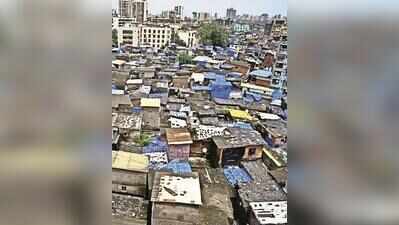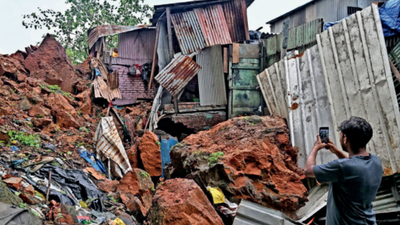
MUMBAI: In a worrying finding highlighted after the Aug 13 Ashok Nagar landslide that killed eight people and injured seven, a Geological Survey of India (GSI) reassessment of 32 highly vulnerable sites among Mumbai’s 249 identified landslide-prone locations has found that most remain vulnerable, with several requiring stronger or additional mitigation measures.The reassessment was conducted by GSI officers from May 4 to 14, with field visits in the presence of BMC officials. The exercise examined slope conditions, rock and soil distribution, drainage patterns, existing retaining and protection measures, proximity of settlements to slopes and the potential for slope failure during unprecedented heavy rainfallIt also covered four sites that were not part of the earlier assessment: Tulshet Pada and the area near the water pipeline in Bhandup (West), Netaji Nagar in Kurla, and Radha Krishna Temple, Khindi Pada, Bhandup (West).
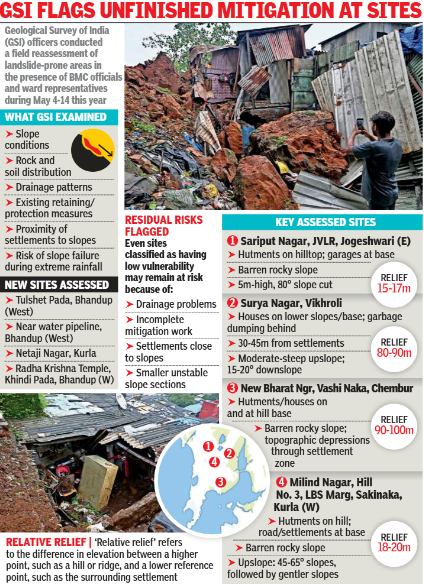
GSI flags unfinished mitigation at sites
According to the report, the majority of the 32 sites broadly remain in the same vulnerable condition recorded during the 2017-18 study. While the vulnerability status of one or two locations has improved following mitigation work, several sites still require modification or strengthening of existing protection measures, as well as additional remedial interventions. The report cautioned that even locations classified as having low vulnerability may carry residual risks because of drainage problems, incomplete mitigation work, settlements close to slopes and smaller unstable sections. GSI has recommended site-specific mitigation measures, regular pre-monsoon maintenance, cleaning of drainage channels and monitoring of vulnerable slope sections on priority. It has also recommended relocating highly exposed settlements wherever necessary.For some locations, the report has called for detailed geological and geotechnical investigations to assess slope stability and determine appropriate long-term stabilisation measures. These include: societies and habitations at Vikhroli Parksite; Ghatkopar (West); habitations on the eastern slope of the N-S trending hillock at Surya Nagar, Vikhroli (West); Amartara Mitra Mandal at Hanuman Tekadi, Bhandup (West); Rajiv Gandhi Nagar along the GMLR near Pravasi Industry in Goregaon; and New Bharat Nagar at Vashi Naka, Chembur.Additional municipal commissioner Avinash Dhakane, who recently wrote to GSI seeking a re-survey of Ashok Nagar, Hill No. 3, and preventive measures to mitigate the risk of another landslide or mishap, said, “Following the incident there have been repeated request being made to those living on the hill slopes to vacate from the site and when required police assistance is also being taken, however even if they move out they return back in two days. The BMC administration has taken cognisance of this and is working towards a concrete plan.”RTI activist Anil Galgali said the BMC must take firm action against people living in landslide-prone areas. “Living in such areas puts residents’ lives at risk and makes it extremely difficult for emergency agencies, including the NDRF, BMC and fire brigade, to respond swiftly during disasters. It took more than 36 hours to locate all those missing after the Ashok Nagar landslide. We need to ensure such situations are not repeated.”