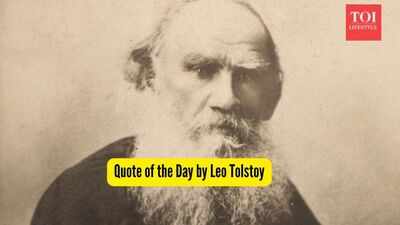
Leo Tolstoy was among the world’s greatest writers, philosophers and moral thinkers. His novels changed the face of literature for ever and his later writings on morality, nonviolence, love and spirituality influenced some of the greatest leaders in history including Mahatma Gandhi and Martin Luther King Jr. Tolstoy’s ideas still have a hold on us because they address timeless questions: What is a good life? Why do people suffer? What could make humans happier and kinder.Leo Tolstoy was born on September 9, 1828, at Yasnaya Polyana, the large estate of his family south of Moscow, Russia. He was from an aristocratic family of great wealth and social standing. Despite this privileged upbringing, tragedy struck him early in life. He was two when he lost his mother, and nine when he lost his father. Tolstoy and his siblings were raised by relatives, which made him aware of the fragility of life and the importance of family.Tolstoy was an intelligent, restless young man. He entered Kazan University to study law and Oriental languages but soon became bored with formal education and left without a degree. For several years he lived an excessive lifestyle, gambling heavily, accumulating debts, and searching for meaning in vain. The confusion of those years later enabled him to create deeply realistic characters struggling with temptation, guilt, ambition, and moral conflict.Military service and the birth of a writer In search of meaning, Tolstoy enlisted in the Russian army in the early 1850s. He served in the Caucasus and then fought in the Crimean War, notably at the Siege of Sevastopol. The brutalities of war shocked him to the core. Whereas many writers glorified the heroism of war, Tolstoy saw it as chaotic, senseless, and tragically profound.His experiences became the material for his first successful works, Childhood, Boyhood, and Youth, and then for the famous Sevastopol Sketches. With honest, psychologically profound, vivid descriptions, these writings immediately made him a major literary talent.Thanks to these masterpieces world literature changed. Tolstoy became known all over the world for two enormous novels which are still among the greatest ever written. The first was War and Peace, a sprawling epic set during Napoleon’s invasion of Russia. The novel was not all about battles but also other things like family links, politics, philosophy, history, love, ambition and the vagaries of human life. It had hundreds of memorable characters and it showed that history is not made only by great leaders but by the choices of ordinary people, the many choices.His second masterpiece, Anna Karenina, is widely considered to be one of the greatest novels ever written. It explores love, marriage, infidelity, family life, social expectations and the pursuit of happiness. Tolstoy, for example, demonstrated through his memorable characters that emotional truth is often more complex than society’s moral judgements. What separated Tolstoy from most novelists was his extraordinary penetration of human psychology. His characters are never completely good or bad. Instead they have the contradictions, fears, hopes and weaknesses that make up real people.A spiritual metamorphosisIn the midst of his literary success, wealth and worldwide admiration, Tolstoy had a profound existential crisis in his middle years. He began to ask himself “what is the meaning of life, the value of fame and the inevitability of death. The crisis led him to study philosophy, religion and Jesus’ teachings in depth.Gradually Tolstoy adopted a simple life of humility, manual labour, compassion, forgiveness and non-violence. He rejected materialism and said true religion was not in rituals but in ethical living. He also thought people ought to care for the poor, resist evil without violence, and live by conscience instead of social status. These ideas found expression in influential works such as The Kingdom of God Is Within You, which would go on to inspire social reformers around the globe.Influence: more than literatureTolstoy’s influence was by no means limited to the novel. His writings on non-violence had a profound influence on Mahatma Gandhi, who corresponded with Tolstoy in the last years of the writer’s life. Gandhi said Tolstoy’s ideas reinforced his faith in non-violent resistance, or satyagraha. Later, Martin Luther King Jr. was also inspired by the philosophy of non-violent resistance that Gandhi had developed . This creates an intellectual lineage in which Tolstoy ‘s moral philosophy indirectly influenced one of the most significant civil rights movements in modern history. Tolstoy inspired educators, pacifists, environmental thinkers and advocates of simple living. His idea of individual moral change being the basis for lasting social change is still widely discussed today.Later yearsAs Tolstoy aged, there were tensions in his family, in part because of his desire to renounce wealth and property. At the age of 82 in 1910 he left his home for peace and solitude. He fell ill during the journey and died of pneumonia at the small railway station of Astapovo on November 20, 1910. His funeral was not like those of the famous aristocrats. Thousands of ordinary people came to pay their respects. Readers felt a deep connection with him.Quote of the DayOne of the timeless quotes of Leo Tolstoy is, “If you make it a habit not to blame others, you will feel the growth of the ability to love in your soul, and you will see the growth of goodness in your life.” This quote is not just about the fear of criticism. It speaks to Tolstoy’s larger conviction that personal change starts when people stop looking outside themselves for someone to blame and start looking inside themselves for ways to grow.When things go wrong, human beings naturally look for explanations. When a relationship goes wrong people often blame their partner. When a project fails they blame their co-workers, the situation or luck. Others may be to blame for our troubles, but the habit of blaming others gradually moulds our character. Constant blame breeds resentment and anger and bitterness. It creates distance between people emotionally, because every interaction becomes an exercise in blame, not in understanding.The blame, Tolstoy says, prevents love from growing in the heart. Love needs understanding, patience, humility, and the ability to see the struggles of another. When people are always trying to find someone else to blame, they lose their capacity for compassion, because they are so focused on the faults of others that they are not paying attention to their own reactions. The quote also implies that goodness is not something external imposed on us. It is built by repeated habits. When we choose understanding over blame, forgiveness over resentment, responsibility over excuses, we are building up kindness, generosity, emotional maturity. And these decisions become part of your character through time.What Tolstoy is saying is that we should not rush to judgement, and that we should overlook injustice. Sometimes there is a need for accountability. His point is more subtle. Accountability is not blame. Accountability is about fixing things and making them better, while blame is about finding someone to punish. One creates relationships, the other destroys them often.This philosophy makes sense in our world today. Social media breeds snap judgements, public outrage, finger-pointing. Political debates are usually about finding villains, not about solving problems. Conflicts escalate inside families and workplaces too, as each side is more interested in proving the other wrong than understanding what went wrong.Tolstoy reminds us that the change begins with the individual choice. Instead of wondering ‘Who is to blame here?’ we can ask ‘What’s my wise response?’ Rather than focusing on the mistakes of another person, we can turn our attention to our own attitudes, reactions and responsibilities. Such self-reflection doesn’t make a person weak; in fact, it builds emotional resilience and healthier relationships.The quote also points to an important psychological truth. People who are always blaming others are often stuck in frustration because they believe their happiness depends on someone else’s behaviour. People who take ownership of their attitudes and their actions become empowered to take control of their lives again. This shift brings more peace, better relationships, more compassion.What Tolstoy says in the end is that change must come from within. He thought that societies only get better when people get better. Love, goodness and peace do not come from great pronouncements but from common habits. Make patience rather than anger, understanding rather than judgement and responsibility rather than blame. His words force us to realise that the way to a more gentle world starts not with changing others, but with changing ourselves.