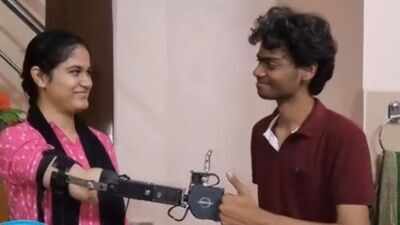
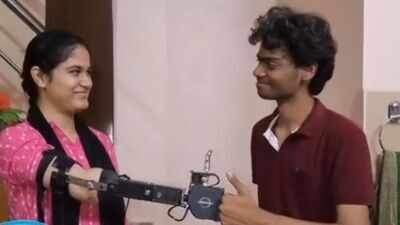
Ansh Mishra saw his friend Shaheen grow up without a hand. The girl had lost her hand in an accident at the tender age of six. For the next 15 years, she lived without a functional prosthetic. Years later, Ansh found an affordable solution and made her a bionic prosthetic hand.Meet Ansh, an 18-year-old innovator from Prayagraj, Uttar Pradesh, who had already been experimenting with robots since school. What began with scrap parts and a ₹2,000 school project eventually led him to develop BRHM, an affordable bionic prosthetic hand, with Shaheen becoming its first user.From scrap parts to roboticsAnsh was always fascinated with machines. According to his account, he started building things from scrap and became increasingly interested in robotics. By Class 8, he had built a semi-humanoid robot at home for just ₹2,000. Instead of spending his birthday money on gifts, he would ask his father for money to buy components for his experiments.Between Classes 10 and 12, Ansh reportedly won 19 science-exhibition awards. He used all his prize money and small grants to fund ambitious projects.Bionic prosthetic handShaheen lost her hand in an accident when she was six. The BRHM website says she went for around 15 years without access to a functional prosthetic hand. Ansh had known Shaheen since childhood and had seen the gap between what prosthetic technology could theoretically do and what was actually accessible to someone like his friend.He therefore decided to build something functional under an affordable price.15 prototypes, failures and then came the big win
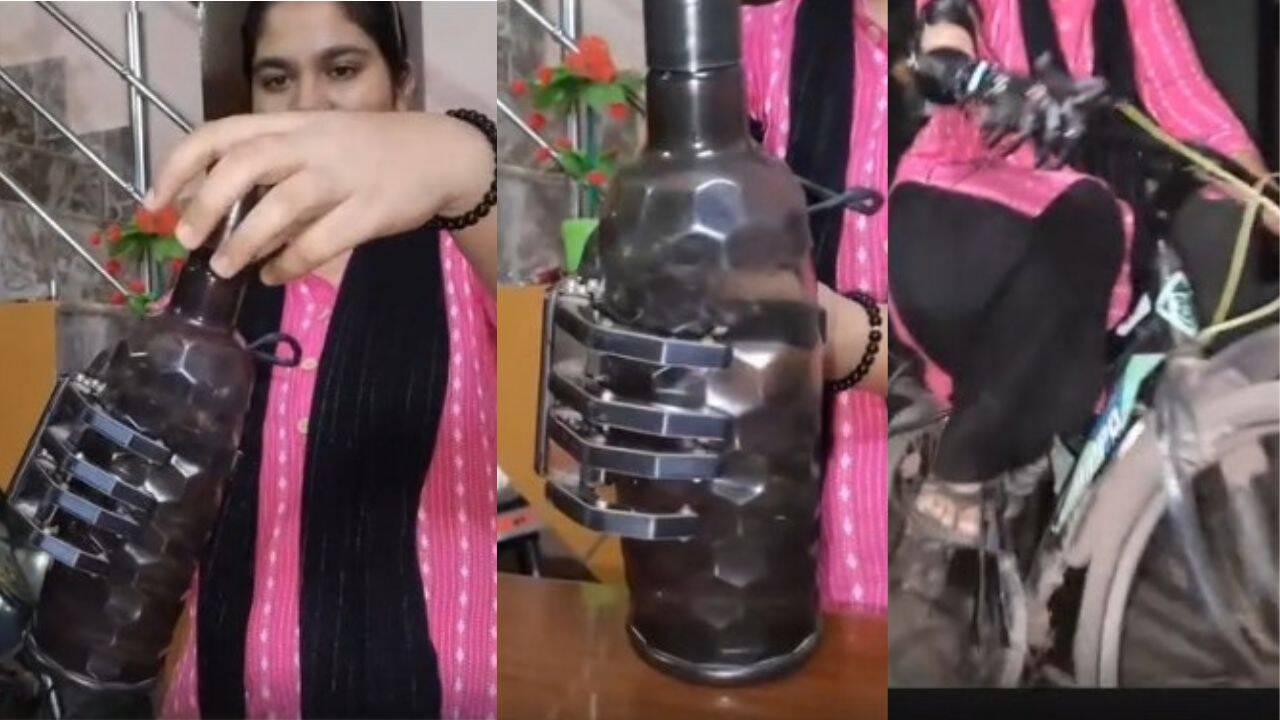
Ansh’s creation for his friend (Instagram/@shree108ansh)
Ansh began working on a bionic hand around 2023. He studies electronics, robotics, mechanical design and prosthetic technology. His early versions were not immediately successful and some were too expensive. Then there were some which were impractical.He created 15 prototypes, using each version to identify what needed to change. He sourced steel parts from Lucknow, 3D-printed components produced in-house and electronics and printed circuit boards manufactured domestically. Some specialised components, including motors, are imported.The result is BRHM’s Divine Organ HandAccording to BRHM, the prosthesis uses EMG signals (electrical signals associated with muscle activity) to control movement. These signals are detected through electrodes and translated into movements such as opening, closing and gripping. The system also incorporates haptic feedback, using vibration to give the wearer information about grip.The project is often described as “brain-controlled”, but the technical description on BRHM’s own website specifies EMG/brain-signal control.A hand designed under ₹1 lakhThe present design supports 12 grip patterns and is designed to lift up to 20 kg. Its stated target price is below ₹1 lakh, while Ansh has said the prototype’s production cost was around ₹40,000.And then Shaheen became the first user. She is now using the BRHM hand, according to the project website and reporting on the innovation. Demonstrations show her using it to hold objects and control her grip and even riding a bicycle.Best Young Innovator For Ansh, that personal connection gives the project a meaning that no award can quite replicate. His work has nevertheless attracted recognition. BRHM was among the teams selected in Samsung Solve for Tomorrow 2025. Ansh received the programme’s Best Young Innovator recognition.Today, BRHM is being developed with a much bigger ambition: to make advanced prosthetic technology more accessible to people who have traditionally been priced out of it.While his technology may be robotic, the idea behind it began with something human and empathy.