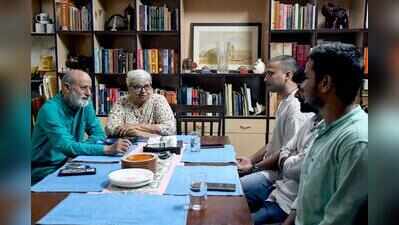
New Delhi: Hoping to better understand Gen Z, whose distinct vocabulary, modes of expression and political engagement have come under heightened public scrutiny following the recent CJP protests, a group of academics, intellectuals and civil society members Sunday opened the doors of their homes to students for informal conversations over tea and lunch.The initiative, organised under Academic Dialogue Forum, saw discussions hosted across 12 residences in Delhi-NCR, including those of historians Aditya and Mridula Mukherjee, scientist-poet Gauhar Raza and activist Shabnam Hashmi, St Stephen’s College professor Karen Gabriel, political scientist Rajeev Bhargava and social activist Syeda Hameed. Students pre-registered through a Google Form, indicating their preferred host and venue.The organisers described it as an attempt to reverse the usual dynamic between older and younger generations — not by advising students, but by listening to them at a time when debates around youth politics, campus dissent and the language of protest have intensified.At Raza and Hashmi’s Dwarka residence visited by TOI, the students, the hosts and their daughter gathered around the dining table, turning a Sunday lunch into an hours-long conversation. Most participants were students from JNU, though the discussions stretched well beyond campus politics.The conversation flowed from the recent protests to everyday concerns confronting the youth and what students described as persistent stereotypes portraying Gen Z as politically indifferent or disengaged.“We have all been part of activism as students ourselves, but we wanted to hear how this generation thinks, what drives it and what we can learn from it,” Raza said.Similar conversations unfolded at the homes of other hosts. At her Lajpat Nagar residence, Mridula Mukherjee said discussions centred on students’ experiences with the education system. “We also wanted to hear how they mobilised (for the CJP stir), what they experienced and what they learnt from it,” she said, adding that the students spoke about many challenges — ranging from travelling to faraway CUET examination centres and poor facilities at exam venues to the growing burden of appearing for multiple entrance exams.For many students, the gathering also became an opportunity to push back against prevailing perceptions of their generation. “We are politically and socially aware. We are rebellious and unconventional. We question things. Our methods may be different because social media has given us a different platform and language, but that should not be mistaken for apathy,” said Shubham, a JNU student from Begusarai.Another participant, Md Shajid, who also studies at JNU and comes from a farming family, said, “The recent protests were bound to happen because many young people feel disillusioned with conventional politics and political parties.”Hashmi said, “This generation goes beyond class, caste and creed. That is why the agitation could not easily be fragmented along these lines.”The organisers said similar interactions had been organised earlier, and the Forum plans to continue holding such conversations in the future.