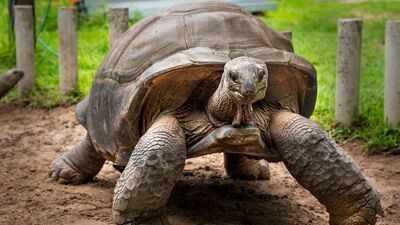
Madagascar began rebuilding a giant tortoise population in 2018 with only 12 founder animals at the Anjajavy Reserve in the north-west of the country. The small group faced an important challenge because a population started from so few animals can lose genetic diversity over time. But a study, published in Ecology and Evolution, found an encouraging early result. The first juveniles produced at Anjajavy carried a higher level of genetic variation than the founding group, largely because animals from two different genetic groups were breeding with each other.
How did Madagascar restart its giant tortoise population
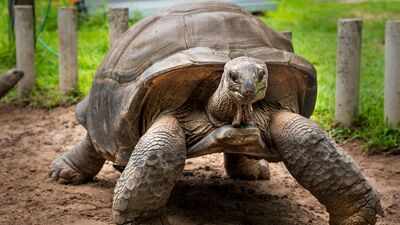
The rewilding project began in June 2018, when 12 sub-adult Aldabra giant tortoises were taken from a private animal dealer’s collection in Madagascar’s capital, Antananarivo. The group consisted of 5 males and 7 females. After quarantine, the tortoises were moved to a two-hectare natural savannah at the Anjajavy Reserve, where local Sakalava rangers monitored and protected them.The return was significant because giant tortoises had been absent from Madagascar for more than 600 years. The species used in the project, Aldabrachelys gigantea, still survives naturally on Aldabra island in the Seychelles. The study explains that the species is closely related to an extinct Malagasy giant tortoise and that its return represents a restoration of an animal that once belonged to Madagascar’s natural history.The tortoises began mating in 2019. Within five years of their release, more than 150 juveniles had been reported, marking the first giant tortoise births in Madagascar in roughly 600 years. The researchers wanted to know whether such a small founding population had enough genetic variation to support the new population over the long term.
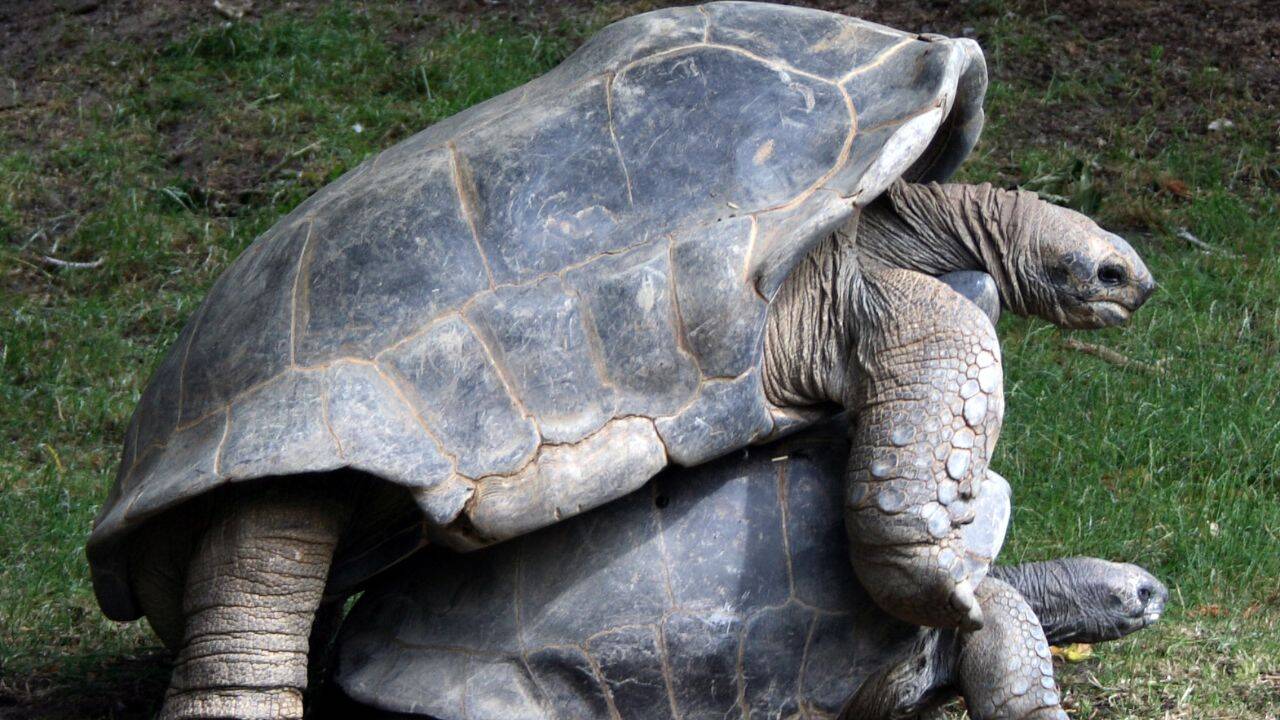
Mating Aldabra giant tortoises. Image Credit: Wikipedia
What did the genetic study reveal about the 12 founders
The researchers examined blood samples from all 12 founders and 50 juveniles. They also studied tortoises from Aldabra to determine where the Malagasy animals most likely came from and how much genetic variation they represented.For the analysis, the researchers examined 29 genetic markers. In simple terms, these markers act as signposts in DNA and allow scientists to compare individuals and identify differences between them. The team also examined a region linked to the major histocompatibility complex, or MHC, which is involved in the body’s immune response.The results showed that the Aldabra tortoises could be separated into two main genetic groups. Both groups were represented among the Anjajavy founders. Most of the Malagasy founders appeared to have come from Grande Terre, one of the main islands of Aldabra Atoll, with most showing links to its eastern or southern areas.The researchers found particularly little genetic difference between the Anjajavy population and tortoises from Grande Terre. This suggested that the founders were not a random genetic sample completely disconnected from the wider Aldabra population. Instead, the 12 animals brought together representatives of the two main genetic groups identified in the study.
The offspring displayed highest genetic variation
The most striking result came from the juveniles. Although the founding population was extremely small, the young tortoises showed higher observed heterozygosity than expected. Put simply, they carried more genetic variation because parents from different genetic groups were producing offspring together.Parentage testing provided a particularly clear picture. Researchers were able to identify a father for 49 of the 50 juveniles with more than 95% confidence.43 of the 50 juveniles came from a pairing between male number 6, who belonged to one genetic group, and three females from the other group. Those females were numbers 2, 9 and 11. The study states that this mixing of the two genetic groups helps explain the higher genetic variation found among the juveniles.This did not mean every founder contributed equally. Three males were regularly observed mating with adult females, but only male number 6 was clearly represented among the offspring examined. Five females also reproduced, but their contributions varied. Therefore the researchers found both an encouraging pattern of genetic mixing and a potential problem caused by the dominance of one male in reproduction.
Factors that could shape the tortoises’ future
The study makes clear that the early genetic result does not remove the challenges facing such a small population. If one male continues to father most of the young, future generations could become increasingly related to one another. That could increase the risk of inbreeding as the population grows.The researchers suggest allowing other adult males to contribute to reproduction. They specifically identify males 4, 7, 8 and 10 as animals that could be given greater reproductive opportunities. The study also notes that all founder animals had not yet fully reached sexual maturity when the research was conducted, meaning the current pattern could change as the population develops.The researchers also point to the long generation time of Aldabra giant tortoises, estimated at about 60 years. This means genetic changes caused by population management may take a long time to become visible.The study describes an expected population of about 500 tortoises by 2030 and around 2,000 by 2040. It also suggests exchanging juveniles with other rewilding projects in the western Indian Ocean to increase genetic mixing between populations.