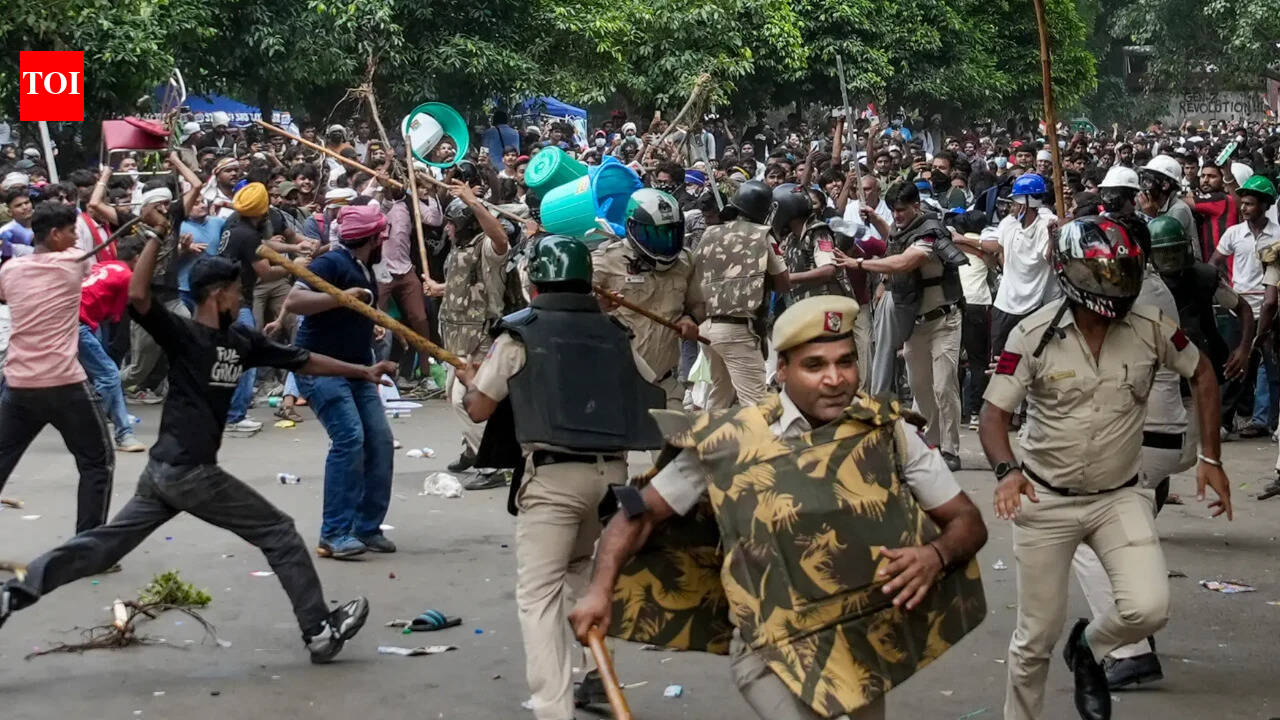

New Delhi: Days after the protest against the alleged NEET-UG paper leak was withdrawn, academicians, students and legal experts Saturday raised concerns about the alleged police action in several states.During a discussion on ‘The Movement Against Paper Leaks, State Repression and The Way Forward’, a panel comprising SC advocate Colin Gonsalves, journalist and human rights activist John Dayal and others alleged that after the protest was called off, Bihar witnessed 300-400 arrests. Many from the Muslim community were targeted in West Bengal and Assam, they claimed. In Delhi, they alleged, Zero FIRs were registered against several protesters.Questioning CJP’s acceptance of Centre’s verbal assurance, the speakers argued that while the agitation had achieved a “symbolic victory” by putting govt “on the back foot”, it was now “using loopholes to silence students and stifle another pushback”.Dayal said the decision to withdraw the agitation required wider consultation as the movement was led collectively by student unions. “The issue was never limited to a minister’s resignation. The law should not only prescribe what happens after a paper leak, but also how to prevent one,” he said, pointing out that “no gazetted officer has been arrested so far in the NEET-UG paper leak case”.Concerns were also raised over govt’s proposed action against protesters with “criminal antecedents”, despite the assurance that all the FIRs against them will be withdrawn. Speakers said the term could be used against student activists who had participated in earlier protests and were booked in minor cases, including for alleged violations of Section 144, potentially exposing them to fresh legal action.The panel also criticised the police response during the July 20 Sansad Chalo march. Questioning SC’s refusal to impose a blanket ban on pellet guns, Gonsalves said, “Pellet guns belong to a category of weapons known as kinetic impact projectiles… The risks include death or serious injury, penetration of the body, and a high risk of hitting innocent bystanders due to the inaccuracy of projectiles.”“For a weapon known for such indiscriminate aim, it has been widely banned by countries, including the UK. Weapons that are indiscriminate by nature are prohibited under Rule 71 of the International Committee of the Red Cross,” he added.DU professor N Sachin said while the movement was attempting to sustain its momentum, “the State is also regrouping to bring an onslaught of backlash”. Competing narratives, he said, were enabling govt to “police the language” around the protests, and now using the same to troll the students on social media platforms.“It is imperative for civil society to support the student-led movement. Their hesitancy in doing so is leaving space for the State and its machinery to redefine the narrative,” he added.