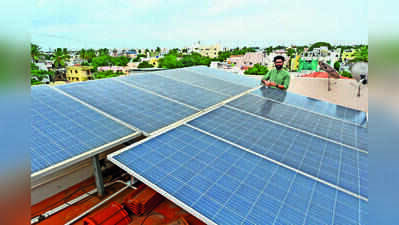
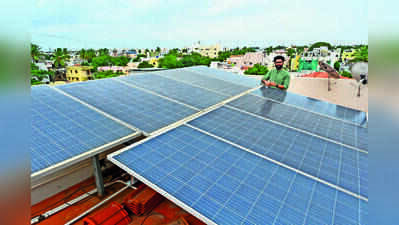
Tamil Nadu’s got an abundance of sunshine. But harnessing its power is apparently where the state is lacking.Two-and-a-half years after the Union govt launched the PM Surya Ghar rooftop solar scheme to turn one crore homes into miniature power stations, Tamil Nadu has yet to cross the one-lakh mark in installations. While Maharashtra, Gujarat and Uttar Pradesh have hit the five-lakh mark in rooftop solar connections, Tamil Nadu, despite favourable weather and strong solar potential, has recorded just 83,906 under the scheme launched in Feb 2024.Overall, Tamil Nadu has 1,003.34 MW of rooftop solar capacity, including systems set up by industries. Coimbatore tops the list of Tamil Nadu districts with the maximum rooftop solar installations under the PM Surya Ghar scheme, with 10,725 installations benefiting 15,889 households, followed by Chennai with 9,410 installations.The Surya Ghar scheme has so far benefitted 99,321 households as of July 20, according to Union new and renewable energy minister Pralhad Joshi in a written reply to questions from DMK MPs G Selvam of Kancheepuram and C N Annadurai of Tiruvannamalai.The scheme offers subsidies of up to `78,000 for domestic rooftop solar systems and is scheduled to end in March 2027. Under the programme, electricity generated from rooftop panels is fed into the grid, with consumers paying only for the additional power they draw under the net-metering system. A one-kilowatt rooftop solar system typically generates three to four units of electricity a day.Under the scheme, the power generated from rooftop solar systems will be injected into the grid, and consumers will be billed for units consumed beyond the injected power under the net-metering scheme. One kilowatt of rooftop solar system will generate three to four units a day.C Manivannan, an MNRE- and TNPDCL-certified rooftop solar vendor, says installations have gathered pace in Tamil Nadu recently after the Union govt announced that the scheme will end in March. “People did not take the subsidy part seriously so far,” he says. “Unlike some states, Tamil Nadu does not offer additional subsidies. So the demand was not strong. But after the Union govt announced that the scheme will end, we have more takers.”Manivannan adds that households paying electricity bills of more than `3,000 should consider installing rooftop solar systems. TNPDCL officials say they have appointed nodal officers for all regions to make the application process easier. Feasibility approval is automated for systems up to 10 kW.SUBSIDY STRUCTURE`30,000 per kW up to 2 kW`78,000 for capacities 3 kW and aboveApplicants can register through registration.pmsuryaghar.gov.in; mobile app ‘PM-Surya Ghar’; solarrooftop.gov.inTNPDCL levies an additional network charges `0.32 per unit for every unit injected into the grid for rooftop solar system with a capacity upto 10kWUnion govt has given financial outlay of `75,021 crore to implement scheme. Tamil Nadu has received `576.66 crore as rooftop solar subsidy to install a cumulative capacity of 303.63 MW so far