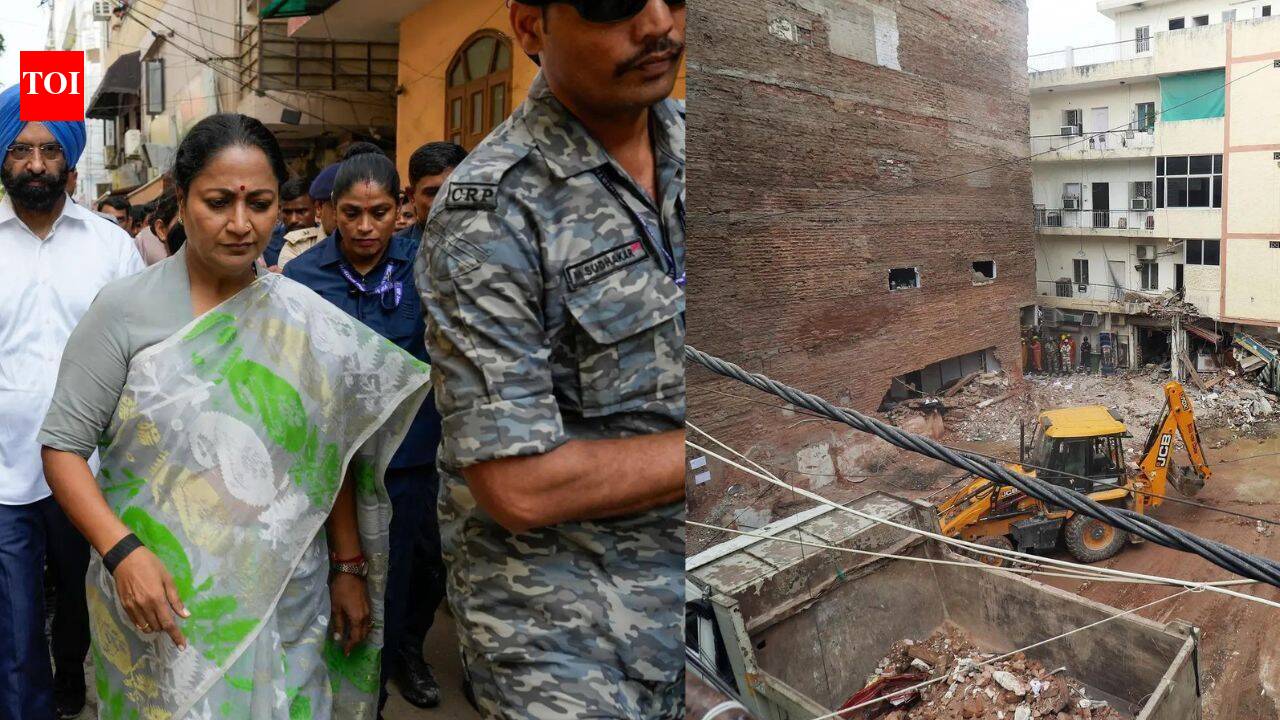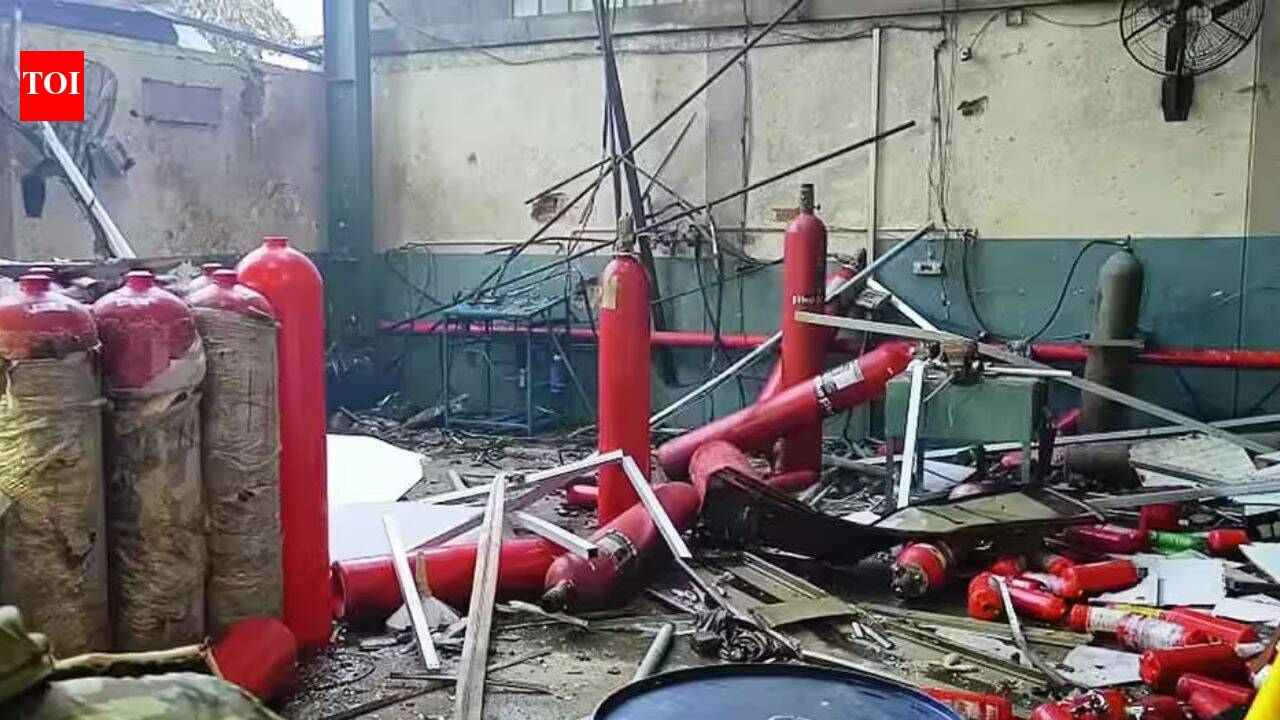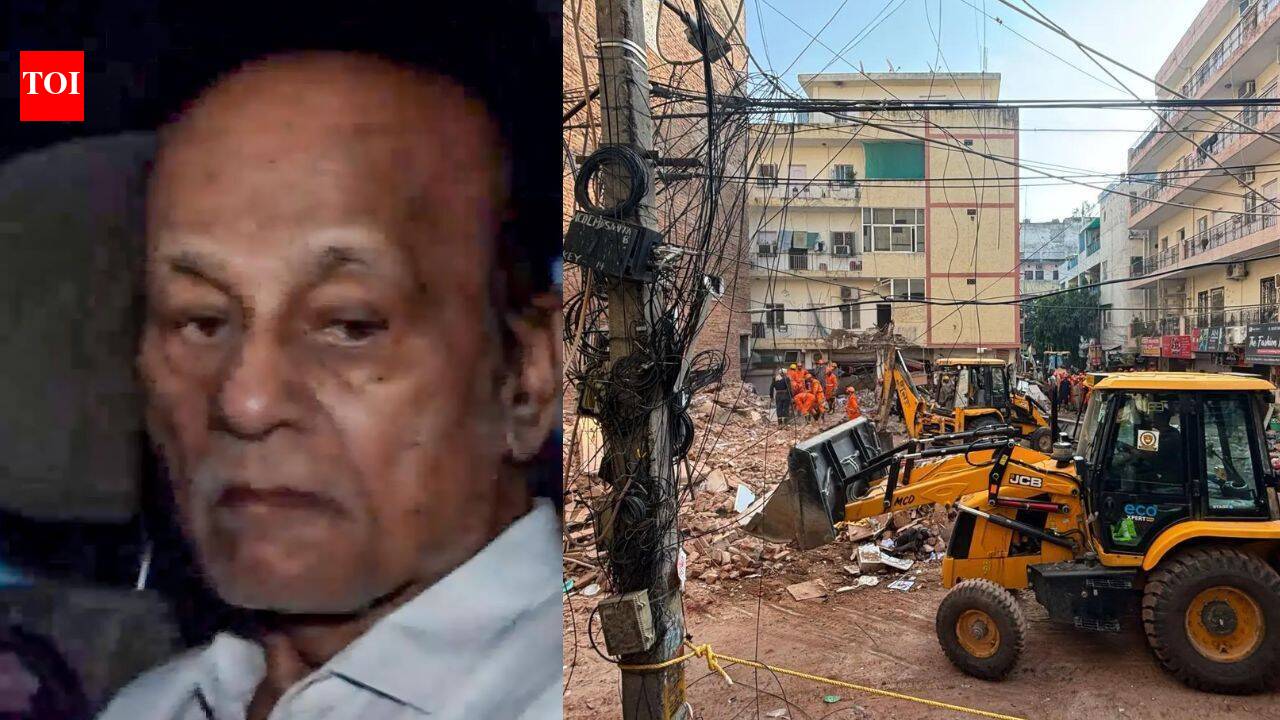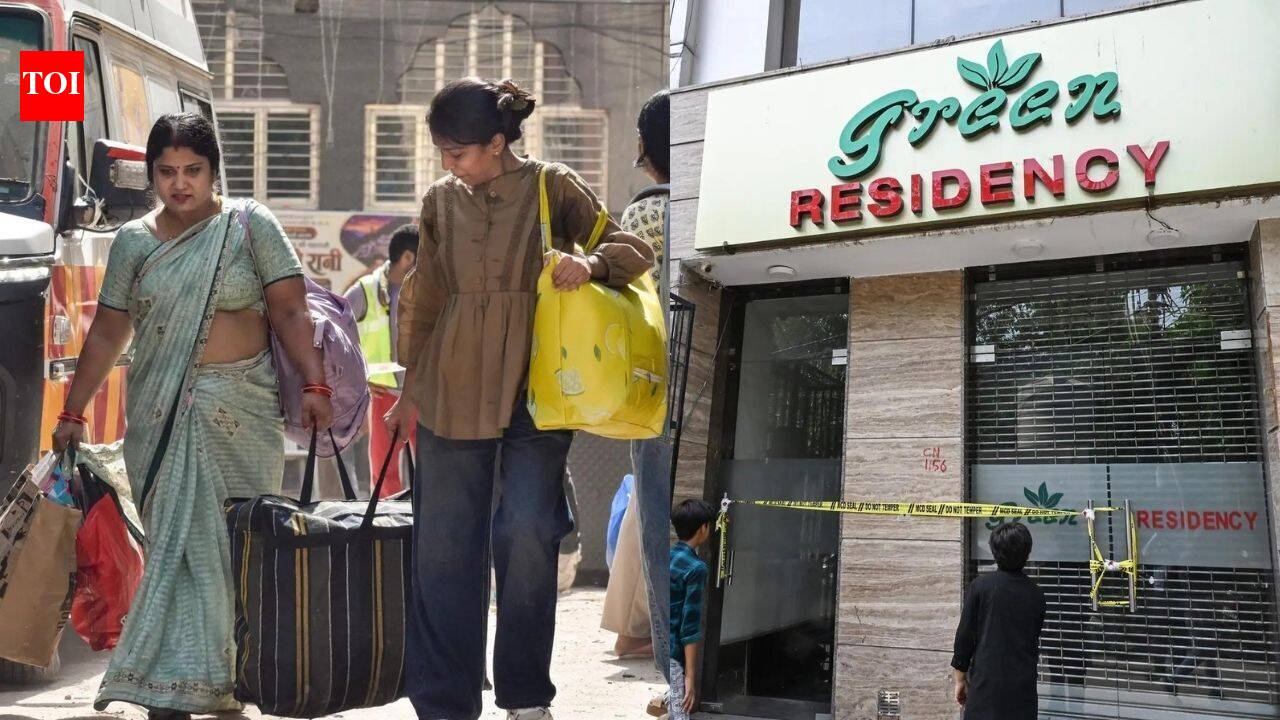
NEW DELHI: In Hauz Rani, foreign faces have disappeared from the narrow lanes. In Satya Niketan, students are packing their bags.The foreign faces that once filled the narrow lanes around the neighbourhood’s budget B&Bs have largely disappeared. Relatives of medical tourists would stop at tea stalls and shops, buy bottled water and soft drinks, and make their way to nearby hospitals. Today, shopkeepers mostly see familiar faces.A few kilometres away, in Satya Niketan, the change is visible in another way.There, it is suitcases, backpacks and bulging bags that have become a common sight. Students who came to Delhi for college are now leaving the neighbourhood, calling parents and looking for safer accommodation. Some have moved to friends’ and relatives’ homes; others have spent nights inside college campuses after being forced out of their PGs.Different tragedies. Different neighbourhoods. But the fear they have left behind is strikingly similar.In Hauz Rani, it was fire that exposed what happens when commercial ambition outgrows safety. In Satya Niketan, it was a building collapse that turned a familiar student neighbourhood into a rescue site.And in both places, the tragedy did not end when the flames were extinguished or the rubble was cleared.It lingered in the buildings around them.In Hauz Rani, three months after the June 3 fire at Flourish Stay B&B killed 23 people, including 14 foreign nationals, the market is slowly returning to life. Police barricades that had kept people away from the site were removed, bringing back some of the footfall businesses had lost.For Arman Mansuri, whose mattress shop sits just metres from the charred building, normal work has finally begun to return. On the morning of the fire, he and his father, Riyazuddin, had piled mattresses beneath the burning building to help people escaping from their rooms.“At that moment, we had no time to think,” Arman said.The family eventually recovered the losses from the two days when business came to a standstill, after people sent money online in appreciation of their efforts.But the neighbourhood’s scars remain.A building opposite the B&B was found deserted, with flats locked from outside. A passerby said residents had left because of the smoke and had not returned. Autorickshaws still rush through the lanes, but several homestays and B&Bs that once catered to medical tourists were sealed after the fire.“When everything is closed, who will want to come here?” asked auto driver Musharat Ali.The investigation into the fire has since laid bare how vulnerable the establishment was.The B&B was licensed for only six rooms but was allegedly operating at least 25 across four floors, a basement and an improvised rooftop facility. The property had been illegally expanded, did not have a fire NOC and had no emergency fire exit.According to the Delhi Police chargesheet, the fire began in the kitchen after an oil fryer was allegedly left unattended. Dense smoke then travelled up the central staircase, trapping guests on the upper floors.The first distress call came at 8.48am. Firefighters reached the spot seven minutes later but faced difficulty navigating the narrow, congested lanes. Between 9am and 11.30am, they rescued 48 people. By noon, the fire was under control.Twenty-three people, however, were dead.The chargesheet names B&B owner Lovkesh Bajaj, manager-cum-accountant Jay Mishra and cook Kesar Negi as accused. Investigators alleged that basic safety requirements had been disregarded while the property was expanded to maximise commercial returns.In Satya Niketan, the questions came from a different direction.The collapse of a five-storey PG killed seven people, including five students and two labourers. The building was around 40-50 years old, according to sources, and additional floors had been added over time. Construction work had also been underway at the property for about two weeks before the collapse.The aftermath has been especially unsettling for students because the danger did not appear confined to one building.Students said neighbouring structures had poor ventilation, dangerous staircases and inadequate fire-safety provisions. One adjoining building was being vacated for demolition, while others were identified as unsafe.For some students, the decision to leave was immediate.Shakib helped a relative empty her room in a building next to the collapsed structure. She had been inside when the collapse happened. Her hands were shaking when the family arrived.“She won’t be able to live here anymore,” he said.Others have faced the same dilemma: stay and risk their safety, or leave and absorb the additional cost.Rahul, a third-year student, pays Rs 8,000 for his accommodation — already on the lower side for Delhi. His room has neither ventilation nor air conditioning. His parents in Dehradun now want him to move.For students arriving from other states, the problem is bigger than finding another room.Delhi University does not have enough hostel accommodation to absorb the thousands who need it. Around 71,600 new undergraduate students were admitted in 2026-27, while the university has around 7,000 hostel seats, according to figures cited by officials.That shortage has created a vast private accommodation ecosystem around college clusters such as Satya Niketan.And that is where the two tragedies begin to converge.In Hauz Rani, an accommodation facility catering to people who needed cheap lodging had allegedly expanded far beyond what its licence permitted.In Satya Niketan, students dependent on affordable private PGs are now questioning whether the buildings available to them are safe at all.The choices in both places were shaped by the same urban pressures: location, affordability and demand.Safety came later.The Satya Niketan collapse has already pushed that question into the political and administrative arena. Students have demanded a dedicated web portal where PG owners would have to disclose rents, facilities, meal plans and structural-safety details. They have also sought pre-monsoon audits, structural certifications and regular fire-safety inspections.Urban development minister Ashish Sood has promised comprehensive legislation and regulations for PG accommodation within two months. The proposed framework is expected to include mandatory licences, zone-wise rent bands, structural and fire-safety audits and a central portal listing rents, amenities and compliance details.But regulation comes after the fear has already spread.On Monday, classrooms and other facilities in Delhi University colleges became temporary shelters. Mattresses were placed in health centres, staff rooms and guest rooms. Colleges arranged food and counselling, while student volunteers searched for classmates who might have been living in the collapsed building.Some students were not just displaced from one building. They were displaced from the idea that the neighbourhood they had chosen could be home.That unease is perhaps the most enduring legacy of both tragedies.Hauz Rani’s shopkeepers are waiting for their customers to return. Satya Niketan’s students are deciding whether to return at all.One neighbourhood is slowly trying to reopen its streets.The other is learning to look at every neighbouring building differently.The fires, collapses and rescue operations may have lasted hours. The consequences are likely to last much longer — in the empty flats of Hauz Rani, in the packed bags of Satya Niketan, and in a city where a cheap room close to a hospital or college can sometimes come with a question no tenant should have to ask: Is the building safe enough to sleep in?