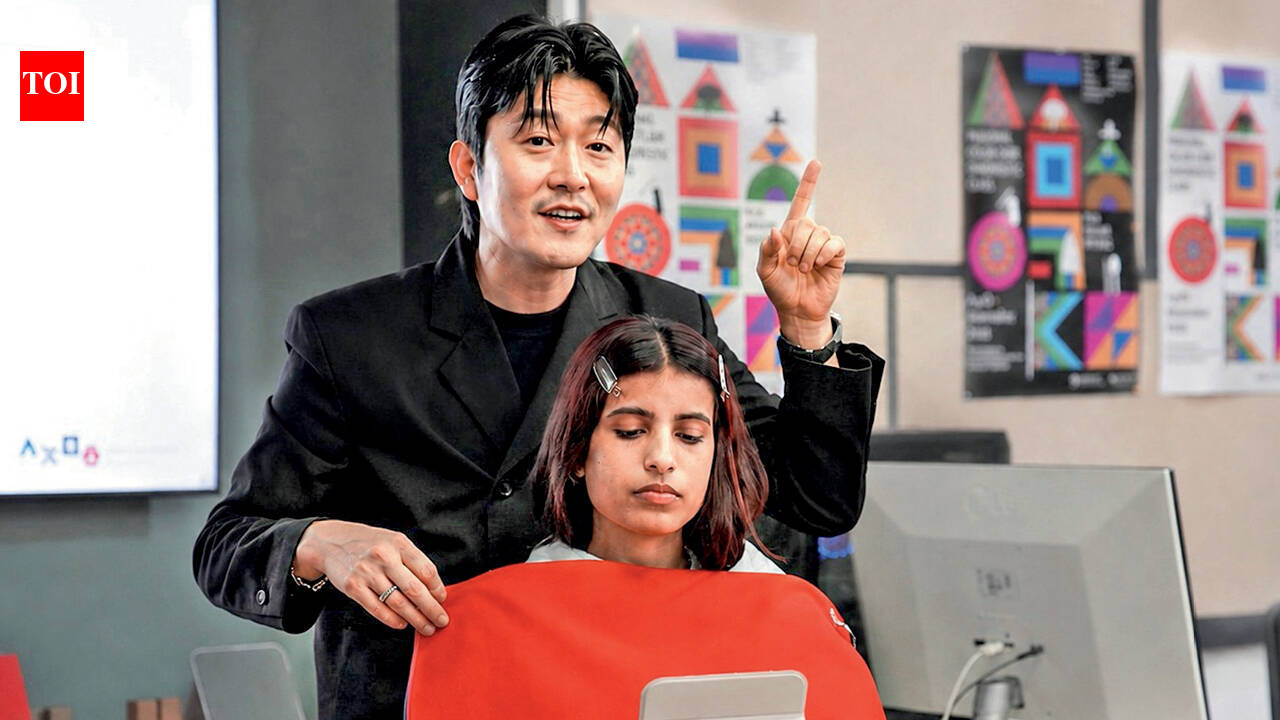
Shopping for skincare, getting a hair spa treatment, filming a convenience store reel and booking a Personal Colour Analysis session are among the experiences many travellers look forward to when visiting South Korea.To introduce Indian Hallyu fans to the trend, the King Sejong Institute at the Korean Cultural Centre India recently organised a three-day K-Beauty and K-Trend Makeup Masterclass, led by Korean beauty expert Lee Sung Min and organised by the Korean Ministry of Culture, Sports and Tourism. One of the highlights shared at the event? A hands-on Personal Colour Analysis session.‘Find a colour that is in harmony with the skin tone, hair, and pupil colours’Lee Sung Min explained that personal colour is determined by an individual’s skin, hair and eye pigments. By analysing colour, brightness and saturation, experts identify shades that work best with a person’s natural features. “If a warm tone suits you, your face looks healthy, and if it doesn’t match well, your face looks yellow or dark. If the cool tone suits you, your face looks bright and clean, and if it doesn’t suit you, you look pale and sick,” he shares.Based on the results, recommendations are made for clothing, hair colour and makeup. “Personal colour is not a scientifically established medical or biological diagnosis. It is appropriate to understand it as a styling method to find a colour that is in harmony with the skin tone, hair, and pupil colours. Refer to the results, but you don’t have to accept them as rules that limit your taste or personality,” he said.‘Along with K-pop and K-dramas, K-beauty naturally gained popularity as interest in Korean culture grew’While Personal Colour Analysis initially focused on recommending hair colours, makeup and clothing, it has expanded to include eye-wear, accessories and even fashion styles. “Personal colour is to find the colour that suits you, not to determine the colour that you should not wear. Even colours that are not in the diagnosis result can be sufficiently stylish, depending on the material, saturation, brightness, accessories, or makeup combination,” Lee adds.Speaking about the growing popularity of K-Beauty, Lee said the trend has grown alongside the global success of Korean entertainment. He explained, “I think the starting point of it was K-Pop before K-Dramas. Along with K-pop and K-dramas, K-beauty naturally gained popularity as interest in Korean culture grew, and the skin care or makeup methods of Korean actors and idols often stimulate consumers’ curiosity. Korean cosmetics have a strong brand image that focuses on skin care rather than makeup.”The beauty expert further added, “It seems that everyday care concepts such as moisturising, UV protection, and skin barrier management are also attractive to young consumers in India. As social media and beauty influencers easily share product usage and reviews, barriers to entry have been lowered, and access to overseas brands has also improved significantly through e-commerce platforms.”