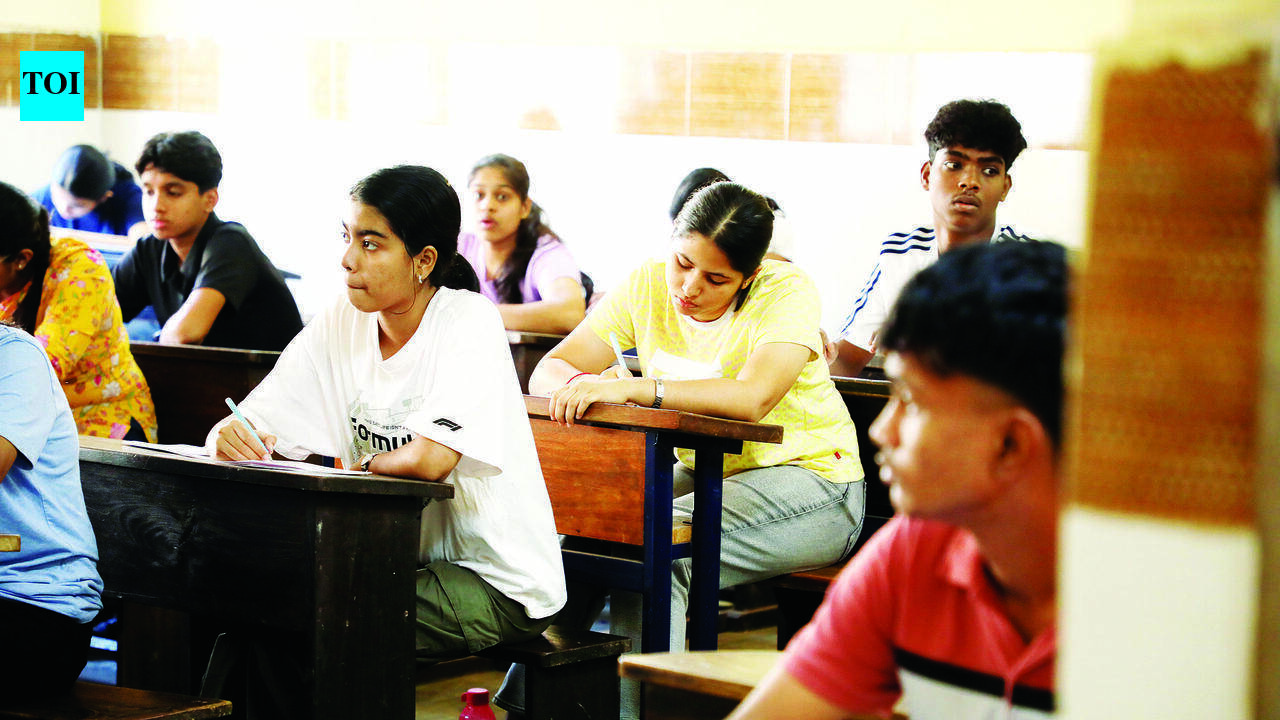

Panaji: Goa will pilot the School Quality Assessment and Assurance Framework (SQAAF) in select secondary schools from the current academic year, with schools voluntarily assessing themselves against 320 parameters to identify gaps and improve standards.The state has readied a dedicated portal as required under the National Education Policy (NEP), while a second orientation programme for schools will be held this week.“One workshop was already held earlier for school heads and many of them have shown willingness to carry out SQAAF for their institute. These schools will voluntarily participate in the self-evaluation. The work will be led in each taluka by the Taluka Level School Complex Committee. They will feed the data on the portal created for the purpose and we will capture the data and place it before the State School Standards Setting Authority headed by the state education secretary,” said Goa Board of Secondary and Higher Secondary Education chairperson Bhagirath Shetye.The authority will comprise the Goa Board chairperson, director of education and director of the Goa State Council for Educational Research and Training. It will analyse the data and guide schools in addressing shortcomings while helping high-performing schools identify their strengths and benchmark themselves against peers.“The SQAAF covers 320 parameters from curriculum to human resources to infrastructure to student outcome and others. Its purpose is quality assurance for schools. Based on the data feed, schools will be helped to cover the areas in which they are lacking, while those doing well will also get to know their strengths and how they stand against peers,” Shetye said.SQAAF focuses on three functions—self-assessment and reflection, strategic improvement planning and public disclosure of performance.The assessment will cover five broad domains– administration, including planning, resource management, safety and teacher development; curriculum, including digital literacy, arts and sports, indigenous knowledge, multilingual instruction and mental health; and assessment practices, including competency-based learning, formative assessment, Holistic Progress Cards and community-linked projects.Infrastructure and inclusiveness will also be assessed, including smart classrooms, green buildings, accessible facilities, support for students with disabilities, gender and cultural sensitivity, tribal engagement, dropout prevention and talent development.It will cover five domains, the first being administration, which will cover strategic planning and resource management to safety protocols and teacher development. Curriculum domain will check for digital literacy, arts and sports integration, indigenous wisdom, multilingual instruction, and mental health support.The domain of assessment will look at competency-based and formative approaches, Holistic Progress Cards, credit systems, and community-linked projects.Infrastructure such as smart classrooms, green buildings, vibrant libraries, and accessible facilities will be part of the assessment.It will also check for inclusiveness, such as specialised support for learners with disabilities, gender and cultural sensitivity, tribal engagement, dropout prevention, and talent nurture.