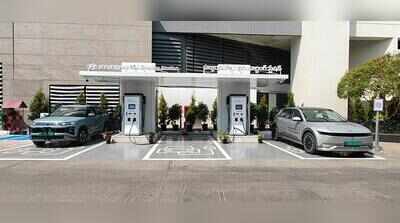
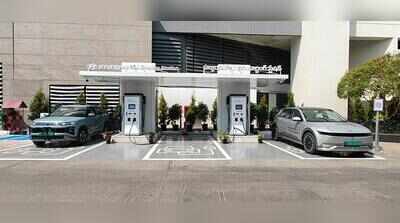
Chennai: Hyundai Motor India Ltd (HMIL) is laying the groundwork for its next phase of growth in the EV market, where competition is gradually shifting towards affordable, mass-market models. The company is expanding its charging infrastructure and deepening localisation of components ahead of the launch of its first mass-market electric SUV, slated for this fiscal.The company has so far focused on premium EVs, with the sub-Rs 15 lakh mass-market segment remaining a gap in its India portfolio. Most of its key rivals already have offerings in this segment, with Maruti Suzuki being the latest entrant. Hyundai has sold about 3,000 EVs in India so far this calendar year.Hyundai’s first dedicated mass-market EV—a locally developed compact SUV—is slated for launch this fiscal. The launch is expected to precede the implementation of the CAFE III emission norms.As part of its ecosystem-led strategy, Hyundai on Monday announced that EV users can now access more than 30,000 charging points across India through its myHyundai app. The company said the network offers charging access within an average radius of 25 km across the country, including major highway corridors such as Chennai-Bengaluru, Mumbai-Pune-Bengaluru and Delhi-Gurugram-Jaipur.Complementing the partner network, Hyundai is also expanding its own charging footprint. It currently operates 183 DC fast-charging stations across 105 cities and plans to increase this to 600 stations by 2030 across cities, highways and dealerships. The chargers, with capacities ranging from 60 KW to 240 KW, are also available to EV owners of other brands.“With charging infrastructure being a key catalyst for EV adoption in India, HMIL is committed to creating an ecosystem that makes electric mobility practical, convenient and accessible to all,” said Tarun Garg, managing director and CEO, HMIL.The upcoming mass-market EV will roll out from Hyundai’s Chennai plant, as the company steps up its localisation efforts. Hyundai plans to increase localisation across both electric vehicles and internal combustion engine (ICE) vehicles from the current 82% to 90% over the next five to six years.