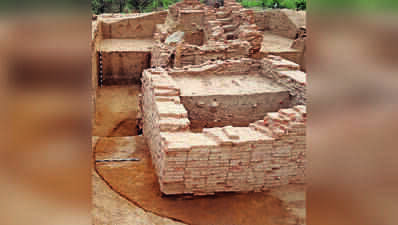
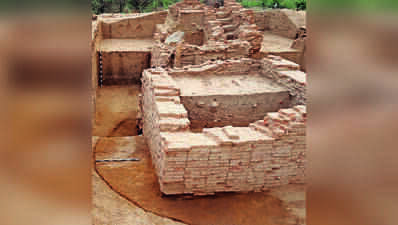
Chennai: A little more than 10 years after Archaeological Survey of India (ASI) found the largest-ever brick structure from the early historic period (Sangam age) at Keeladi in Tamil Nadu dated to 2,500 years, excavators from the state archaeology department have found another major brick structure, a square shaped stepwell considered to be from the same period, at Karivalamvandanallur near Tenkasi.Archaeologists say this is the first-ever brick stepwell from the early historic period unearthed in Tamil Nadu. The well measures 4m X 4m, with steps in stone descending into it.K Rajan, advisor to Tamil Nadu state department of archaeology says the newly discovered structure denotes water management of yore. “In the 1930s, Roman gold coins were found in this site. It is situated on an ancient trade route from Madurai to the west coast via tha Shencottah pass,” he said.Based on the size and style of the bricks which were consistent with those found at other sites such as Keeladi, Alagankulam and Poompuhar, archaeologists say this structure could belong to the Sangam Age. The bricks measure 40cm x 20cm with 7cm thickness.“During the excavation, we found water stains on the inner side of the well which shows the water table was high. We have gone up to a depth of 2m. We will know the full depth of the well after further excavations,” said V P Yathees Kumar, excavation director of the site.The steps were built of stone; walls are of bricks. “The attrition on the step stone indicates it was used for a long period. The steps were originating from outside of the well leading to the mid part of the well,” he said.The ancient people built the walls in an interlocking fashion to make it stronger and used clay as binding material. Archaeologists said the stepwell was built on top of the paleochannel, and might have functioned as a water source during the summer months.The site which is situated on the right banks of the Vaippar river near Malaiyadipatti in Tenkasi district also yielded high tin bronze objects, iron objects, terracotta figurines, hopscotches used for games, glass beads and microlithic tools.Among other interesting finds is a red-slipped pot, which could belong to the Iron Age, decorated with a series of peacocks painted on its shoulder and covered with a lid. “This suggests it may have contained skeletal remains .Molar and premolar teeth found outside the pot along with black and red ware vessel confirms it could be the burial urn. They also found graffiti marks on the pots,” Yathees Kumar said.The excavators also found a piece of high-tin bronze. “Archaeological sites associated with urn burials including Adichanallur, Sivagalai, Sasthapuram, Tirumalapuram and Sulapuram had high-tin bronze. This is the sixth site which yielded high-tin bronze in Tamil Nadu,” Rajan said.Archaeologists also found iron slogs with iron ore of hematite which pointed to the iron production centre. It could have evolved from the microlithic period to the iron age to early historic period.