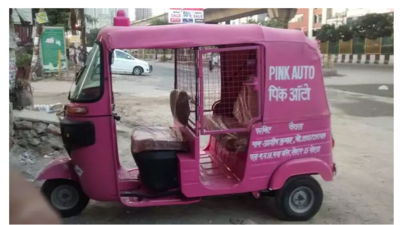
Pune: State govt has doubled the subsidy under its pink e-auto scheme from 20% to 40%, giving a boost to its initiative to improve women’s livelihoods and promote electric mobility. NGOs working with beneficiaries, however, said the higher subsidy alone will not ensure the scheme’s success unless procedural bottlenecks are addressed.A govt resolution (GR) issued recently stated that women who purchased pink e-rickshaws under the earlier 20% subsidy will also be eligible for the additional 20% assistance to help repay vehicle loans. Under the revised funding pattern, beneficiaries will have to contribute at least 10% of the vehicle cost, while the remaining amount can be financed through bank loans or an interest-free deferred payment facility offered by the vehicle supplier. Officials from the women and child development (WCD) department said the enhanced subsidy would make the scheme more accessible to women.WCD minister Aditi Tatkare, during the recently concluded legislative assembly session, reaffirmed the govt’s commitment to deploy 5,000 pink e-autos across Maharashtra by simplifying the application process before the end of the current financial year. However, the scheme has received a poor response so far.The enhanced subsidy comes even as the scheme has struggled to gain traction. Pune district, which was allotted a target of around 4,000 pink e-autos, has seen only 17 women complete the application process and begin operations since the scheme was launched two years ago.Women who have applied for pink e-autos told TOI that the process remains cumbersome. “Though the minister said the application process has been simplified, applicants continue to face several hurdles,” said one beneficiary who is waiting for her application to be approved.Beneficiaries said financial assistance alone would not guarantee sustainable livelihoods. They sought faster technical support for vehicle breakdowns and maintenance issues, along with stronger post-delivery support.Pune-based NGOs Parisar and Asar Social Impact Advisors, which have worked with applicants, WCD department and implementing agency Kinetic Green, said implementation gaps continue to discourage prospective beneficiaries.The NGOs, based on field engagement and an independent beneficiary survey in Pune, identified several hurdles, including a lack of clarity over eligibility criteria and documentation, delays in processing applications, difficulties in arranging the beneficiary contribution and securing finance, and concerns over the commercial viability of operating the vehicles. They have recommended simplifying the application process, creating district-level facilitation and grievance redressal mechanisms, improving coordination among implementing agencies, financial institutions and vehicle manufacturers, reviewing vehicle specifications based on user feedback, strengthening financial support and monitoring beneficiaries after vehicle delivery to help ensure sustainable incomes.“The increase in subsidy is a welcome step and has the potential to improve uptake significantly, provided it is accompanied by timely implementation and adequate institutional support. The visibility of the scheme is still low, and awareness needs to be increased,” said Sharmila Deo, senior programme associate at Parisar.She said Pune Metro could support the initiative by providing dedicated parking and pick-up spaces for pink e-autos at Metro stations. She also called for better coordination among the transport department, traffic police and other agencies to ensure quicker licensing, vehicle registration, permit approvals and route planning, besides sensitising male autorickshaw drivers to reduce workplace hostility.Vilas Gite, programme associate at Asar, said beneficiaries had also raised concerns over vehicle speed, ride comfort and passenger acceptance.