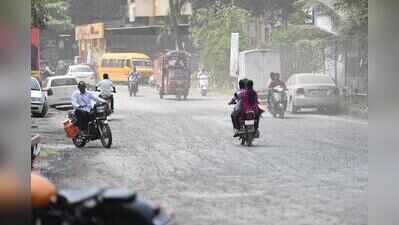

Pune: The city recorded its most intense rainfall spell of this monsoon over the 36 hours till 8.30pm on Saturday, with Chinchwad receiving topping the rain chart at 56.5mm, followed by NDA (53mm), Lohegaon (48.6mm) and Shivajinagar (45.1mm).This came after the city logged its highest 24-hour rainfall of the season till 8.30am on Saturday, with NDA at 33mm, followed by Pashan (31.4mm), Shivajinagar (30.5mm), Lohegaon (29 mm), Chinchwad (19.5 mm) and Lavale (10.5 mm), IMD data showed.In western Maharashtra, cloudburst-like rainfall lashed parts of Satara district, with Mahabaleshwar recording 233mm, Navaja 210mm and the Koyna region 189mm in a 24-hour period ending 8.30 am on Saturday. The incessant rain disrupted life and triggered landslides, road closures and rising river levels across Satara, Kolhapur, Sangli and Solapur districts.India Meteorological Department (IMD) scientist SD Sanap said similar weather conditions were expected to continue over Pune city for at least the next 24 hours. “Thereafter, as the low-pressure system moves westwards, rainfall intensity is likely to reduce, though rain activity will continue,” Sanap told TOI.Among several stations that recorded sharp showers between 8.30am and 5.30pm on Saturday, Nimgiri topped the chart at 77mm, followed by Girivan (49mm), Narayangaon (36mm), Malin (30mm), Dapodi (23mm), Rajgurunagar (22.5mm) and Dudulgaon (18mm).Sanap said rainfall was widespread across Pune district, though its intensity varied across locations. “It is not that some places are completely dry. Rainfall is widespread, but there are differences in intensity. The city generally received lower rainfall than some of the outlying stations, which recorded heavier showers,” the IMD scientist said.The Western Ghats continued to receive very heavy rainfall. Bhira recorded the highest rainfall at 243mm till Saturday morning, followed by Tamhini (200mm), Koyna-Pophali (178mm), Dawdi (169mm), Shirgaon (165mm), Dungerwadi (162mm), Ambone (140mm) and Lonavla (136mm), among several locations that recorded triple-digit rainfall during the period.Heavy rainfall also drenched Kolhapur district, where more than 100mm rain was recorded in 13 dam catchment areas. The Tulsi dam catchment in Radhanagari tehsil received 200mm rainfall in the 24 hours.Meanwhile, a landslide in Ambenali ghat forced authorities to suspend traffic on the Mahabaleshwar-Poladpur route till July 6. “The movement of light vehicles through Ambenali ghat will be entirely suspended whenever there is an ‘orange’ or ‘red’ alert in the district. Also, orders have been issued to halt all night traffic on this route during monsoon. During this period, traffic will be diverted via Mangaon-Tamhini (towards Pune-Satara) and Poladpur-Chiplun-Patan-Satara-Kolhapur route,” said Raigad collector Kishan Javale.In Satara’s Mahabaleshwar taluka, a portion of Navali village subsided due to heavy rainfall, with mud, debris and uprooted trees spilling onto a road. Authorities shifted residents from nearby houses to safer locations while debris-clearing operations continued.“There are four houses near the site; one is completely unoccupied. Residents of the other three houses are being relocated to a safe location. The administration is taking action while closely monitoring the situation. There is no danger to the village,” said tehsildar Sachin Mhaske.Landslides also partially affected the Karul and Amba ghat sections in Kolhapur and Ratnagiri districts, though one-way traffic towards Konkan was later restored.In Kolhapur city, incessant rainfall led to waterlogging, uprooted trees and traffic snarls across several areas. The Panchaganga river rose to 25.3feet at the Rajaram barrage by 8pm, while 20 barrages across the district were submerged, affecting local connectivity.Amid the threat of floods, the National Disaster Response Force (NDRF) teams have been deployed in Kolhapur and Sangli districts for the monsoon. An NDRF team also conducted disaster preparedness and boat training programmes for villagers in Panhala taluka on Saturday.The IMD issued a red alert for the ghat areas of Satara district and an orange alert for the ghat areas of Kolhapur district for Sunday.