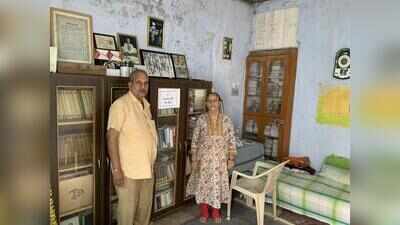

Ahmedabad: A phone call to a social worker in the Science City area last week captured a poignant crisis of urban living: a death in the family, and no one to help. The caller, a Navrangpura resident, had moved from Mumbai and had neither friends nor kin in the city to perform the last rites for a relative.“He Googled for people who could help, and got my contact. I assured him of all help after paperwork with police and hospital was completed,” recounts Rohit Patel. It was the 61st instance of Patel helping someone through their last journey.As Ahmedabad draws people from across India and abroad, sociologists say the city is also producing more moments when death collides with isolation. Even basic tasks — finding four people to carry the bier, arranging a priest at short notice, and navigating police and hospital procedures — can become unmanageable for someone grieving and alone.That is when Good Samaritans and community groups step in.“My mission started with a request from Sola police station after a man died in an accident,” Patel said.Now his group has a dedicated mortuary van driver and at least two people who can help perform last rites. “I have only one message to relatives,” Patel said. “I do not take a paisa for the work as I believe it is the highest form of social service to help someone in their last journey.”In east Ahmedabad, Dakshini Merchants’ Association in Maninagar created a group to assist families of accident and suicide victims, particularly those with limited means. Jagdish Thakkar, the association president, said the area once recorded high numbers of deaths on the tracks before a concrete wall was erected.“These people often belong to lower socioeconomic strata, and the rites just add one more burden,” Thakkar said. “We decided to provide the basic goods required for the last rites free of cost. So far, we might have helped over 100 people perform last rites.”Strain after bereavement is not limited to migrants living alone. Old-age homes are increasingly asked to take on responsibilities that families once handled.Niraj Vyas, founder-trustee of Visamo Vruddhashram, says the requests often come from children or relatives — sometimes from outside the city — seeking proof that rites were done.“We cannot perform the last rites for anybody, as medical and police permissions are required,” said Vyas, who has performed about 45 last rites.Recounting one case, Vyas described a senior citizen sent to the home after being diagnosed with HIV.“He passed away about a month and a half after coming here,” Vyas added. “We performed his last rites as the family was not willing to participate.”Priyansh Trivedi, associated with a Vejalpur-based firm, said his initiative to help people perform last rites was spurred by his father after the Covid period. “We started working for free as a social service, but realised that we would at least have to cover the operating costs,” Trivedi said. “We still deal with some requests at nominal charges. We attend to 10-20 calls per month.”For Jains in the city’s west, with roots in the Walled City, WhatsApp groups of volunteers recreate the once-common response of neighbours. When someone dies, whoever arrives first helps the bereaved kin.