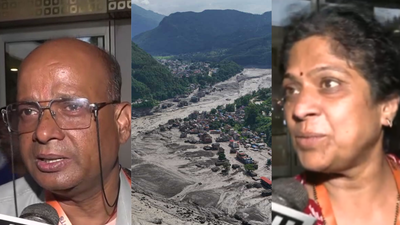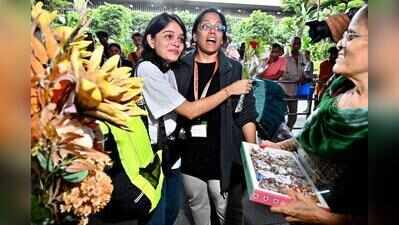
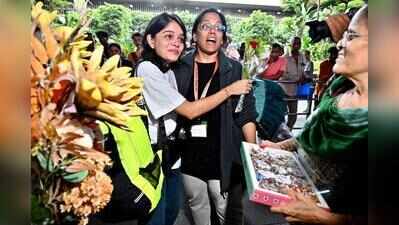
Mumbai: Returning to a humid Mumbai after a holiday in the cool, verdant mountains of Nepal would generally bring on the post-vacation blues, but for the 37 Kailash Mansarovar pilgrims who landed in the city from Kathmandu on Saturday evening, the heat of the coastal city was a balm after the tragic Nepal flash floods that left more than a thousand missing. As the pilgrims walked out of Mumbai airport Terminal 2 arrivals around 6 pm, they were received with bouquets, lingering embraces and tears by relatives and friends.At the heart of the survivors’ narratives was the Chinese immigration office at Gyirong-Rasuwagadhi on the Tibet-Nepal border, the one in the viral footage that showed the five-storeyed immigration building standing strong against the mountainside only to disappear seconds later in the flash floods triggered by the glacier collapse on Wednesday.Smita Pawar, Pune tahsildar (revenue), said she was meant to be at the immigration centre on that fateful day. “We had just left the hotel for the immigration building, about 12 km away, when I received a message from the Chinese immigration authorities. They asked me to furnish a medical certificate. So, we changed our plan and four of us left for a hospital instead, about 10 km away from the immigration building. My sister-in-law Yogini Patil and I were at the hospital when we heard about the floods. But it was not until later in the day that we became aware of the scale of the catastrophe. Lord Shiva alone has saved us,” said Pawar. The need for a medical certificate arose because Pawar and some other pilgrims had suffered from hypoxia during their Kailash journey. “My face had turned black and blue, but the tour operator did not give us medical aid, there was no first aid kit, nothing, no help at all,” she said. But it was the detour to the hospital that saved their lives.Pawar’s husband, Pradip Pawar, an executive engineer with Slum Rehabilitation Authority, had been in his office when he first heard about the disaster. “Initially I thought it was a regular landslide. There are so many landslides there,” he said. “I saw the clip of the Chinese immigration building being swept away on the Times of India website. That’s when I understood the scale of the catastrophe,” he said.Prabhadevi resident advocate Sonali Belosay said she was at the immigration centre a day earlier. Pooja Bhosale, another pilgrim, said the group’s ordeal had begun before they reached the disaster zone. “Two patients in the group were unwell because of acclimatisation problems. We took them to hospital. The next day, at Mansarovar base camp, they were worse, so we brought them down to a lower altitude, almost 800 km in one day,” she said. At Gyirong, the pilgrims were again diverted to hospital when doctors demanded X-rays and blood tests. That decision proved decisive. While another group headed to the immigration centre, the 37 pilgrims remained at the hospital. “The Isha group went for immigration. We were stopped and sent to the hospital. That is why we were saved,” Bhosale said. The group eventually returned to Nepal through Tatopani border, 114 km northeast of Kathmandu, which meant none of the pilgrims witnessed even the aftermath of the catastrophe.