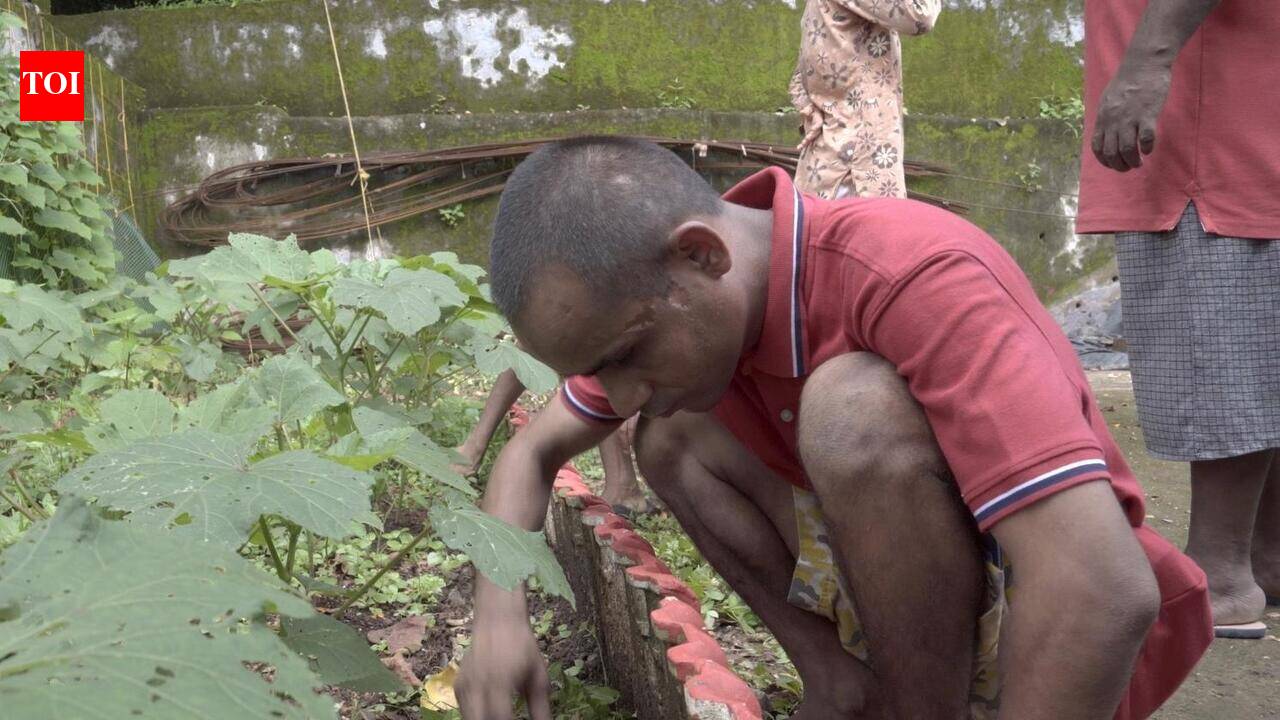
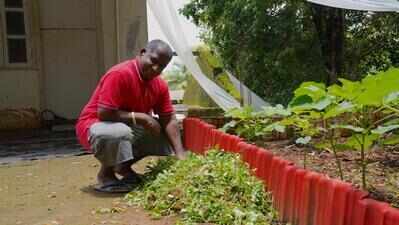
Panaji: Maruti Kumar has spent much of his life in institutional care. He was moved to Little Angels at Chorao, a home for persons with special needs, in 2009 after a charity where he was cared for shut down.Maruti has serious long-term health problems, including a history of tuberculosis affecting the brain, recurrent high fevers and an ongoing ear condition for which he is expected to undergo surgery. He understands spoken communication and responds with “yes” or “no” but does not speak in long sentences. He relies heavily on routine and familiar patterns.Now, agricultural work is giving him a sense of purpose.Since June 5, Maruti has been among residents tending to a permaculture garden at Little Angels, with support from Communicare Trust. The aim is simple–grow vegetables and fruit for the home, reduce dependence on purchased food and eventually sell surplus produce to generate income.“This helps them to engage in a meaningful way with nature,” said Nalini Elvino Souza, manager of Communicare Trust, which has worked with Little Angels since 2013 through its food-bank programme.The garden currently has okra, red amaranth, long-yard beans, cucumber, pumpkin and bottle gourd. Fruit trees and saplings include papaya, coconut, ‘bimbli’, lime and mulberry. Drumstick saplings were planted this month.“The garden is being tended by them as part of their daily routines. After breakfast, those who choose to participate come to the garden to clean the area, remove weeds, water plants and perform other tasks under supervision,” said Pedro Lima, founder and manager of Little Angels, who established the home 27 years ago.The work has also introduced residents to the small ecosystem around the farm. Monkeys, porcupines and caterpillars are now part of their daily experience. Residents are also learning composting and natural cultivation methods.“They know which plants have to be put over there and learnt not to kill worms but to collect and preserve them as part of the soil ecosystem,” said Little Angels co-founder Genilda Lima.The home follows structured routines as many residents need continuous supervision and support. “Some have limited verbal communication, while others have behavioural or psychiatric difficulties that can make sustained activities challenging. The garden, therefore, offers an opportunity to learn through repetition, movement and hands-on experience,” Genilda said.Among the regular participants are former students of Sanjay Centre for Special Education, Porvorim. Besides Maruti, Maaz, Emu and Gabriel are enthusiastic about the vocational activities.“The first priority is to use the harvest in the home’s own kitchen. When production increases, we hope to sell excess vegetables and fruit locally, therefore empowering our differently-abled residents,” Genilda said.