Surat: As floodwaters slowly receded across Surat on Thursday, they left behind a trail of devastation. More bodies of people who had drowned during the deluge surfaced even as thousands of residents waded through streets covered in foul-smelling sludge and sewage to assess the damage to their homes and businesses.The death toll from the 24-hour rain fury that paralysed the city between Tuesday and Wednesday rose to 23 after 10 more bodies were recovered. Anger continued to simmer in several housing societies, with residents accusing the Surat Municipal Corporation (SMC) of failing to prevent repeated flooding in creek-side and low-lying areas.This is the eighth consecutive year that Surat’s businesses and industries have suffered large-scale disruption due to flooding. The record 358 mm rainfall submerged warehouses, shops and factories, damaging finished goods, raw material and machinery, while bringing commercial activity to a standstill.
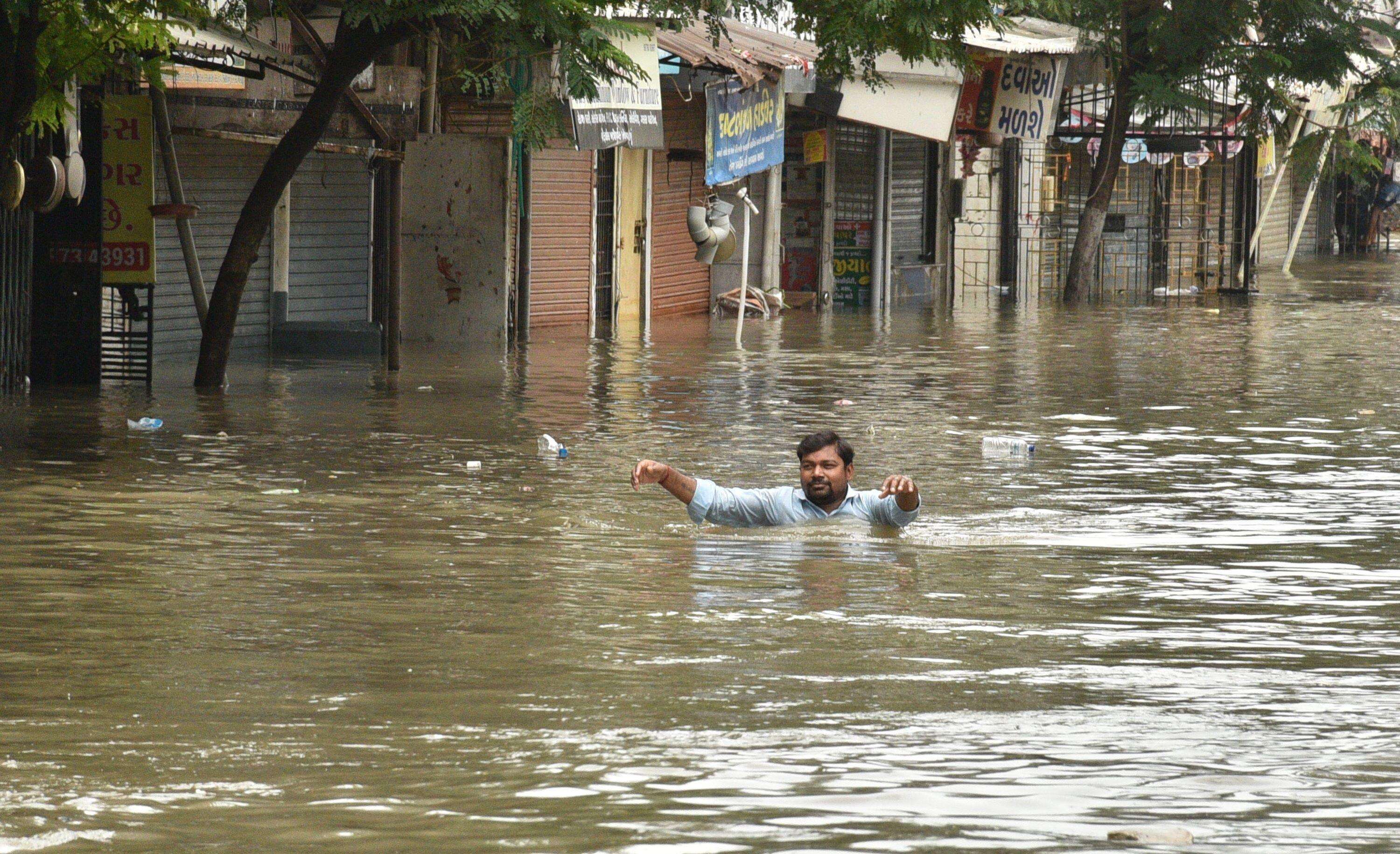
Several parts of the city remained inundated in water on second day as the rain water is yet to recede.
Trade and industry bodies have begun assessing losses, which are expected to run into several crores. Much of the damage occurred in basements and ground-floor establishments that remained inundated for days.Among the worst hit were textile shops in the city’s wholesale markets. Floodwater continued to stagnate in several markets on Ring Road and in the Saroli textile hub even on Thursday, preventing traders from accessing stock, cleaning their premises or resuming business. Apart from the direct loss of goods, traders said they had also lost valuable business days during a peak trading period.Basements at Raghukul Market, Millennium Market and Sagar Market on Ring Road remained flooded for the third consecutive day. “Traders have suffered heavy losses due to flooding. At this stage, we are trying to help each other recover,” said Dinesh Katariya, secretary of the Federation of Surat Textile Traders Association (FOSTTA).At DMD Logistic Park in Saroli, textile trader Gopal Rathi said his ground-floor shop remained submerged for nearly two days, causing losses running into lakhs. Around 50 shops in the complex were affected, marking the second consecutive year he has suffered flood-related losses.Paras Jain, a dupatta trader, estimated losses of over Rs 15 lakh after rolls of lycra fabric remained soaked for two days. “The material will be completely ruined after remaining under water for so long,” he said.The impact extended beyond the textile sector. Pamir Shah, who runs a fitness centre on VIP Road in Vesu, said his business remained shut because the building’s flooded basement made the premises inaccessible, even though the gym is located on the fourth floor. He said the problem recurs every monsoon despite repeated complaints to civic authorities.Industries struggle to restartIndustrial estates in Pandesara, Bamroli, Bhestan and other creek-side areas were among the worst affected after overflowing storm-water drains inundated factory premises, damaging machinery and halting production for nearly two days.
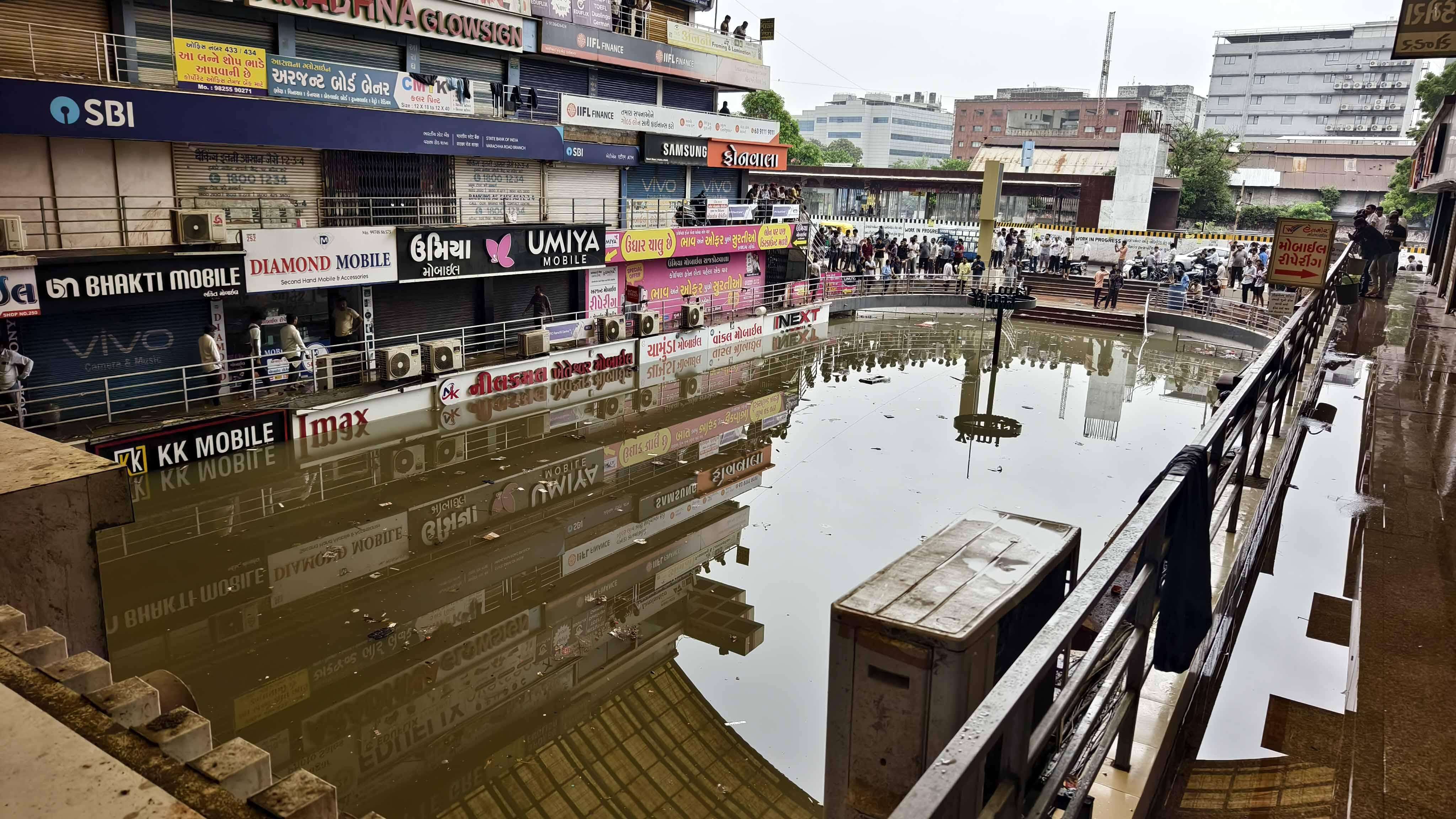
Waterlogged basement of Poddar arcade in Varachha area of Surat
Textile processing units reported extensive damage to equipment. “Several textile processing units have suffered machinery damage due to waterlogging. We have begun a survey to assess the extent of the losses,” said Kamalvijay Tulsian, president of the Pandesara Industrial Association.Weaving units in Pandesara, Bamroli and Bhestan also reported heavy losses from damaged machinery, yarn and finished fabric. “Production remained shut for three days. Apart from machinery damage, huge quantities of yarn and finished fabric have been destroyed,” said Atul Patel, president of Shree Ram Industrial Society.Industrial associations said losses have been compounded by production delays and disruption of supply schedules. Many workers were unable to report for duty as their residential areas remained waterlogged for two to three days, delaying the reopening of factories.Industry representatives estimate it will take at least a week for many units to repair machinery, restore utilities and resume normal production, prolonging the financial impact of the floods.