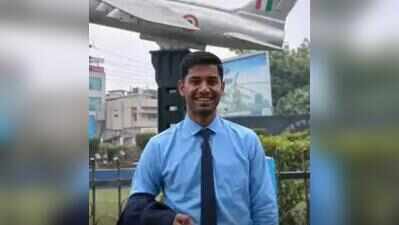
Pune: The death of a first-term National Defence Academy (NDA) cadet during routine physical training has once again raised difficult questions about how India selects and trains its future military officers.While the Army has ordered a Court of Inquiry into the death of 17-year-old Cadet Abhinav Bajpai, several retired officers believe the tragedy should lead to a wider review of the officer selection system and the physical training followed at military academies.Leading the call is Colonel Vinay B. Dalvi (Retd.), who served as a Physical Training Officer at the NDA, Indian Military Academy (IMA) and Officers Training Academy (OTA) for nine years.“Every time a cadet dies during training, a part of me dies too,” Dalvi said.“For more than 15 years, experienced veterans have suggested reforms. But many of those recommendations have still not been implemented.”According to him, the public usually learns about cases only when a cadet dies. Many other incidents involving serious injuries, medical boarding out and training withdrawals rarely come into the public domain.Five reforms suggested:Dalvi has proposed five major changes that he believes can make military training safer without lowering standards.He wants mandatory physical fitness tests during the Services Selection Board (SSB) selection process, similar to those conducted for Army recruits.He also recommends detailed medical and physical screening immediately after cadets report to military academies and before they begin intensive outdoor training.Another suggestion is to conduct fresh medical examinations at the academy because several months often pass between the SSB medical examination and the start of training. During this period, a candidate’s health or fitness can change.Finally, he has called for a scientific approach to physical training that gives equal importance to exercise, nutrition, hydration, sleep and recovery.“The aim is not to reduce the toughness of military training,” Dalvi said. “The aim is to ensure that every cadet is medically fit to undergo such demanding training.”Veterans supported the proposals:Several retired officers who have served in military hospitals, training academies and the SSB have supported these recommendations.Colonel IVS Gahlot (Retd.), former Commanding Officer of Military Hospital Khadakwasla, said proper medical screening, structured physical assessment, adequate hydration and sufficient recovery time can significantly reduce injuries.He said similar measures introduced during his tenure helped lower cases of dehydration, fractures and illnesses among NDA cadets.Former SSB Group Testing Officer Brigadier Jay Konnur (Retd.) said the armed forces should study data on training-related deaths and injuries over the years instead of treating each case separately.He also suggested comparing Indian practices with those followed by leading military academies around the world.Learning from global military academies:Military academies in countries such as the United States, the United Kingdom and Australia continue to maintain very high physical standards. However, over the years many of them have also introduced sports science, continuous medical monitoring, injury prevention programmes and structured recovery into their training systems.Experts say modern military training is increasingly based on scientific data rather than simply making training harder. Fitness experts, sports physicians, physiotherapists and psychologists work together to monitor cadets and reduce the risk of preventable injuries without compromising operational readiness.Several Indian veterans believe similar practices could strengthen India’s officer training system while maintaining the rigorous standards expected of future military leaders.A wider debate:Major General Raj Mehta (Retd.), a former Divisional Officer and Squadron Commander at the NDA, believes the discussion should also include the Services Selection Board system itself. He said the officer selection process should be reviewed periodically to ensure it keeps pace with changing military requirements.Colonel Vijay Bhate (Retd.) said modern diagnostic tools now allow doctors to detect many health conditions that earlier went unnoticed. Using these technologies during selection and after joining academies could improve safety.Military psychologist Colonel P.K. Royal Mehrishi (Retd.) said some physical qualities, such as lung capacity, endurance and stress tolerance, cannot be developed quickly. Identifying such limitations early would help academies provide additional conditioning or take appropriate decisions before intensive training begins.Safety without lowering standards:The veterans agree on one point: India’s military academies must continue to produce physically and mentally strong officers.But they also believe that strength and safety can go together.They argue that better medical screening, scientific physical training, regular monitoring and evidence-based practices can reduce preventable injuries and deaths while preserving the high standards for which institutions like the NDA, IMA and OTA are known.As the Court of Inquiry examines the circumstances surrounding the latest tragedy, the veterans hope it will also encourage a broader conversation on whether India’s military training system can benefit from reforms and global best practices without compromising its core values.