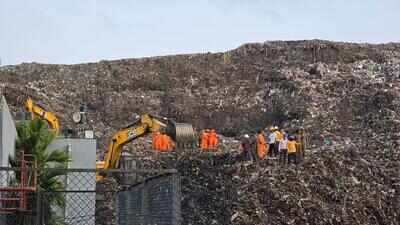
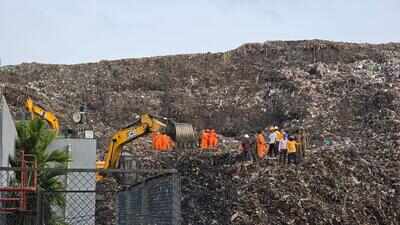
Pune: At least 1,150 metric tonnes of trash generated every day in Pimpri Chinchwad is brought to the Moshi waste-to-energy plant for processing. Four separate units, waste-to-energy, plastic, bio-CNG, construction and demolition, process it on 81 acres, an overload for the facility where garbage has been piling up for years as legacy waste.On Wednesday, a colossal heap of garbage in the waste-to energy plant collapsed on its administrative building just 30 metres away trapping at least 20 people. So far, nine have been rescued while one person was recovered dead. Four people walked away. The others are still trapped and while rescue operations are going on for the second day, hope is fading fast.Experts said the civic body must work on decentralising garbage processing that will be cost-effective and allow for better waste management practices with clear vision, proper planning and citizens’ involvement.Sachin Londhe, president of Pimpri Chinchwad Housing Societies Federation, said they had proposed the decentralisation of waste management in 2022 to former commissioner Shekhar Singh. “There is resistance from citizens when garbage processing plants or transfer stations are proposed near their homes, but just one such facility is not enough. If the civic body could work with the citizens, address their concerns and involve them in the planning process, the project will meet with success.”Sanjivan Sangle, president of Chikali Moshi Pimpri Chinchwad Housing Societies Federation, said smaller depots in all wards will take the load off Moshi. “More than 1,000 tonnes of garbage is collected from Pimpri Chinchwad every day and this figure will increase as the population rises. A solution is needed now,” he added.Ganesh Shirode, an entrepreneur working in sustainability, said, “My garbage, my responsibility should be what residents live by. Decentralisation is important for better waste management and provides employment opportunities at the ward level plants as well.”Shirode said Pune has processing plants in proximity to residential areas. “The civic body should proactively figure out what works best in which area. It can tie up with local businesses for efficient functioning,” he added.PCMC civic chief said the building was inaugurated in 2023 and had no issues. “It was 30m away from the trash mounds. Probably the weight of the garbage, due to the heavy rain, made it a landslide-like situation. It happened all of a sudden and no one inside had any time to rush out,” he added.The civic body did attempt to decentralise the waste management system when it planned a 65-acre waste depot in Punawale in 2008. However, residents protested till the authorities gave in and turned the space into an oxygen park.Sanjay Kulkarni, PCMC’s city engineer (environment), said that the civic body wants to decentralise the garbage management system, does not have a place yet. “Given the new rules and the buffer zone requirements, we are looking for a suitable place to build a plant. Amenity spaces are very close to residential areas. Currently, we only have the Moshi plant which bears all the load,” Kulkarni added.