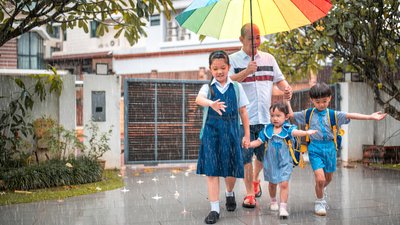
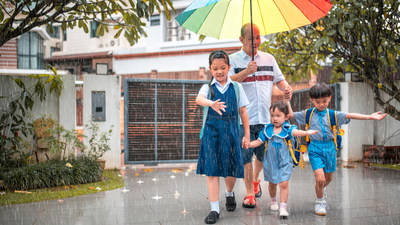
While children are busy enjoying puddles and playgrounds, the monsoon season can bring a new set of worries for parents. Wet uniforms and damp shoes- this is the way many children return from school. However, this is what exposes their skin, scalp and feet to moisture, creating the perfect environment for infections to spread. However, the good news is that most of these issues can be solved with few simple at-home habits. It’s not about panic, it’s about prevention. Here’s what parents need to keep in check:
6 Jul 2026 | 14:01
What factors did you consider, or would consider, before choosing the right school for your child?
Check your child’s scalp and area behind the ears
One of the most important things to check in the monsoon is the child’s scalp. Parents should pay special attention to; the crown of the head, behind the ears, and the back of the neck. Children often share close contact during school activities, making lice transmission easier. Early detection prevents a larger infestation and reduces the chance of it spreading through the household.
Check socks and uniform immediately after school
Even if the clothes do not appear completely wet, they may still be damp from sweat and humidity. Once your child comes back home, remove the socks immediately, take off their uniform, and wash and dry their feet. This is important because if moisture remains trapped for several hours, it can irritate a child’s skin and even lead to fungal growth and infection.
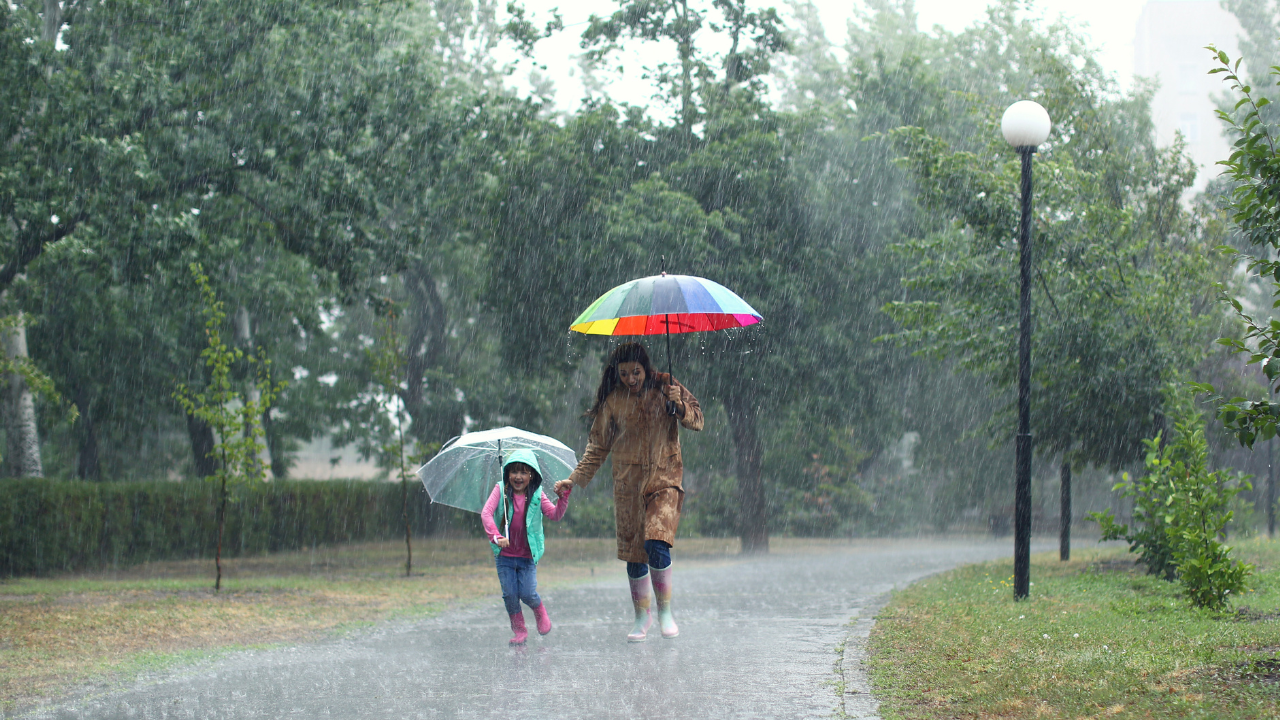
Image: Canva
Dry the body folds properly
Moisture can get trapped in several areas of the body, but the most prone areas are the folds. Rainwater tends to get stuck in areas such as the neck, underarms, inner thighs, and between the toes. These are the same areas where sweat tends to collect. After your child changes out of their school clothes, gently dry such areas of the body.
Always check if your child’s shoes are damp
You just can’t stop your child’s shoes from getting damp in monsoon. Be it the cause of them jumping in puddles or simply due to the water-logged roads. This is why making sure your child’s shoes are dry before they wear them again. Spending too long in wet shoes doesn’t just cause bad odor, but it can also lead to fungal infections. If the shoes haven’t dried completely, let them air out and use a spare pair instead. Keeping two pairs of school shoes during the rainy season can make it easier to ensure this precaution.
Take rashes, itching, and bumps seriously
Despite all the safety measures, it’s possible that your child may develop rashes, bumps or suffer persistent itching. If your child develops a rash, persistent itching, peeling skin, or small pus-filled bumps during the monsoon, don’t ignore it, because fungal infections can spread quickly. Early medical attention can help identify the cause and prevent the infection from worsening or spreading to other parts of the body. Consulting a pediatrician or dermatologist shouldn’t be delayed.
Bonus: Keep a small monsoon emergency kit
A small monsoon emergency kit in your child’s school bag can be incredibly useful on rainy days. Many parents now pack a simple backup kit in the school bag.What to keep in a monsoon emergency kit:
- Extra underwear
- Spare socks
- Small towel
- Waterproof bag
- Extra pair of shoes
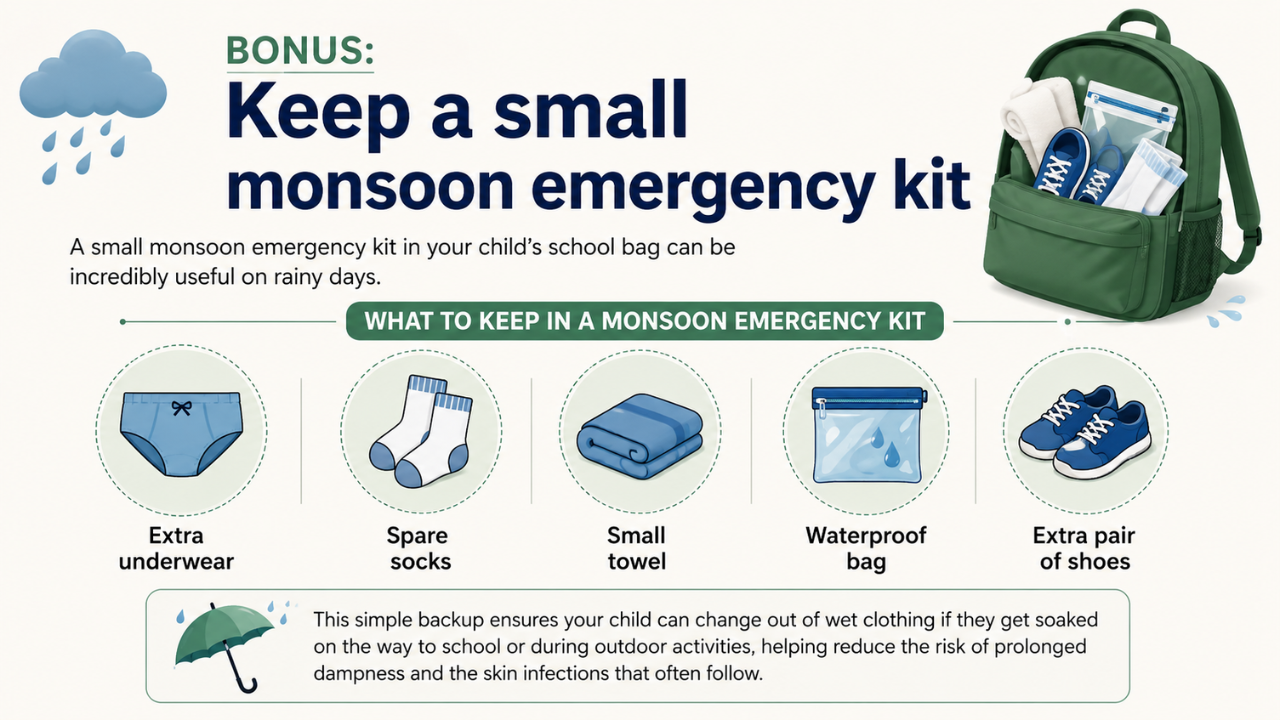
Emergency monsoon kit
This simple backup ensures your child can change out of wet clothing if they get soaked on the way to school or during outdoor activities, helping reduce the risk of prolonged dampness and the skin infections that often follow.