The name Tristan da Cunha tends to sit at the edge of most atlases, almost as an afterthought in the South Atlantic, a small mark of land far from anything that feels busy or connected. Yet its story runs oddly thick for such a remote place. Ships once passed it as part of a long, looping route between Europe and the Indian Ocean, and for centuries it was less an island community than a passing reference in logs and charts. The Portuguese navigator Tristão da Cunha gave it a name in 1506 while sailing towards the Cape, though he never set foot there. What followed was not discovery in any settled sense, more a series of brief encounters, missed chances, and occasional landings that left behind little more than stories, supplies, and the idea that the island might matter one day.Today, it is still spoken about in that same uncertain tone, half geographic fact and half historical accident, especially when scientists try to explain unusual patterns in the health of its small population.
How wind, current, and chance put a remote island on the edge of early navigation
Tristan da Cunha sits in a stretch of ocean that once functioned like a slow-moving highway for sailing ships. Routes from Europe to the Indian Ocean were never straight, more a series of calculated curves shaped by winds and currents. Vessels dipped southwards into the Atlantic, then rode trade winds and currents past the coast of South America before swinging towards the Cape of Good Hope.In that drifting geography, the island appeared and disappeared from navigational awareness depending on the century. It was there on early maps, then barely mentioned, then drawn again with varying accuracy. Mercator’s 16th-century world map included it in outline form, suggesting a presence that mariners could not quite ignore, even if few had confirmed what it actually looked like from the sea.
Early encounters driven by need rather than discovery
The earliest recorded visits were not heroic or exploratory in the traditional sense. They were practical stops, often driven by hunger, water shortages, or damaged vessels needing a pause in open ocean travel. In the mid 1600s, Dutch crews are said to have come ashore for fresh water and whatever could be gathered quickly from the land and surrounding waters. Seals, fish, and seabirds appear in those accounts, taken and left behind in equal measure.Later expeditions from European trading companies tried to assess whether the island could serve a more stable purpose. It did not take long for that idea to fade. The coastline offered little protection. Landing was uncertain, sometimes dangerous, and the weather rarely cooperative. Ships that attempted longer stays tended to leave with the impression that the island was more obstacle than opportunity.By the late 18th century, American whalers were passing through more regularly, treating the waters as a working ground rather than a curiosity. Some even tried living ashore for short periods, living in tents and using the island as a base for sealing.
Settlement that narrowed into almost nothing
The first real attempt to build something resembling a settlement came in the early nineteenth century. A small group led by Jonathan Lambert from Massachusetts arrived in 1810 with the intention of turning the island into a trading post. They renamed it, in a gesture that now feels slightly optimistic, and tried to establish a foothold in a place that offered little shelter and fewer guarantees.That experiment collapsed quickly. By the time a British ship arrived a few years later, only one survivor remained, along with fragmented accounts of accidents and loss. The others had died in what appear to have been routine maritime mishaps made fatal by isolation.
When empires arrived and then quietly left again
Britain formally claimed the island in 1816, placing a small garrison there in part to prevent other powers from using it during a period of global tension. Napoleon’s exile on St Helena had sharpened interest in controlling nearby waters, and Tristan da Cunha briefly appeared useful in that strategic thinking.A small fort was established, but it never developed into anything substantial. Supply lines were long, conditions harsh, and the island’s value as a military outpost quickly came into question. One shipwreck near the settlement site, with heavy loss of life, reinforced the sense that maintaining a presence there was more risk than reward.Within a year or so, the garrison was withdrawn. The island returned to being what it had always been: present on maps, occasionally visited, but largely untouched by sustained administration.
What modern medicine found hidden in the island’s early settlement history
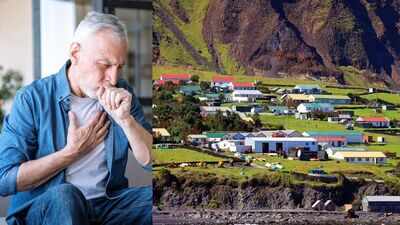
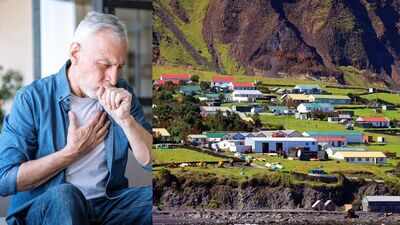
Much later, in a very different scientific context, Tristan da Cunha became interesting again for reasons no naval officer would have recognised. Researchers studying respiratory conditions noticed something unusual in the island’s population. Asthma rates appeared higher than expected for such a small and isolated community.The explanation did not lie in modern pollution or lifestyle changes, but in something far older and more accidental. Genetic studies pointed back to a remarkably narrow founding population. In effect, much of the island’s modern genetic profile could be traced to just a few settlers who remained after the early nineteenth century.Two individuals, in particular, are often cited in simplified accounts of this bottleneck. Their descendants formed a large portion of the later community, meaning that conditions carried in their biology had an outsized influence on generations that followed. Asthma, in this context, is treated less as an environmental mystery and more as an inherited echo of that early isolation.