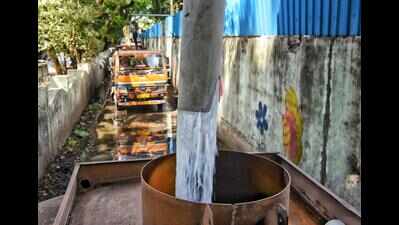
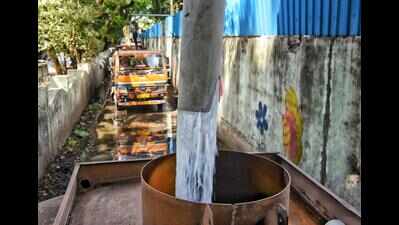
Pune: More than 2.3 lakh residents and over 33,000 livestock in 133 villages and 493 hamlets across the district remain dependent on water tankers, with Junnar, Ambegaon, Khed, Indapur and Shirur talukas emerging as the worst affected, a recent Zilla Parishad report showed.With rainfall delayed and groundwater depleted, 143 tankers are now supplying water to the affected villages where residents are scrambling for drinking water. District collector Jitendra Dudi, however, said efforts were on to address the crisis. “We have undertaken significant work on rejuvenating natural water resources over the past two years. A contingency plan is in place too, and more tankers will be deployed wherever necessary,” he told TOI.Among the worst-hit areas, Junnar alone accounts for water supply to 111 villages through 27 tankers. Khed and Ambegaon also continue to face acute shortages despite sporadic rainfall.A similar crisis was seen in 2024 when the monsoon arrived late. In June that year, tanker services were needed in around 203 villages. This year, the number stands at 133, indicating continuing stress on rural water infrastructure. “This situation shows how the administration has failed to rejuvenate natural water bodies in affected regions. Why are tribal populations still dependent on tankers and forced to walk kilometres for water? Isn’t this a failure of governance?” tribal activist Budhaji Damse from Ambegaon asked.For villagers, however, the crisis translates into daily uncertainty and hardship. “We wake up before sunrise because the tanker can arrive anytime. If we miss it, we have to wait until the next day,” Sunita Jadhav from Ambegaon said, adding, “Our daily routine (household work, farming even children’s studies) revolves around tanker schedules now.”Farmers are also grappling with falling groundwater levels. “Earlier, our wells held water till July. Now, they dry up before the monsoon. The situation worsens every year and tanker dependence has become the norm,” farmer Bhanudas Raskar from Khed said.Women continue to bear the brunt of the crisis. “Whenever a tanker arrives, people rush with containers. There’s always fear that the water won’t be enough. We spend hours waiting instead of working or caring for our families,” Anita Pawar of Junnar said.The administration has started acquiring private water sources to sustain tanker operations. Of the 143 tankers deployed, most are privately hired, and authorities have taken over 19 borewells and 23 private wells to boost supply.Activists stress that tanker supply is only a temporary solution, calling for long-term interventions like watershed development, groundwater recharge, restoration of ponds and stricter regulation of borewell use. “We need a comprehensive survey and a clear action plan. Often such work lacks attention from senior officials, leading to poor execution and limited results. Strong accountability mechanisms are essential to ensure quality outcomes,” activist Shripad Lonari from Khed said.