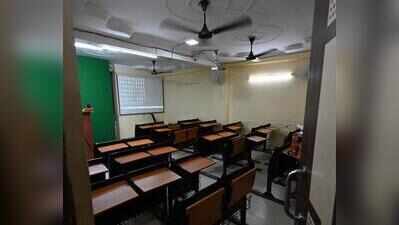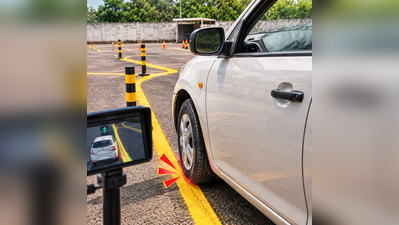
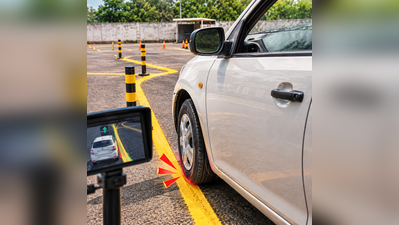
Ahmedabad: Whether AI will drive humans out of work is a fear for another day; for now, AI-powered yellow lines used for licensing tests are stopping many humans from driving.Regional Transport Offices (RTOs) across Gujarat are now using yellow lines with AI sensors as markers to judge reverse parking and other manoeuvres.RTO officials said that 80% of applicants in cities and 75% in rural areas are failing the AI-based driving test.Before tech arrived on testing tracks, the yellow line was notional, with traffic cones on either side of a track indicating the stretch.“Applicants attempting reverse parallel parking and the reverse ‘S’ manoeuvre often touch or cross the yellow line, resulting in an automatic failure,” said an official from Ahmedabad RTO.RTO officials said that the automated test, designed to make licence testing more objective, is proving particularly unforgiving for applicants.Reverse parallel parking, which earlier had a 90-second limit, now allows applicants 130 seconds. Once a vehicle is correctly parked, a signal prompts the applicant to move ahead. However, several candidates fail either during the manoeuvre or while exiting because they miss the signal or respond late.The reverse ‘S’ manoeuvre is another major hurdle. Earlier, test vehicles had sensors that beeped when they approached an obstruction or bollard. Officials said applicants now have to rely more on their own judgement. Even a minor deviation that causes the vehicle to touch or cross the yellow line can end the test.Officials said applicants who carefully watch the instructional video in the waiting area have a better chance of clearing the test. The video can be viewed only once.“One key instruction is to keep the arrow displayed on the track aligned with the centre of the vehicle,” an official said. “Failure to understand this visual cue can result in the vehicle drifting towards the yellow line.”Officials said women applicants appear to have an edge in following the instructions.“Men tend to be more confident and sometimes do not watch the video carefully, while women applicants generally watch it more attentively,” an official said.In rural areas, people often have limited exposure to traffic signals and structured driving tracks. But rural applicants are faring better than their urban counterparts.