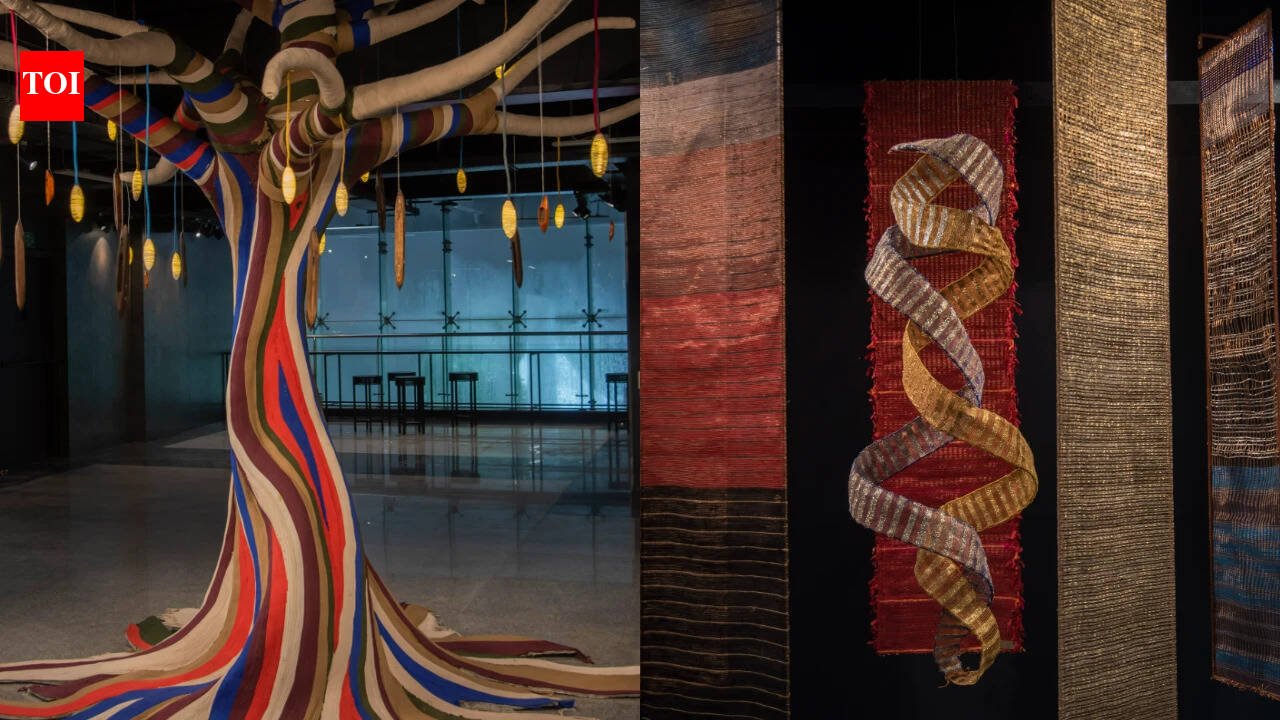
What if every garment we wear could be traced back to nature, and at the end of its life, return to it? At a time when fast fashion has made textile consumption increasingly linear and disposable, the installations at Weave the Future 5.0 makes a case for a more regenerative relationship with what we wear.
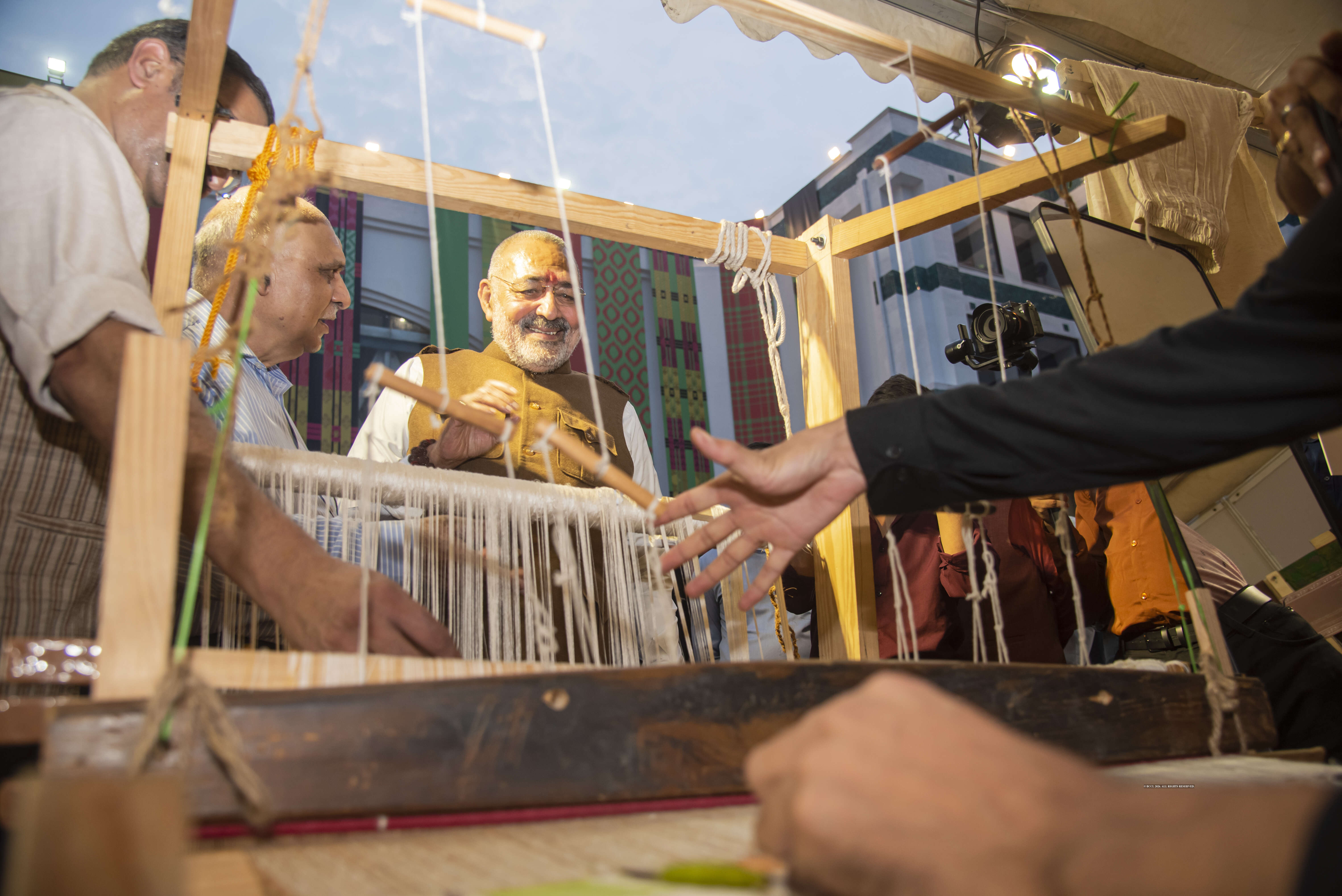
Union Minister of Textiles Giriraj Singh interacts with a kani shawl weaver
‘Lot of learning in store for handloom lovers’The idea of building a circular relationship with our clothes sets the tone for the fifth edition of Weave the Future, which was inaugurated by Minister of Textiles Giriraj Singh at Handloom Haat in Janpath last week. This edition expands the conversation around regenerative and circular textile practices, bringing indigenous and emerging fibres into focus.Dr M Beena, Development Commissioner (Handlooms), said the space brings together weavers, artisans, designers and sustainability champions, while making a case for handloom beyond its traditional positioning. “It is aspirational. The brands are exhibiting innovative materials and fibres which people haven’t heard of. There is a lot of learning and discovery for any handloom lover,” she said.
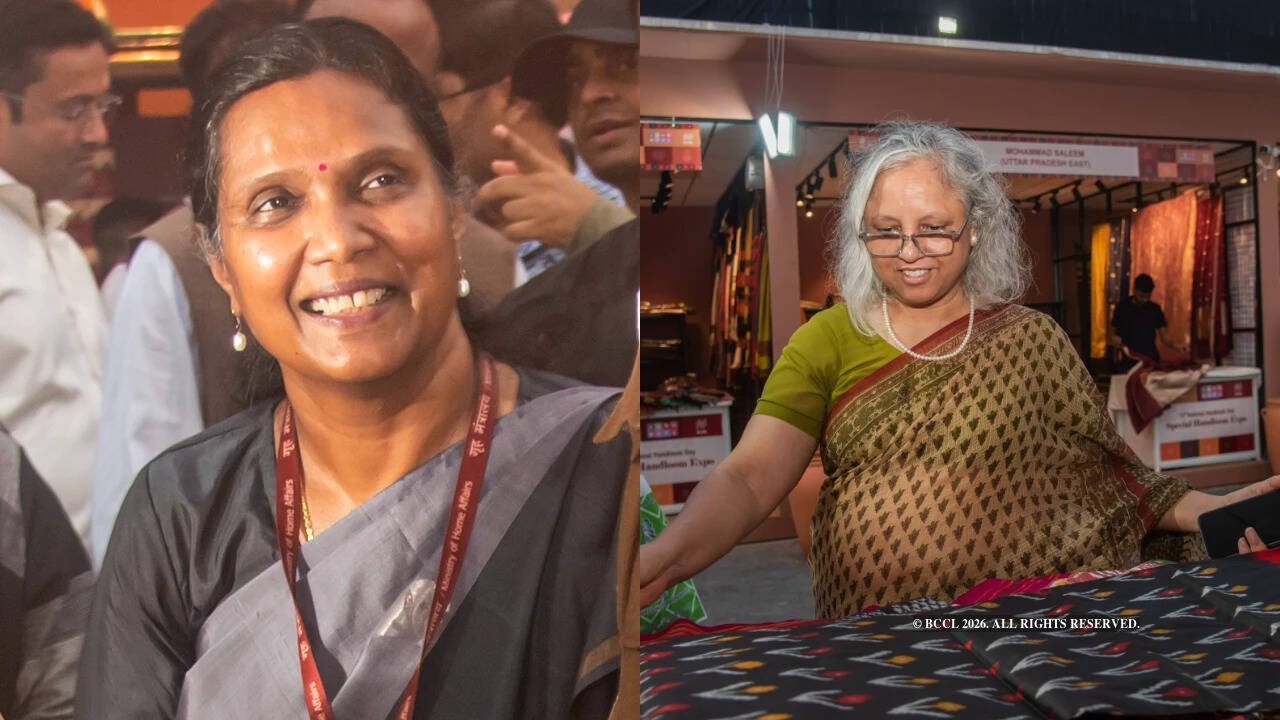
Dr M Beena, DC (Handlooms) and Neelam Shami Rao, Secretary, Ministry of Textiles
Speaking at the exhibition, Singh said, “Handloom has a naturally lower carbon footprint and immense potential to emerge as a sustainable fabric for fashion, clothing and home décor.” He added that the focus was on strengthening the handloom ecosystem by improving incomes, expanding market access and creating new opportunities for weavers.Alongside the exhibition, visitors got a glimpse of the Handloom Experience Centre, which is the re-envisioned Handloom Haat, celebrating the enduring relevance of India’s handloom sector.
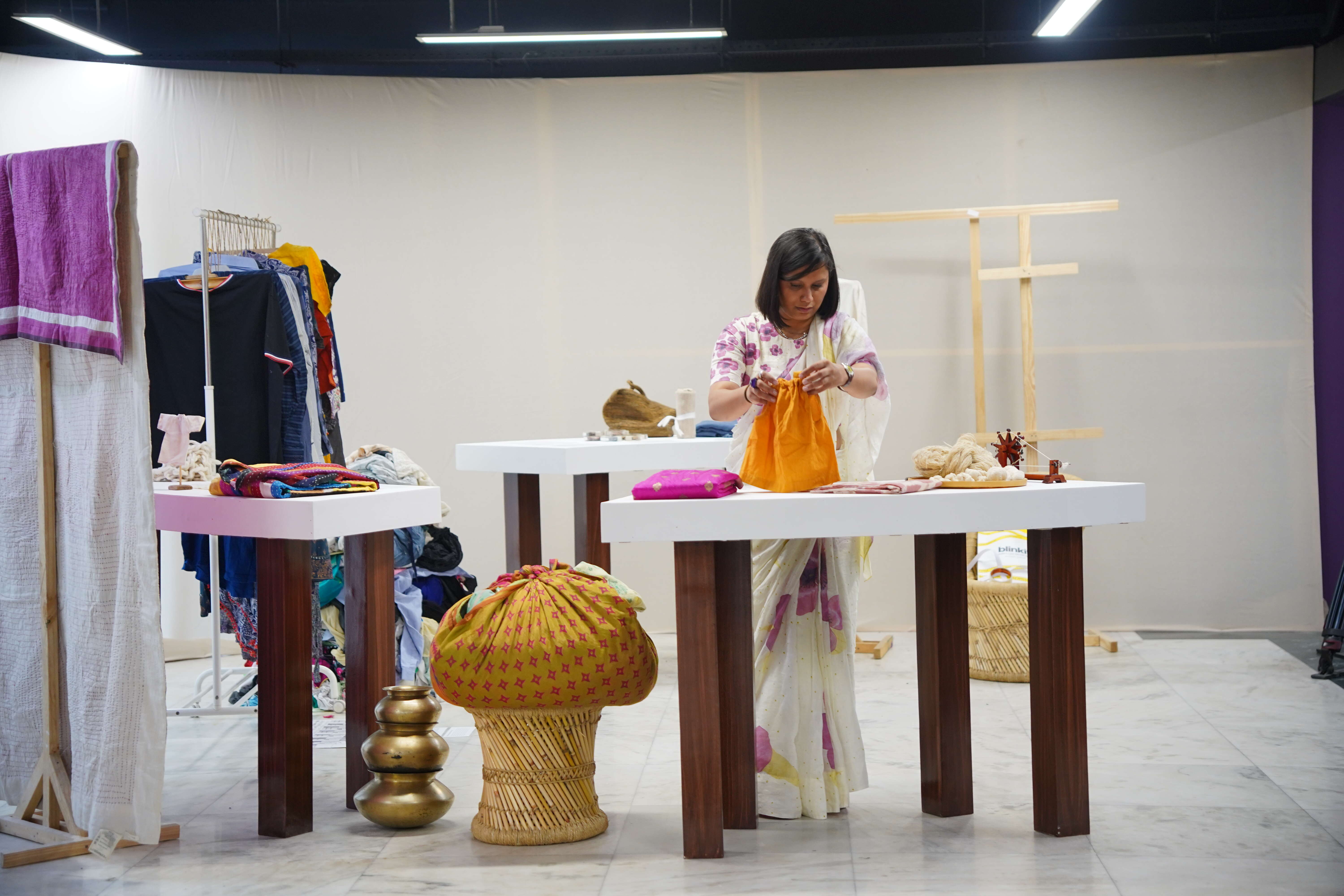
Shubhi Sachan, founder of the Material Library of India, who curated the exhibition
The Visvakarma Gallery is a permanent exhibition showcasing rare textiles from a landmark exhibition series held between 1981 and 1991. Developed through collaborations between Weavers’ Service Centres and artisan communities, the collection offers a window into our textile heritage and its evolution in the decades following Independence.
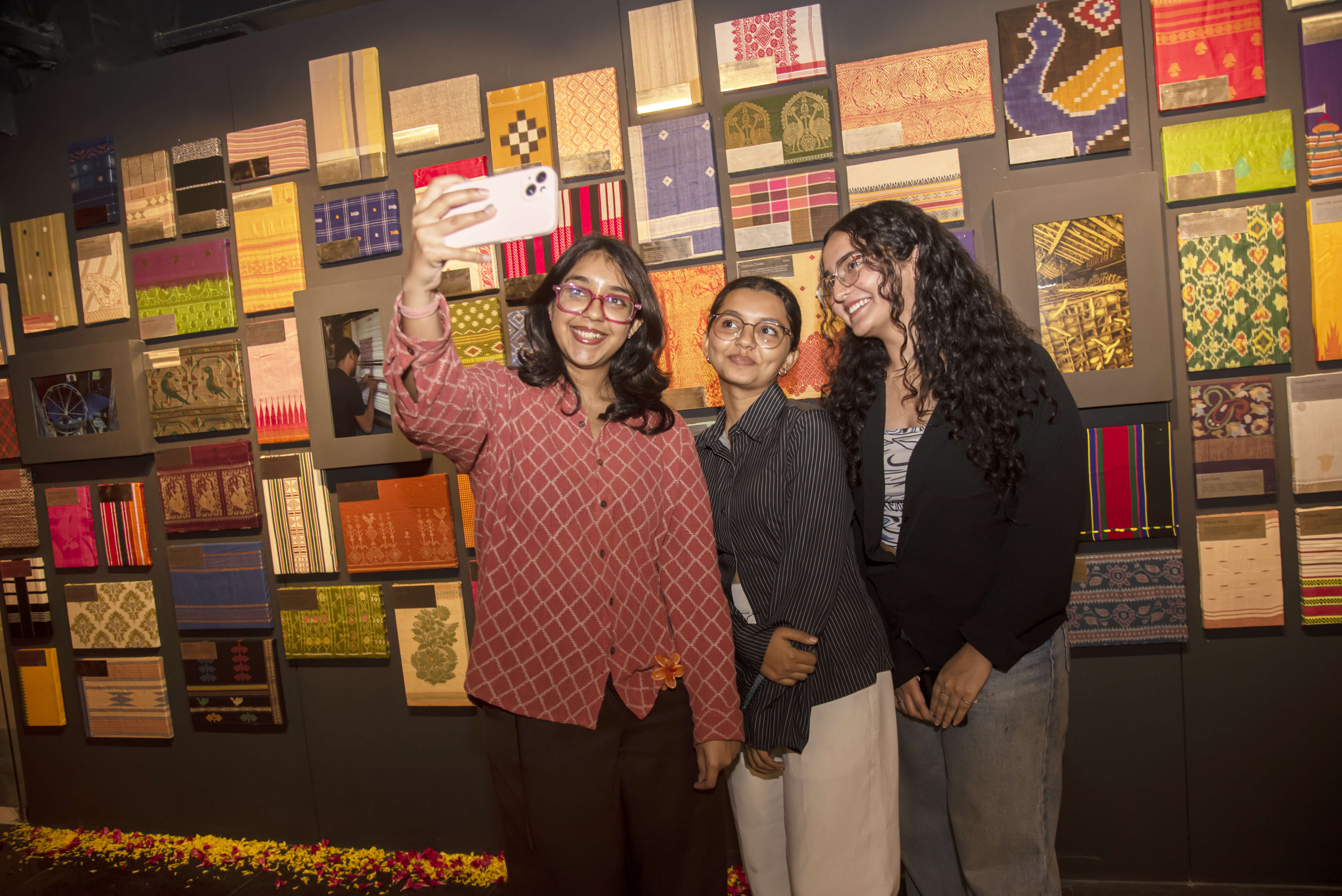
The Visvakarma Gallery is a permanent exhibition showcasing rare textiles from a landmark exhibition series held between 1981 and 1991
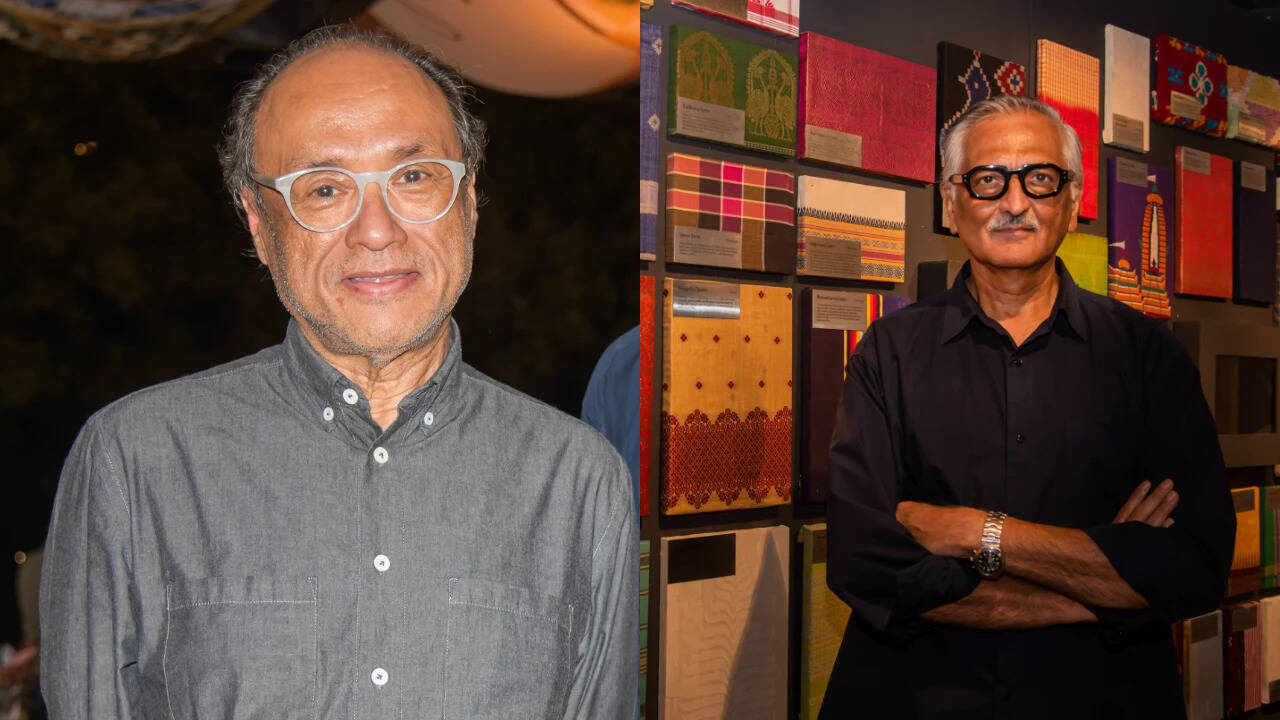
David Abraham with Rakesh Thakore
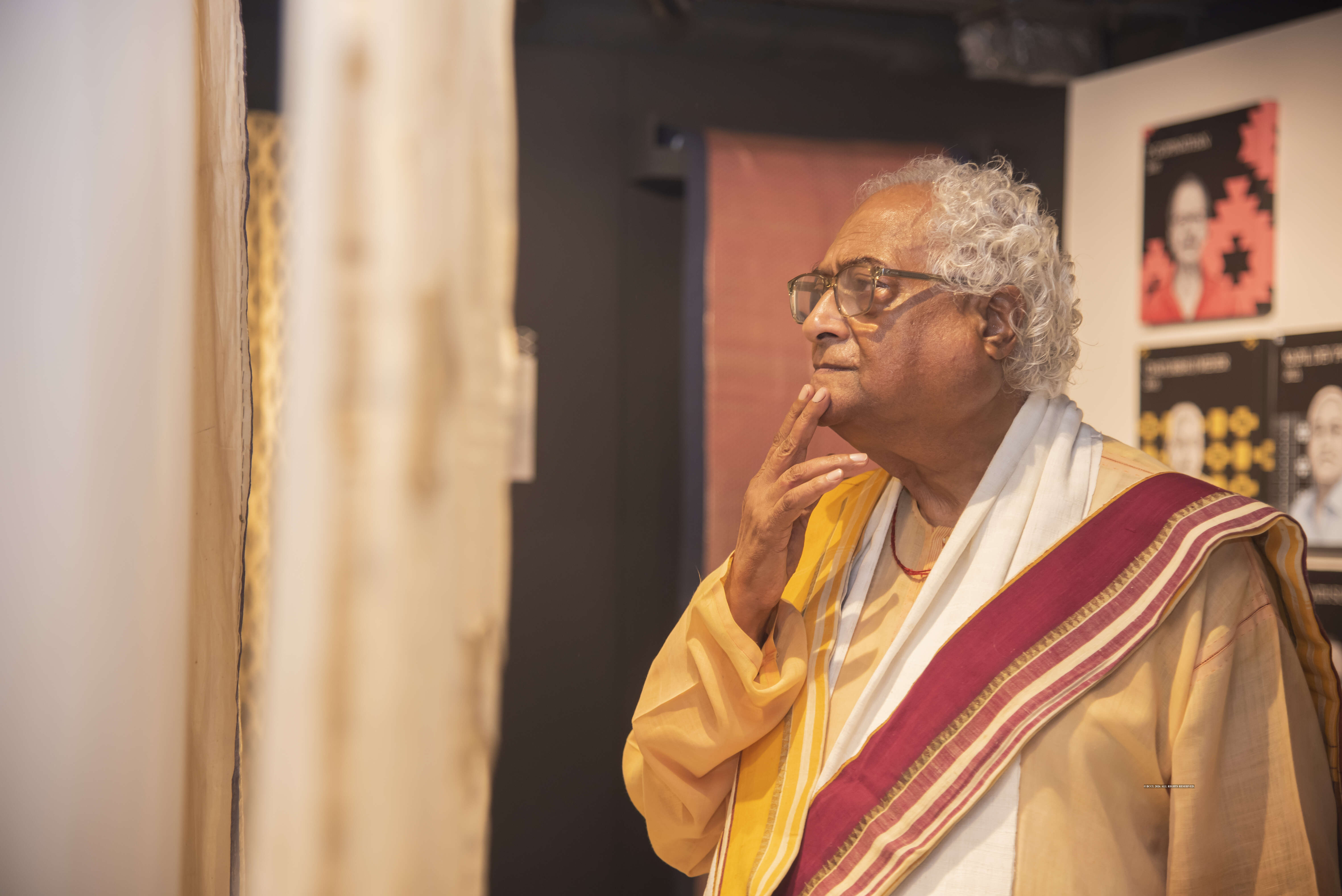
Rajeev Sethi visiting the Visvakarma Gallery
Sushma Veerapa showcased the journey of cotton from farm to fibre. About her work at Kandu, she said, “Cotton is valuable when made into a product. So, we collaborated with a farmer growing naturally brown cotton, grown with desi seeds. Now 55 farmers are engaged. To die the brown yarn we are using lily, leaves of wedeliya creeper and indigo.”
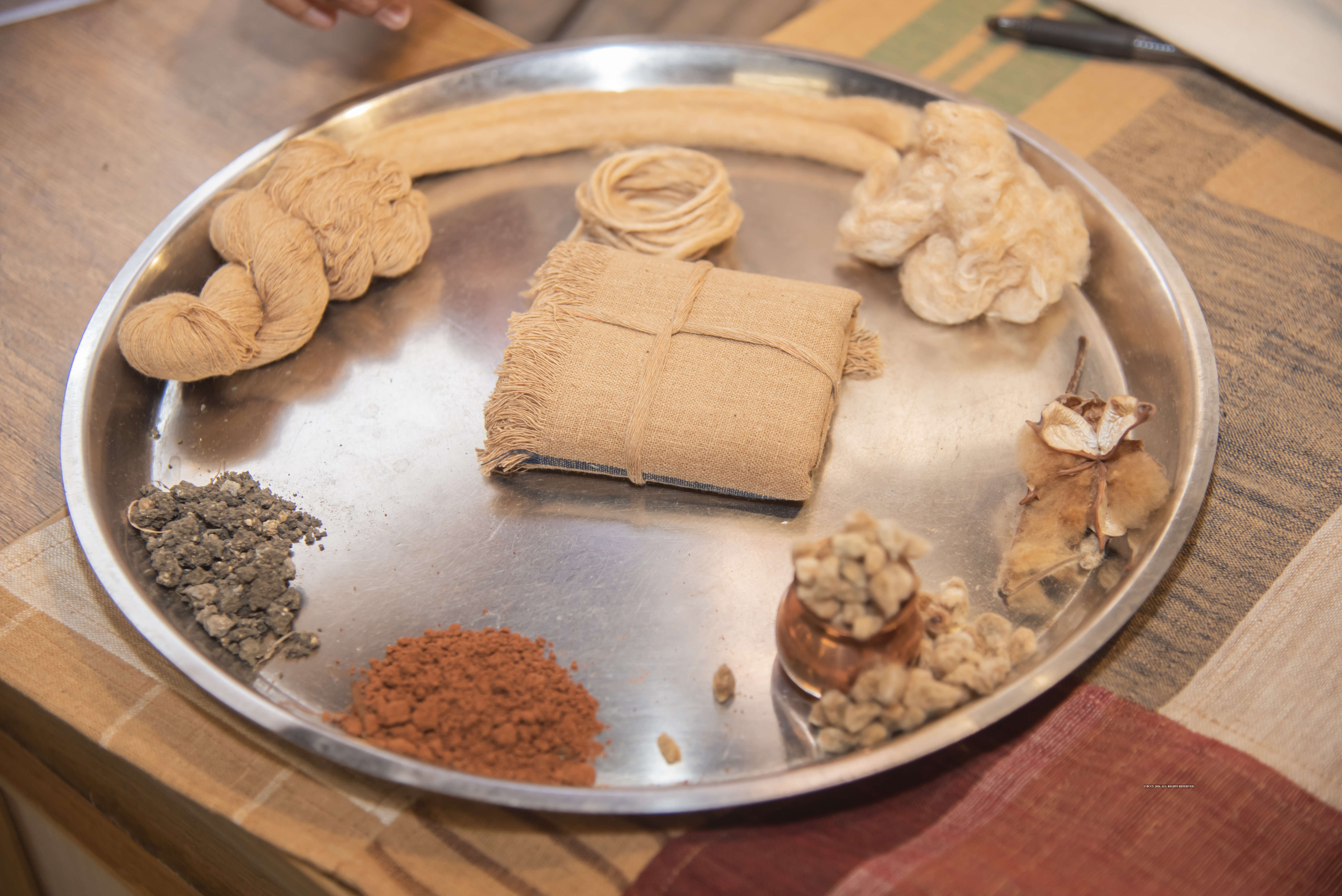
The journey of brown cotton from soil to fabric
Varshne, founder of CRCLE, who has been working with weganool (nool means thread in Tamil), said, “The point is to ensure nothing gets discarded and everything goes back into production — either into the soil or into the production cycle. Regeneration, for us, also means working with plant-based materials. Weganool is made from the fibre of the calotropis plant. We also work with korai grass, traditionally used to make chattai. We collaborate with artisans to create these mats in specific colours and patterns, which are then transformed into bags.”
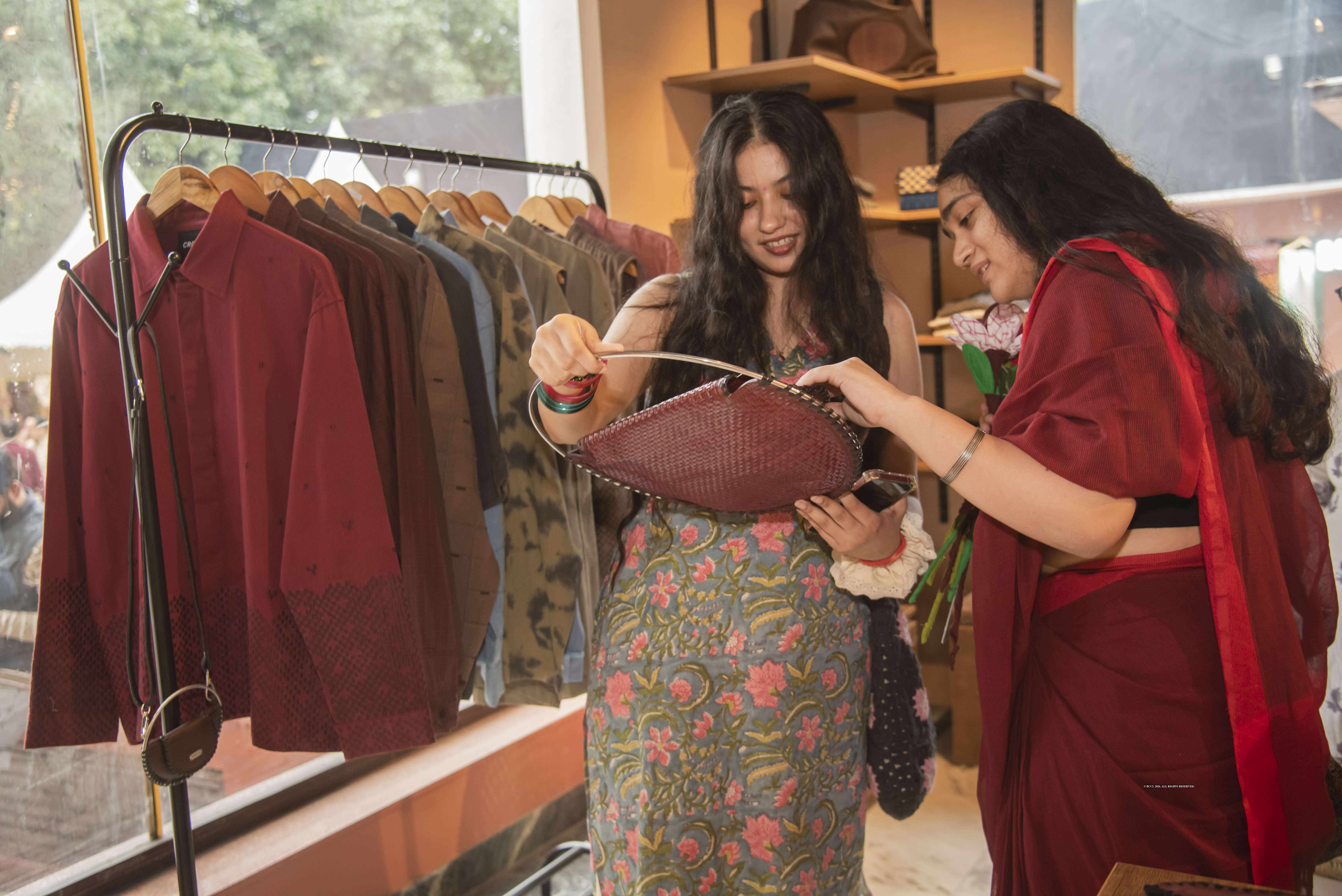
Customers take a look at CRCLE’s korai grass bag
Showing a rust shirt made from Himalayan grass fibre, with chikankari embroidery done using a broken 100-year-old block, Shubhangi Bajpai, founder of Salooka, said, “Regeneration is not just about the anatomy of a textile; it can also be about how we reuse materials, surfaces and processes.”
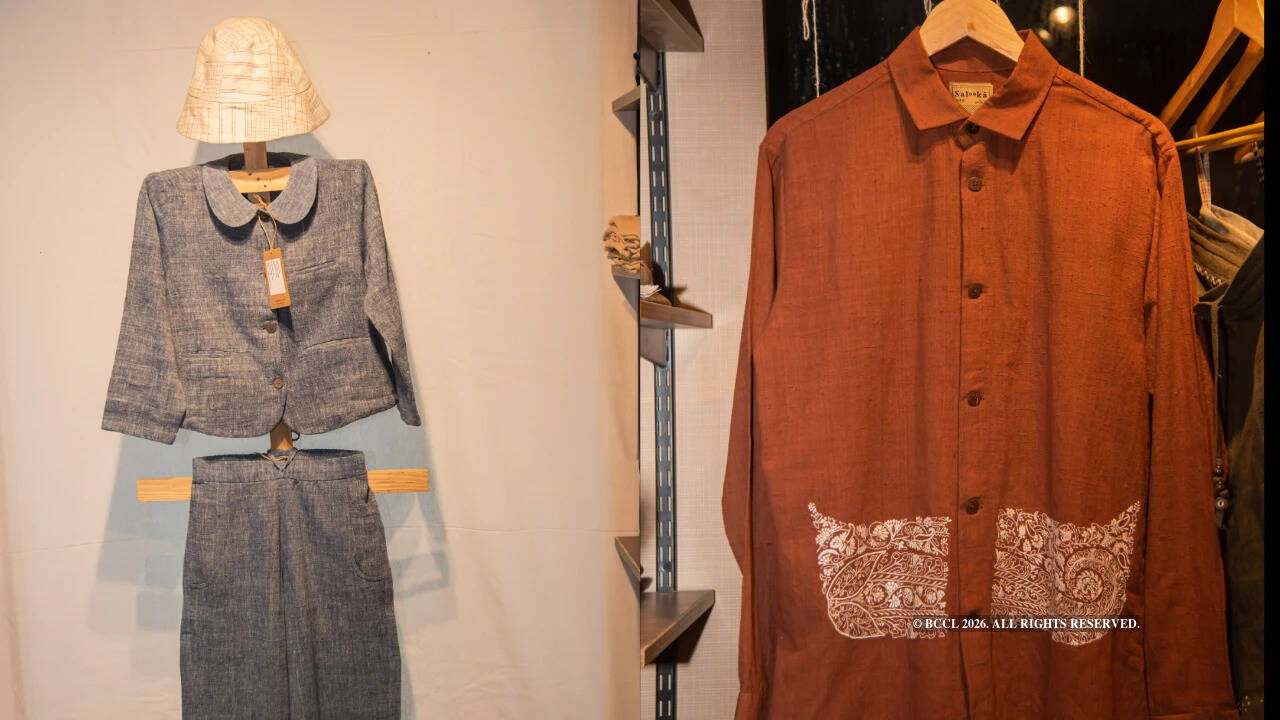
Leela Ler’s fully compostable apparel and Salooka shirt made using HimGra fibre
“Regeneration is about discovering new possibilities in indigenous materials, from cardamom fibre to water hyacinth,” Hena Dasari from Tvastri, who have been using fibres like banana fibre, sitalpati, madurkathi stalks to make home utility items and bags.
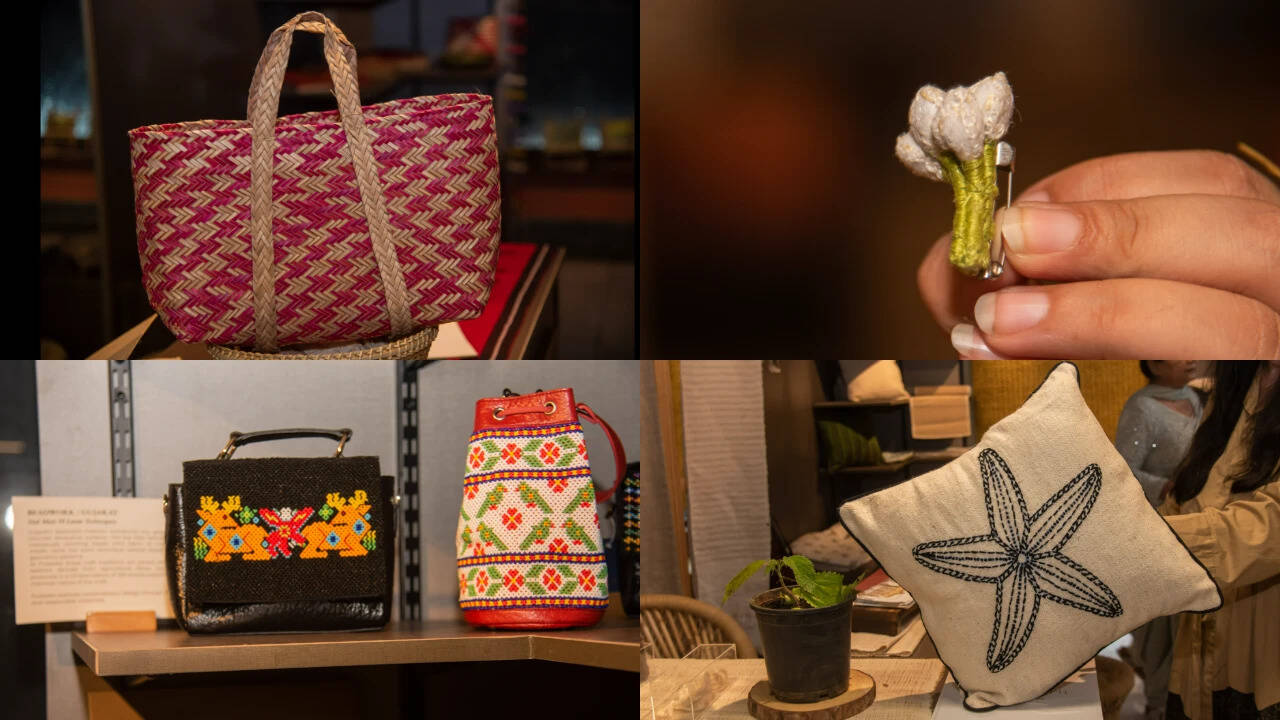
Clockwise: Tvastri’s bamboo craft bag, Parul Gupta’s brand Label Yuga’s mogra brooch, Pillikothi Home’s nettle fabric cushion cover and Kanika Sahijwani’s brand Pusaaka’s bead bags
“We are exploring the possibilities of indigenous Indian fibres through hand-spun and handwoven textiles, reimagined for contemporary living. From nettle (bicchu booti) and bhimal to mountain wools, it is interesting to work with materials rooted in local landscapes,” said Devica Sud, founder, PilliKothi Home showing a nettle fabric cushion cover with kantha embroidery.