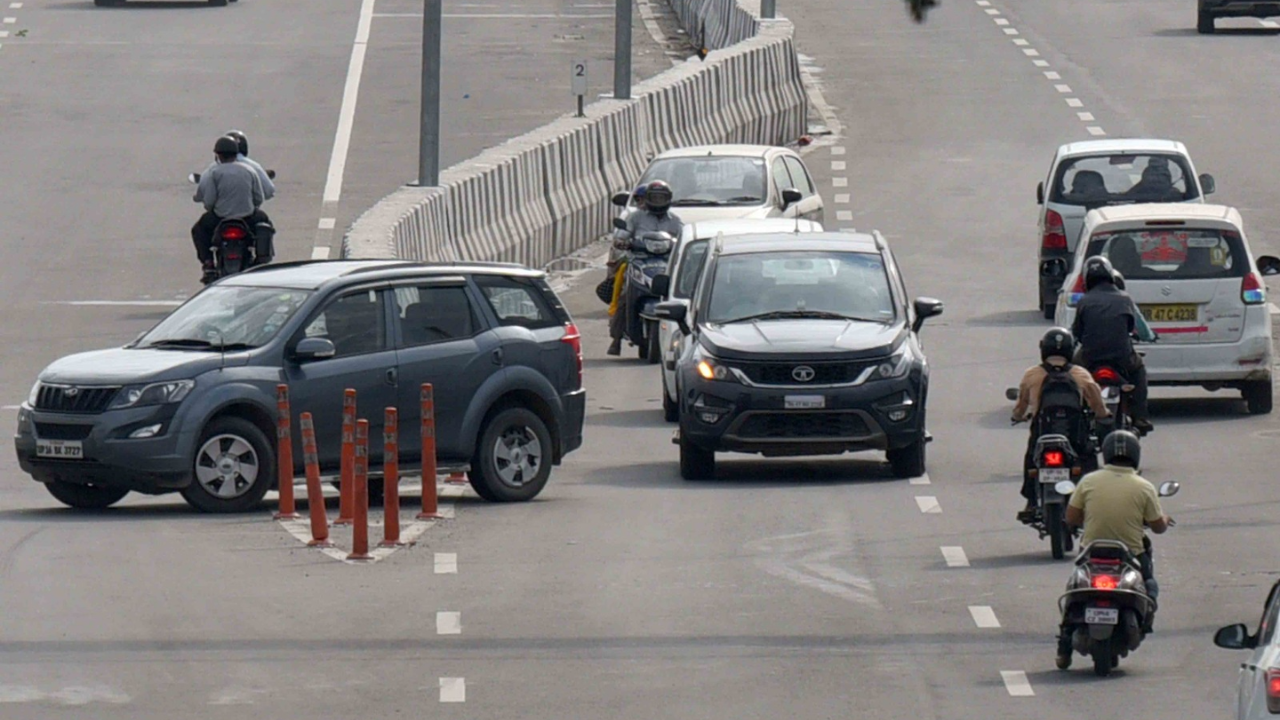
Imagine this. You are driving home late at night on a one-way road that you have driven on a hundred times without thinking twice. Suddenly, a pair of headlights comes into view, barreling directly at you from the wrong direction. There’s no time to process what’s happening, let alone react. It is no longer a freak, scarce thing. Driving on the wrong side of the road has stealthily climbed from being a traffic nuisance to being one of the most lethal, and least talked about, threats on the roads of Delhi, Mumbai, Bengaluru, Hyderabad and virtually every other big Indian city.
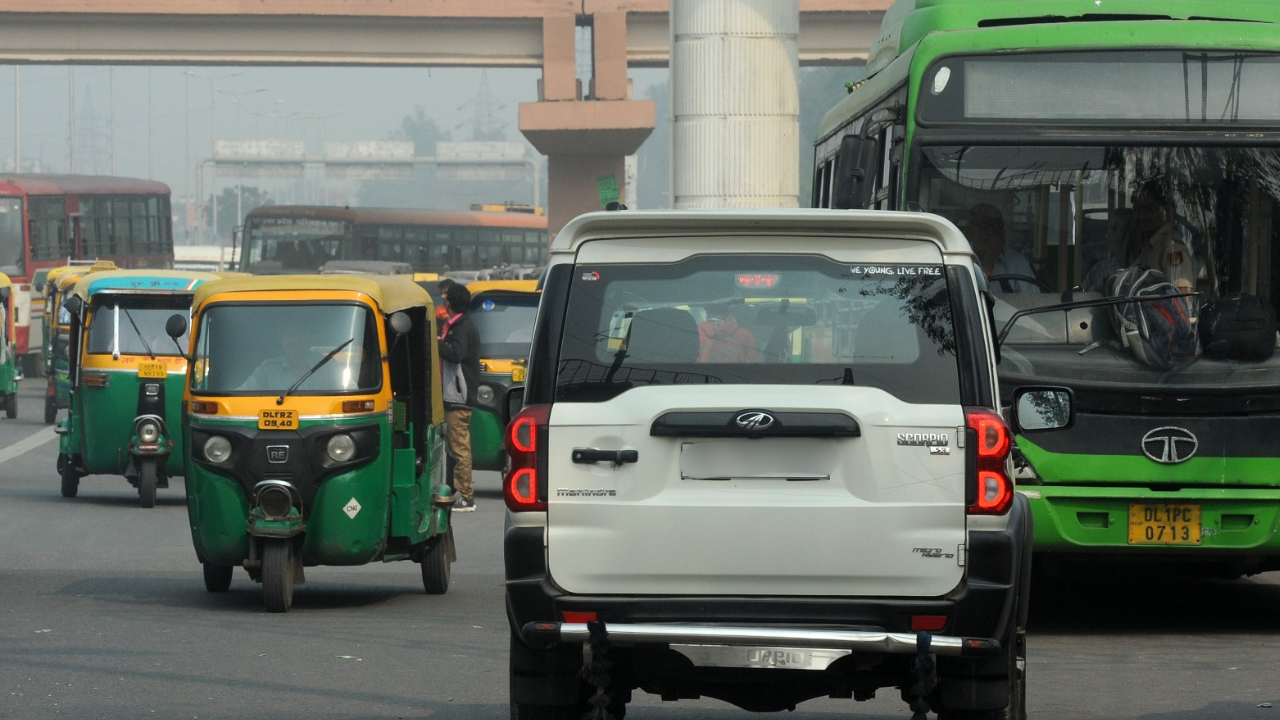
When two cars are coming straight at each other, the force of impact is the two speeds added together.
What used to be a small infraction scooter cutting across a divider, auto squeezing through the wrong lane to save two minutes has become something much more dangerous with the addition of speed. Now the question for city planners and traffic police is not whether driving the wrong way is a problem, but why has it been allowed to become a fatal one.Why wrong-way crashes are so deadlyTo understand why this kind of collision is so devastating, it helps to look past the visuals of mangled metal and shattered glass and into the basic physics of impact. If a car hits another car from behind, and the two cars are traveling in the same direction, the force is the difference in the speeds of the two cars. But when two cars are coming straight at each other, the force of impact is the two speeds added together.
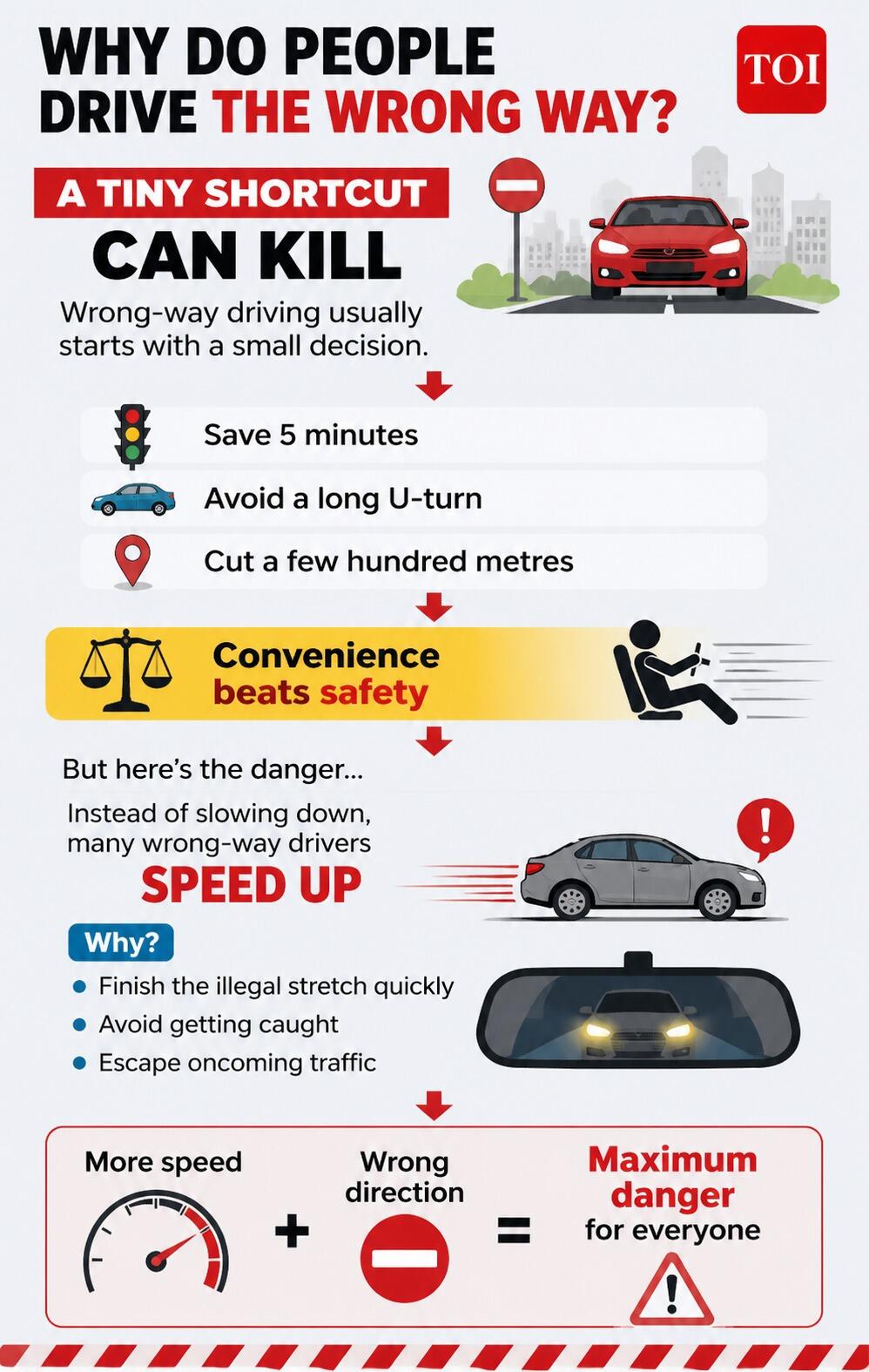
A head-on crash between two cars each travelling at 40 km/h is not the same as a 40 km/h impact against a stationary wall, it hits with the force of an 80 km/h crash. Add to this the fact that most Indian urban roads are not designed for head-on collisions and the results are often catastrophic, with multiple fatalities instead of injuries that could have otherwise been survivable. To make things worse, there is no reaction time whatsoever. On a one-way street, drivers are trained, almost automatically, to expect traffic in only one direction. Their eyes, their reflexes, their mental map of the road, are all tuned to one flow. The brain has no cognitive script for a vehicle suddenly appearing from the “wrong” direction, meaning it takes longer to even realize the threat is real, let alone execute a swerve or hit the brakes in time, which is exactly why so many of these crashes end in impact instead of a near-miss.
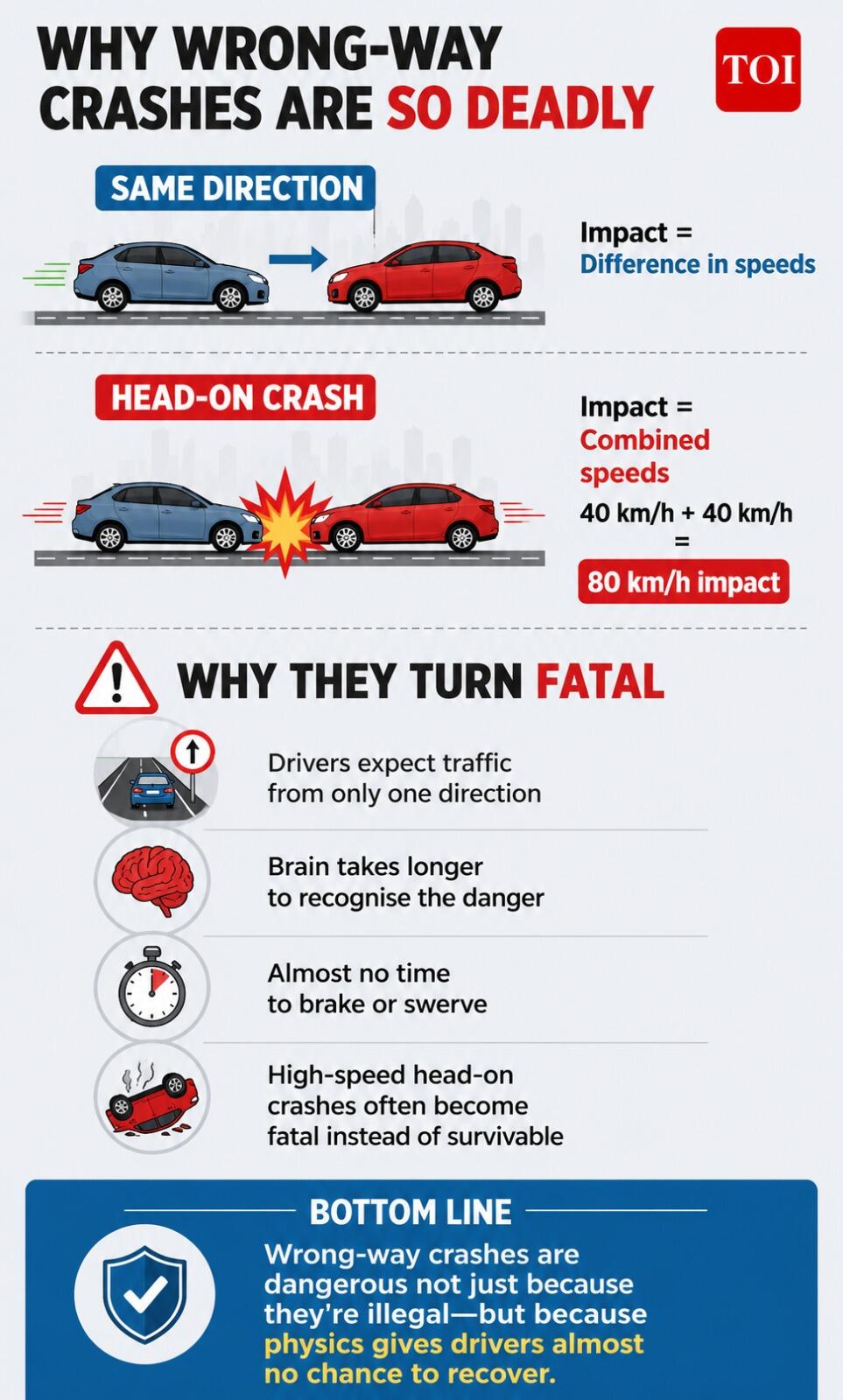
A tiny shortcut that can killEvery wrong-way vehicle has a decision behind it, and to understand why enforcement alone hasn’t solved the problem you need to understand that decision. Mostly, the motivation is disarming in its insignificance. Saving five minutes on a journey, avoiding a long detour to the nearest legal U-turn, or shaving a few hundred metres off a route that would otherwise require going the “proper” way around a block or flyover. It’s a calculated, if reckless, trade-off between personal convenience and public safety, and convenience wins out almost every time because the perceived risk feels abstract until it doesn’t. To make matters worse, traffic researchers have repeatedly flagged a counterintuitive pattern: contrary to caution, wrong-way drivers don’t slow down, they actually speed up.
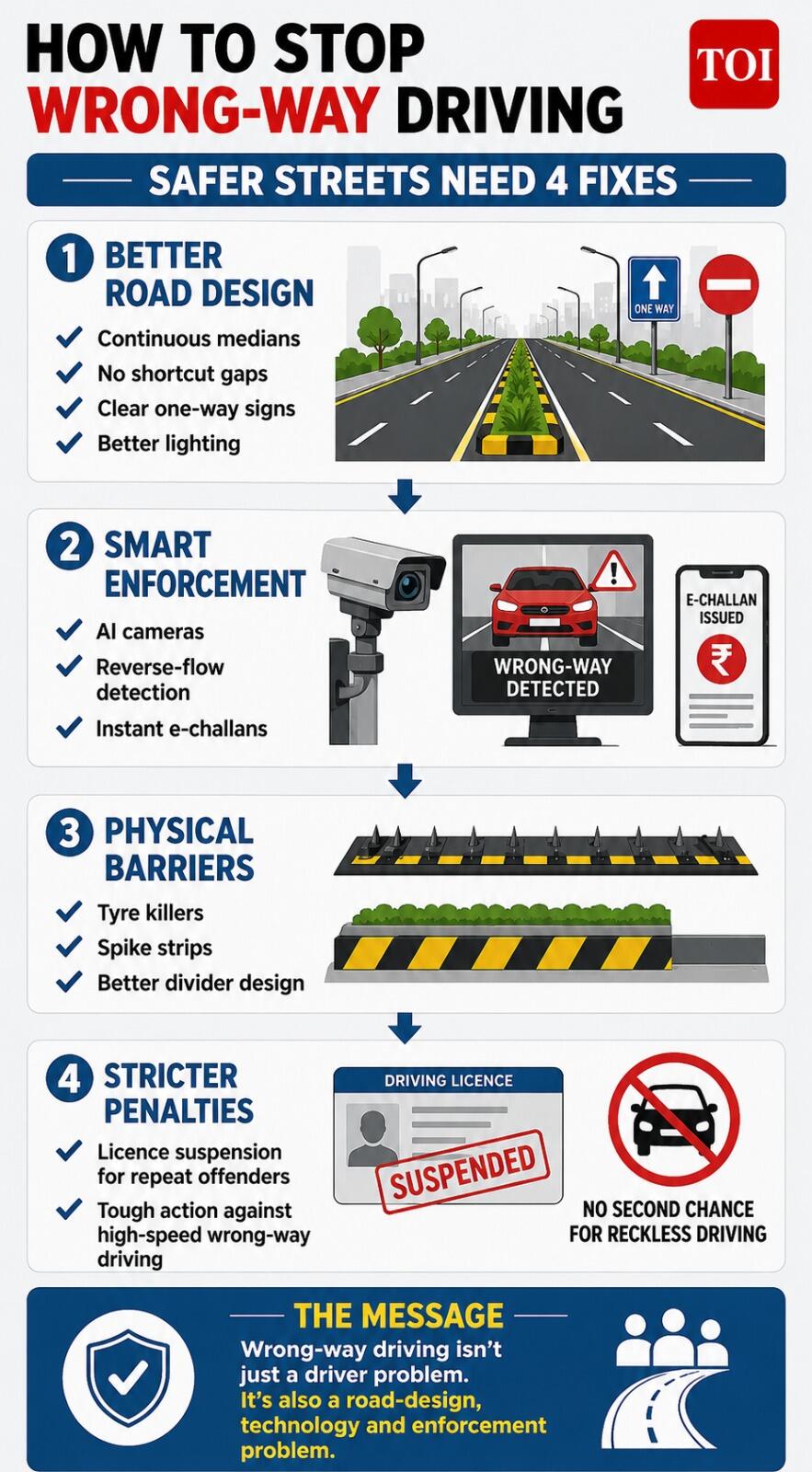
The instinct is to clear the illegal stretch of road as quickly as possible, if not to avoid being spotted and fined by traffic police, then to minimise the window in which they might be blocked or confronted by oncoming vehicles. This aggressive overcompensation is what turns a bad decision into a fatal decision. The driver most likely to hit you head-on is the driver going the fastest, and the least prepared to stop.How our roads make it easy to bend the rulesThe psychology explains why people drive the wrong way, the infrastructure explains why they so often get away with it. At least, until something goes wrong. There are quite a few key intersections, slip roads and flyover entry points in many Indian cities where either clear signage is missing or the signage is faded, covered by hoardings or placed such that a driver in a hurry simply misses it in time. Most Indian junctions are different from international wrong-way detection systems, where there is no real warning to a wrong-way driver until they are already deep into oncoming traffic. At that point, the damage is basically already set in motion. The story is no less disturbing with physical infrastructure. The most effective physical deterrent against wrong-side entry, continuous medians and dividers, is often broken, incomplete or missing precisely where illegal shortcuts are most inviting – a gap in a divider near a market, a missing barrier near a residential lane. Enforcement technology has also lagged behind the scale of the problem. CCTV networks in most metros are fairly extensive for monitoring speed and red-light violations in the correct direction of traffic. Very few systems are actually set up to detect and flag reverse-flow movement automatically. This means a large proportion of wrong-way violations simply go unrecorded and unpunished, even when cameras are technically in place.Preventing wrong-way driving before it becomes deadlyAwareness campaigns and occasional crackdowns won’t solve such a fundamental problem. Traffic experts are converging on a set of concrete, feasible fixes. The slip roads, u-turn zones and junctions where wrong-side entry is most common are the most vulnerable exit points. Physical deterrents such as tyre killers or spike strips could make the illegal manoeuvre self-defeating for the driver attempting it, as a punctured tyre is a far more immediate consequence than the remote possibility of a fine. On the tech side, cities need AI-enabled cameras that are calibrated specifically for reverse-flow movement detection in real time, rather than retrofitted systems for forward-direction speed and signal violations, so that violators can be identified and penalized as the violation happens, rather than after a crash has already occurred. Enforcement also needs teeth beyond fines. Repeat wrong-way offenders, especially those caught driving at high speed against traffic, should face genuine licence suspension rather than a nominal challan that does little to change behaviour. Finally, none of this works in isolation from better road design itself, which means continuous, unbroken medians at high-risk stretches, clearly lit and unobstructed signage at every entry point and junction layouts that make the correct direction of travel intuitive rather than something a driver has to consciously remember. Until these pieces come together, the wrong-way vehicle on a city street will be less an aberration than a design failure waiting to hit someone.