MUMBAI: The daily commute is tiring for most Mumbaikars as they negotiate crowds, delays and traffic snarls. But incidents over the last fortnight, an open manhole claiming a life, a schoolboy killed by a falling tree, a commuter stabbed on local trains, passengers electrocuted in waterlogged streets and fatal road accidents, have added new facets such as “uncertainty” and “lack of safety” to this already stressful commute.
Fearful Fortnight
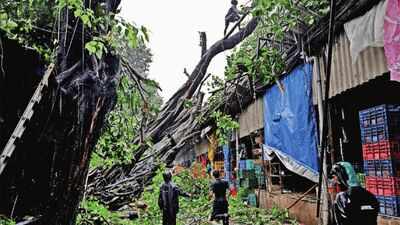
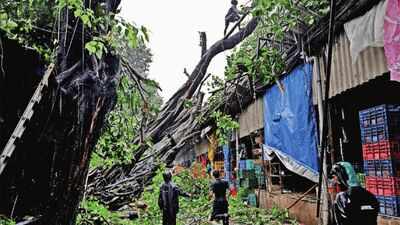
On July 2, 55-year-old labourer Aslam Shaikh died after falling into a manhole at Sakinaka, Andheri. His brother Akbar said, “It was a regular day and he was on his regular path. It’s a busy road, so to think that a manhole was left open on such a stretch is very distressing.”The day before, two college girls from Nerul, Ujwala Wagh (18) and Shubhangi Balkhande (16), suffered electric shock while walking home, unaware of electricity flowing through the floodwater near the Nerul flyover. Luckily, they survived.Shubhangi’s father Subhash Balkhande is worried such incidents can recur. “She returns from college by share auto and walks some distance after alighting. Now every day till she reaches home, we will be in constant fear.”Vihaan Shrivastav, 11, the only son of his parents, was killed on June 30 when a tree fell upon his school bus in Chembur. BJP leader in BMC Ganesh Khankar said the death of another child in a tree-fall incident, after a similar tragedy killed a girl in Khar, could not be dismissed as an isolated accident.In a case that shook the city’s conscience, on June 23, train commuter Mayank Lohar, 21, was stabbed to death by co-traveller Roshan Suvarna as they argued over shutting the compartment door during a downpour.In Jan, college professor Alok Kumar Singh was similarly murdered in a local train. Lohar’s father Ramesh said the murder has sparked fear in the minds of train commuters.On June 25, office peon Navin Prasanna was stabbed multiple times outside Mahim station, only because he collided with a man who dropped his phone. On June 8, a BEST bus driver lost control in Dadar and rammed his vehicle into five vehicles, killing one person and injuring three.
Depression Angle
Globally, urban commuting is being recognised as a public health issue, with a growing body of research linking long and stressful daily travel to poorer mental wellbeing. Mumbai is no different.A 20-year-old Pali Hill resident, who used to travel daily to her South Mumbai college until her graduation three months ago, refused to travel by train last week, saying it was a “scary proposition.”Two days after Lohar was stabbed, a psychologist waiting at Andheri station noticed that five youngsters were apprehensive about boarding crowded trains.A 2025 systematic review published in the ‘Journal of Transport & Health’ found prolonged and congested commutes not only increase stress and fatigue but spill over into family life, reducing leisure time.Other studies have shown commutes lasting over an hour are associated with higher levels of stress, anxiety and depression.Psychiatrist Dr Harish Shetty believes repeated exposure to uncertainty is beginning to affect the city’s psychological wellbeing.“People are constantly anticipating something going wrong — whether it is flooding, overcrowding or violence. Living with that uncertainty every day creates chronic stress,” he said.For a section of commuters, such stress-laden commute could lead to a post-traumatic stress disorder (PTSD)-like situation, he added.
Train Travails
For railway activist Subhash Gupta, commuter tragedies are symptoms of a transport system operating under relentless pressure. “Every commute has become a gamble,” he said, considering suburban trains routinely carry four times their capacity.He also cited the June 9, 2025 tragedy in which five commuters fell to their deaths from overcrowded trains between Mumbra and Diva, and the Nov 6, 2025 incident in which two stranded passengers were run over near Sandhurst Road after a railway union protest disrupted services.“Accountability after such tragedies rarely lasts long enough to deter future negligence,” Gupta said.The risks are not confined to rail travel.Although over 80% of Mumbai’s 2,000-plus roads have been concretised, pedestrians continue to negotiate broken pavements, encroachments and unsafe walking conditions. Shiv Sena MLC Manisha Kayande said the city is yet to achieve true “ease of walking.” She added, “Elderly residents are unable to walk comfortably on city roads.”AGNI trustee Zahida Banatwalla blamed haphazard road concretisation that has narrowed footpaths, poor pavement quality, encroachments, inadequate lighting, hawkers, open-flame cooking, parked two-wheelers and the added danger posed by weakened trees.Powai dabbawala Arun Shinde recalled what he described as a “close brush with death.” He said, “I had finished delivering tiffins and was walking back towards Sakinaka circle when a huge tree came crashing down behind me. A car got crushed and two women were injured. I had a close brush with death.” Mumbai is no longer a city for pedestrians, he added.BEST panel member Ajay Singh said he recently travelled in a bus where rainwater leaked through the roof, forcing passengers to open umbrellas inside. He also raised concerns over brake-related issues, maintenance of wet-lease buses and training of drivers.Walkability activist Rishi Aggarwal believes the city’s commuters endure “silent suffering” every day, much of which rarely becomes news. “Extreme incidents like Lohar come to notice. But the silent suffering rarely does,” he said.Referring to a viral video of commuters struggling to board an AC local because the doors would not close, he said, “These are horrible lived experiences of people every day.”(Inputs by Bella Jaisinghani, Malathy Iyer, Richa Pinto, Nitasha Natu, Somit Sen, Manthan Mehta, Hemali Chhapia and George Mendonca)