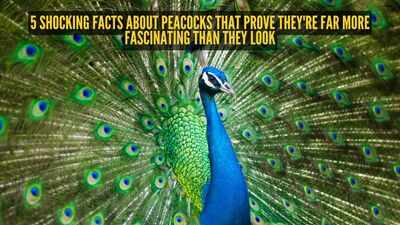
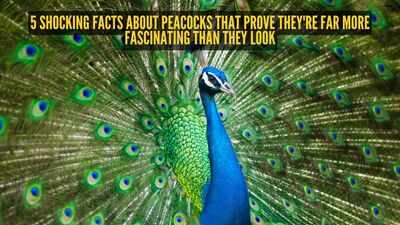
Peacocks are often admired for their dazzling feathers and graceful appearance, but there is much more to these iconic birds than their colourful displays. Found across forests, farmlands, and even city parks in many parts of the world, peafowl have evolved some surprising traits that help them survive in the wild.From their unusual family life to their impressive flying skills, these birds continue to surprise scientists and wildlife enthusiasts alike. Here are five shocking facts about peacocks that reveal a completely different side of these magnificent birds.
Peacocks can fly, despite their huge tails
Many people assume peacocks cannot fly because of their long, heavy-looking trains. In reality, they are capable of short but powerful flights. They usually fly only when necessary, such as escaping predators or reaching tree branches where they spend the night.Their take-off may look dramatic, but once airborne, peacocks can easily glide onto rooftops or tall trees. Their strong legs provide the initial lift, while their wings do most of the work.
That colourful “tail” isn’t actually their tail
One of the biggest misconceptions about peacocks is that their famous display is made up of tail feathers. In fact, those shimmering feathers are called the train, which grows from the bird’s upper tail coverts.The actual tail is much shorter and remains hidden beneath the train. When a peacock fans out its feathers during courtship, the real tail acts like a support structure, holding the enormous train upright.
Only males are called peacocks
The word “peacock” is often used for the entire species, but it refers only to the male bird. Females are called peahens, while young birds are known as peachicks. Together, they are collectively known as peafowl.Male peacocks are famous for their colourful plumage because they use it to attract mates. Peahens, on the other hand, have brown and grey feathers that provide excellent camouflage while nesting and protecting their chicks.
Their feathers can send invisible messages
A peacock’s display is not just about bright colours. When males perform their courtship dance, they rapidly shake their feathers, creating tiny vibrations that humans can barely notice.Research suggests these vibrations produce low-frequency sounds and subtle movements that peahens can detect at close range. This hidden form of communication may help females judge the health and fitness of potential mates beyond what they can simply see.
Their feathers don’t get their colours from pigments
The brilliant blue and green shades of a peacock’s feathers are not created by coloured pigments like those found in many other birds. Instead, the colours come from microscopic structures within the feathers that bend and reflect light.This phenomenon, known as “structural colouration,” changes slightly depending on the viewing angle, making the feathers appear to shimmer and glow in sunlight. It is one of nature’s most remarkable optical effects.Thumb image: Canva