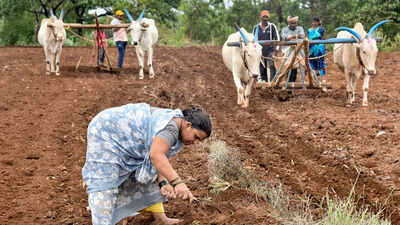
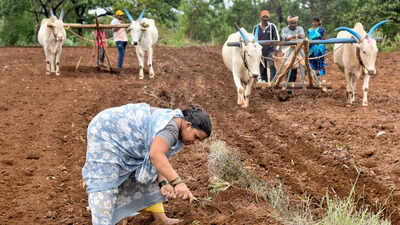
MUMBAI: A rare convergence of an Adhik Jyeshtha month in the Hindu calendar and a powerful Super El Niño has raised concerns over the progress of this year’s monsoon in Maharashtra, with an analysis of historical data suggesting an increased risk of delayed rains and below-normal rainfall.The analysis, based on 76 years of data from 1951 to 2026, was initiated by Ketan Pathak, media advisor to Maharashtra chief minister Devendra Fadnavis, using artificial intelligence platforms Claude and ChatGPT to study past climate patterns. While the findings point to a historical correlation, they do not establish that the astronomical event itself causes weak monsoons.For millions of farmers, urban residents and water managers across Maharashtra, the timing and intensity of the monsoon determine everything from crop sowing and drinking water availability to reservoir levels, hydropower generation and relief from prolonged summer heat.According to the analysis, an Adhik Maas—an extra lunar month inserted roughly every three years to synchronise the lunar and solar calendars—may influence the seasonal calendar when it occurs early in the year as Adhik Jyeshtha. This effectively extends the peak summer period before the southwest monsoon normally advances over the state.Pathak said the prolonged Jyeshtha period lengthens the intense pre-monsoon heat, increases aridity and may contribute to a delay in the onset of seasonal winds. “This is a profound observation rooted in traditional knowledge that aligns with modern meteorology. An Adhik Jyeshtha inherently extends the intense pre-monsoon summer, compounding dry conditions and delaying the monsoon’s arrival,” he said.The concern becomes greater when such an extended dry spell coincides with El Niño—a periodic warming of sea surface temperatures in the central and eastern Pacific Ocean that has long been associated with weaker Indian monsoons. El Niño events do not invariably produce drought, but they are recognised as one of the factors that can suppress rainfall over the Indian subcontinent.The historical assessment found that, of the 76 years studied, 28 witnessed an Adhik Maas, 22 were El Niño years, and both events coincided in 12 years. Of these 12 overlapping years, only five recorded normal rainfall, while seven experienced deficient rainfall or drought conditions, suggesting a historical probability of about 58% of below-normal rainfall during such years.The study also noted that the risk appeared higher when the extra lunar month fell early in the monsoon cycle—during Jyeshtha or Ashadha—than when it occurred later in Shravan or Bhadrapada.With Maharashtra already witnessing weather uncertainties this season, the findings are likely to fuel interest in how traditional calendar observations may complement scientific climate analysis. However, meteorologists generally emphasise that the strength and distribution of the southwest monsoon depend on multiple interacting factors, including ocean temperatures, atmospheric circulation and regional weather systems. They caution that seasonal rainfall cannot be forecast on the basis of any single parameter alone.