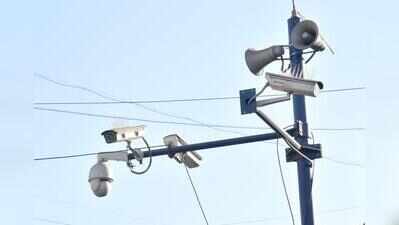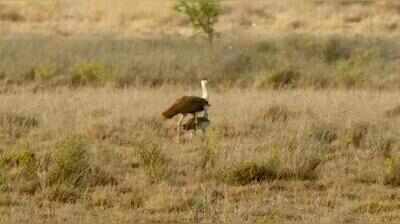
Ahmedabad: In a significant boost to the conservation of the critically endangered Great Indian Bustard (GIB), the second chick born in Gujarat through the ‘jump start’ technique has survived beyond the critical 40-day period, marking a major milestone after the failure of the first attempt earlier this year.The chick, born on May 21 at the GIB breeding site in Naliya, has now completed 48 days and has begun taking short flights of nearly 100 metres, forest officials said.According to deputy conservator of forests Harsh Thakkar, the chick was born to the same female GIB that had produced the first ‘jump start’ chick in March. As part of the conservation strategy, the female again laid an infertile egg, which was replaced with a fertile egg brought from Rajasthan.The operation was kept under wraps following widespread criticism after the first ‘jump start’ chick, born on March 24, died after surviving only 24 days. The chick went missing on April 18, with officials suspecting predation.The success of the second attempt was revealed by Union environment minister Bhupender Yadav, who shared the development after reviewing Project Great Indian Bustard during the 91st meeting of the standing committee of the National Board for Wildlife in Coimbatore.The minister announced the development in a social media post. “It is heartening to know that second ‘jump start’ attempt executed in Naliya, Gujarat, has succeeded and the chick born on May 21, 2026, has passed the critical stage of 40 days of survival. Besides this, the total number of chicks born in captivity in Rajasthan at Sam and Ramdevra has reached 98,” Yadav posted on X.He also added that the project will soon enter its rewilding phase.Forest officials said several changes were introduced after analysing the shortcomings of the first attempt. The habitat around the nesting site was cleared of invasive prosopis juliflora (gando baval) to improve visibility and reduce cover for predators. Feral dogs and jackals were also kept away from the area.As in the first attempt, nearly 50 forest guards were deployed in three rotating shifts to monitor the chick round the clock from specially erected watchtowers equipped with spotting scopes, binoculars and tripods.To minimise predator movement near the nesting site, artificial waterholes have been kept dry, while surrounding shrubs and invasive vegetation have been removed to ensure an unobstructed view of the landscape.